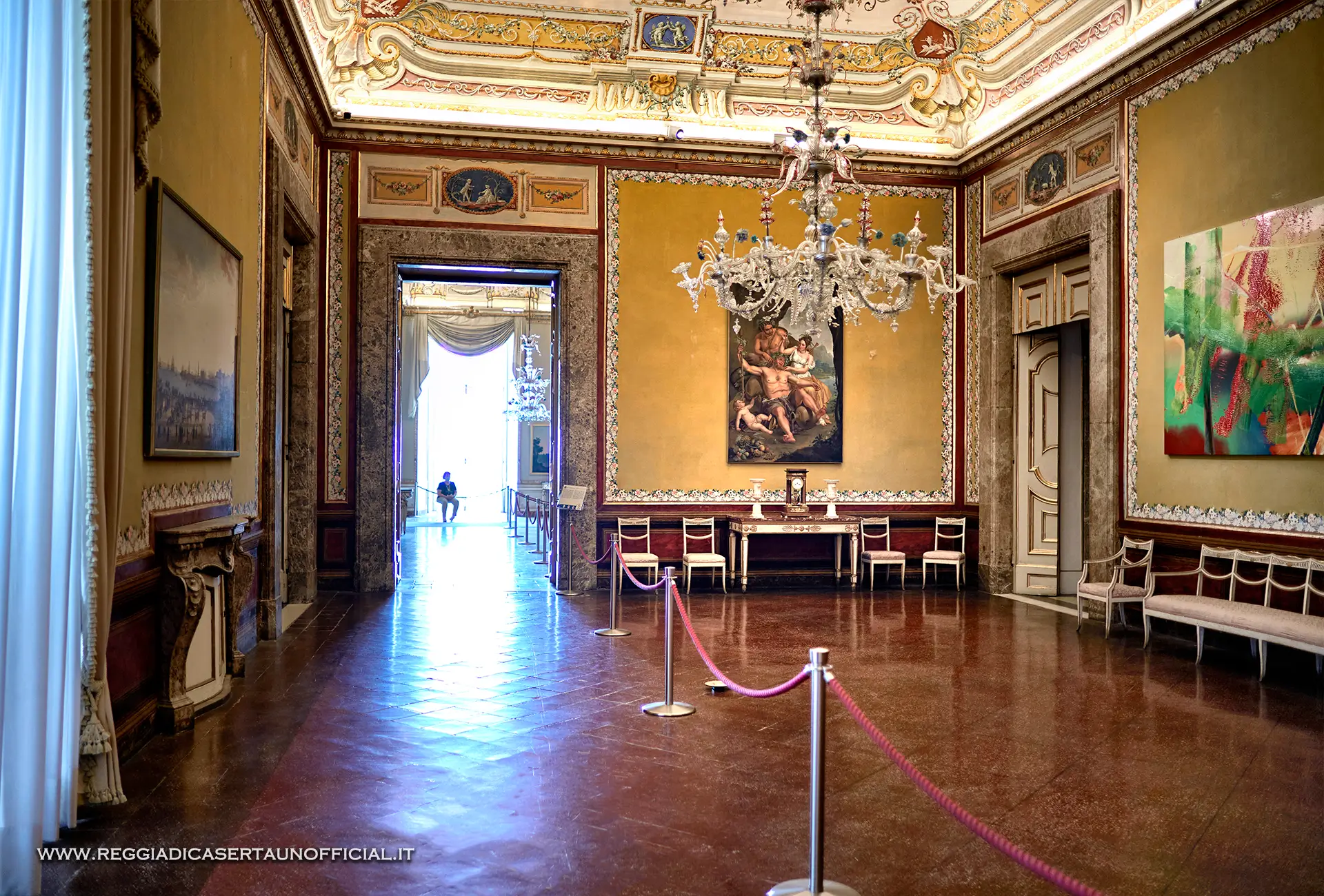
The First Reading Room of the Palatine Library in the Royal Palace of Caserta
At one time, what is now known as the reading room was Queen Maria Cristina's wardrobe.
Description of the First Reading Room
The so-called First Reading Room of the Palatine Library —based on the Vanvitelli’s project — was part of the wing reserved for the apartments of young princes and princesses. Although the original plans did not specify a particular function for this room, it was later used as a wardrobe for Queen Maria Cristina of Savoy; this was partly because the adjoining room—the current Second Reading Room—had been designated as a bedroom in the plans but was subsequently used as a sitting room by Queen Maria Carolina and later as a picture gallery.
After all, it is essential to remember that royal palaces were “homes,” and over time, their inhabitants made changes to them, just as we still do in our own houses today.
At the time, this room contained numerous wardrobes for the clothing managed by the maids-in-waiting, who would station themselves here to attend to Princess Maria Cristina and the royal princesses.
Behind this room lay an “anteroom for HM the Queen’s wardrobe” and a “small kitchen for Princess Maria Cristina, used for preparing coffee and hot chocolate.” These rooms led to the 18th-century back rooms, which housed another room for the chamber maids and a room for the Queen’s wardrobe.
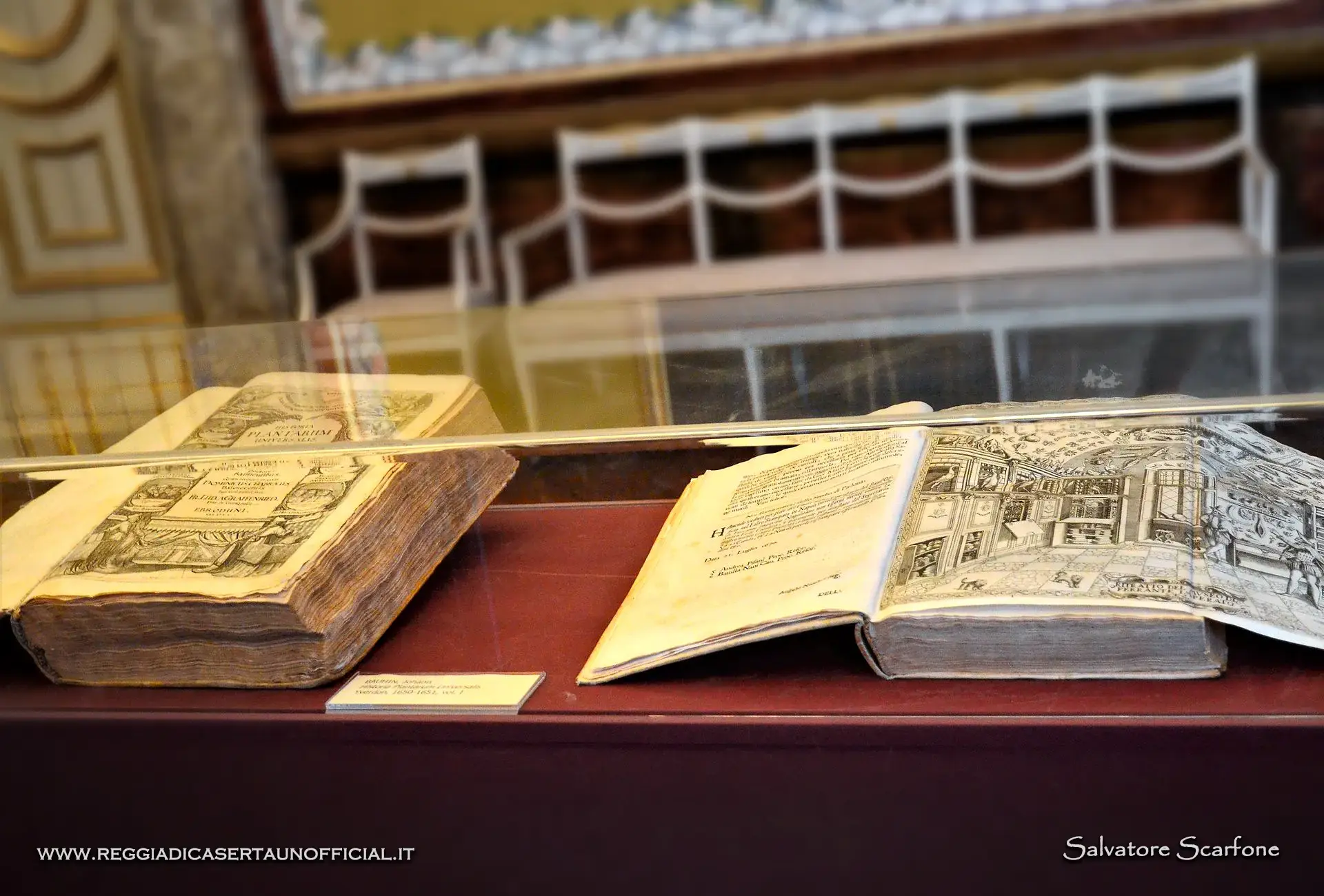
An ancient book, the Historia Plantarum Universalis by Joachim Baumin from 1650
Decorations and furnishings of the First Reading Room
The fresco
The fresco and the overdoor panels in the First Reading Room are the work of painter Gaetano Magri; they feature a distinctly Neoclassical style inspired by the paintings and archaeological finds unearthed at Herculaneum and Pompeii during that era. The fresco is adorned with grotesque motifs, leafy branches, and floral festoons and garlands that intertwine and overlap.
Note the overdoor panels, which are decorated to resemble faux cameos—objects of great value and fashionable appeal during the late 18th and early 19th centuries.
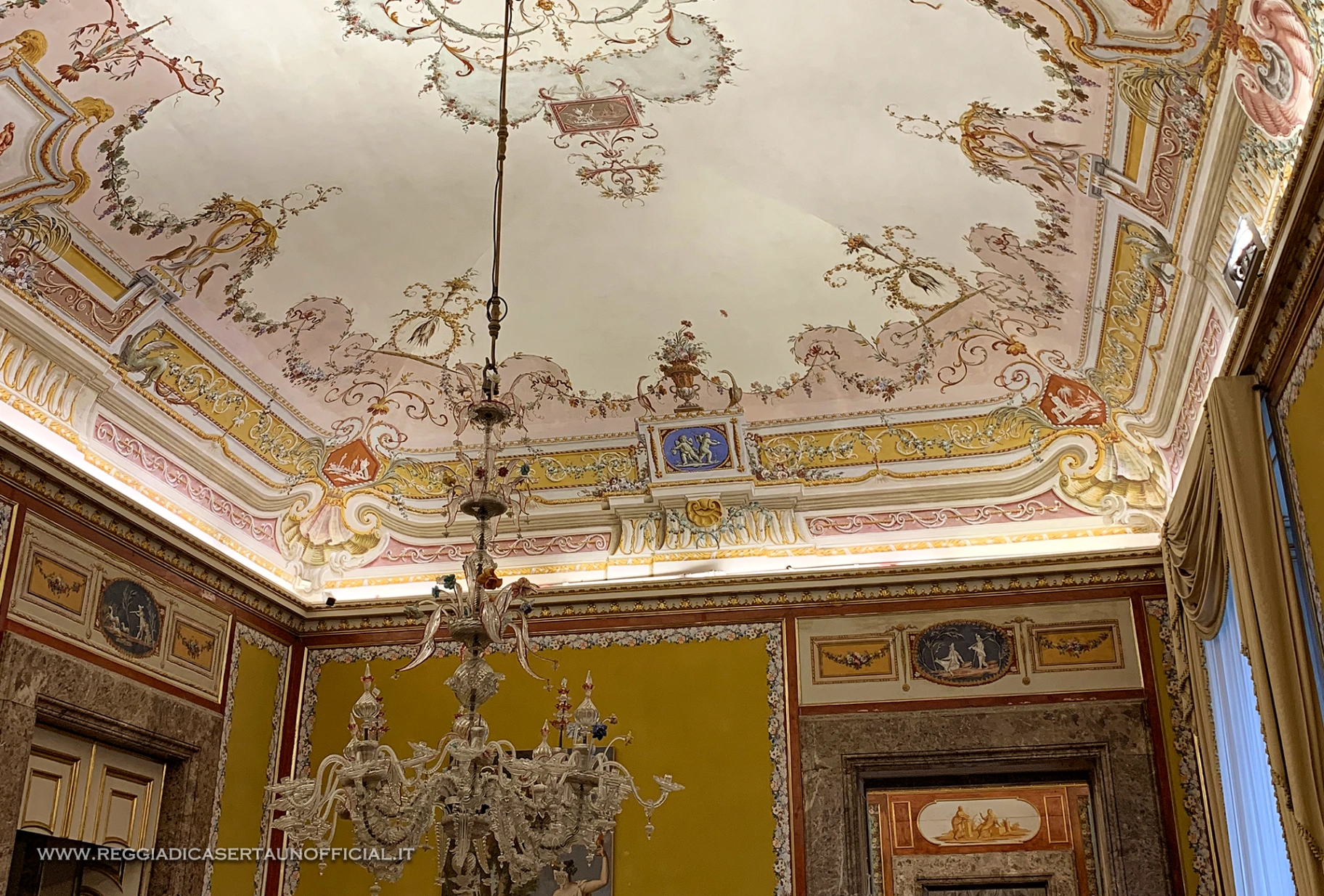
The ceiling fresco
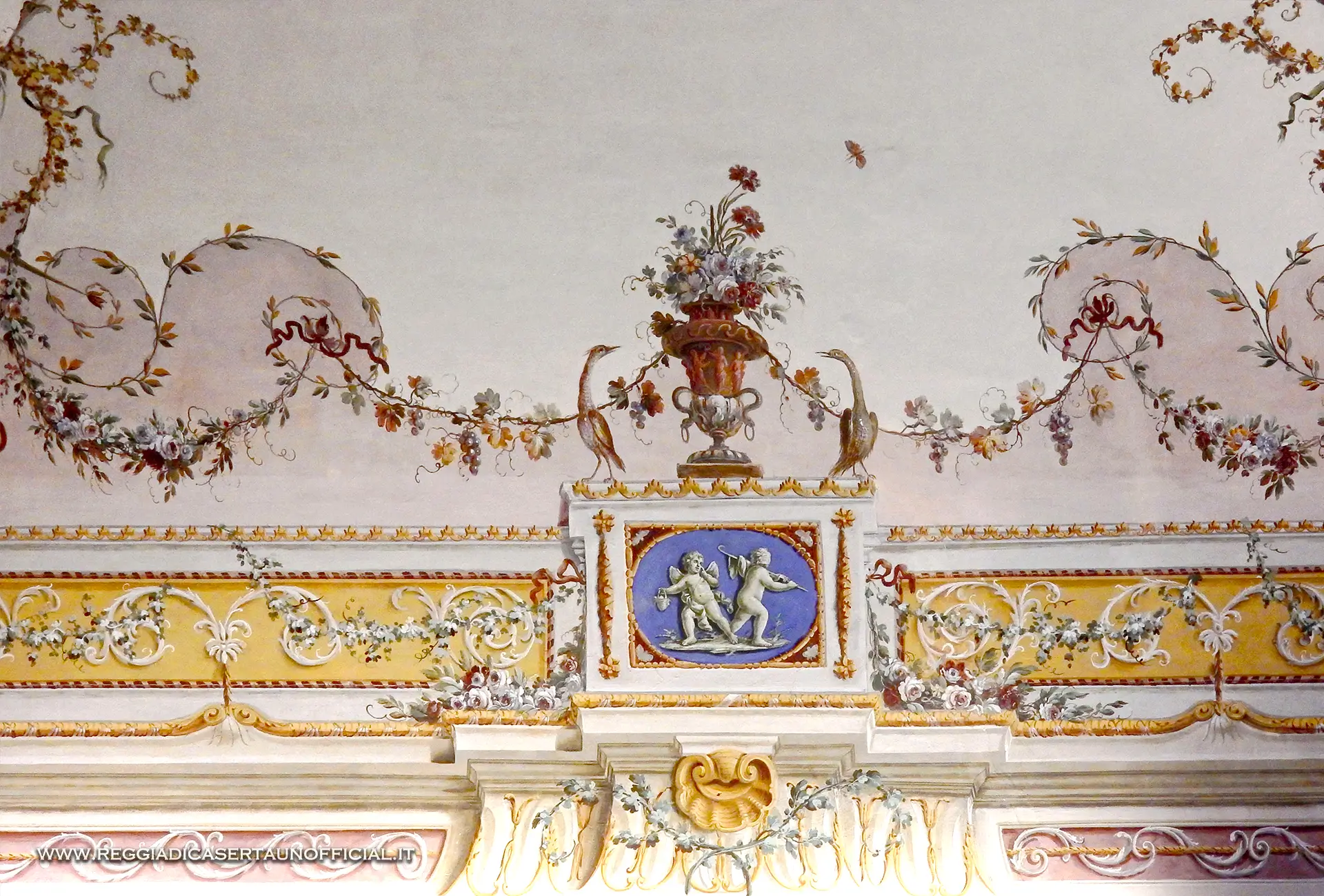
Details of the fresco
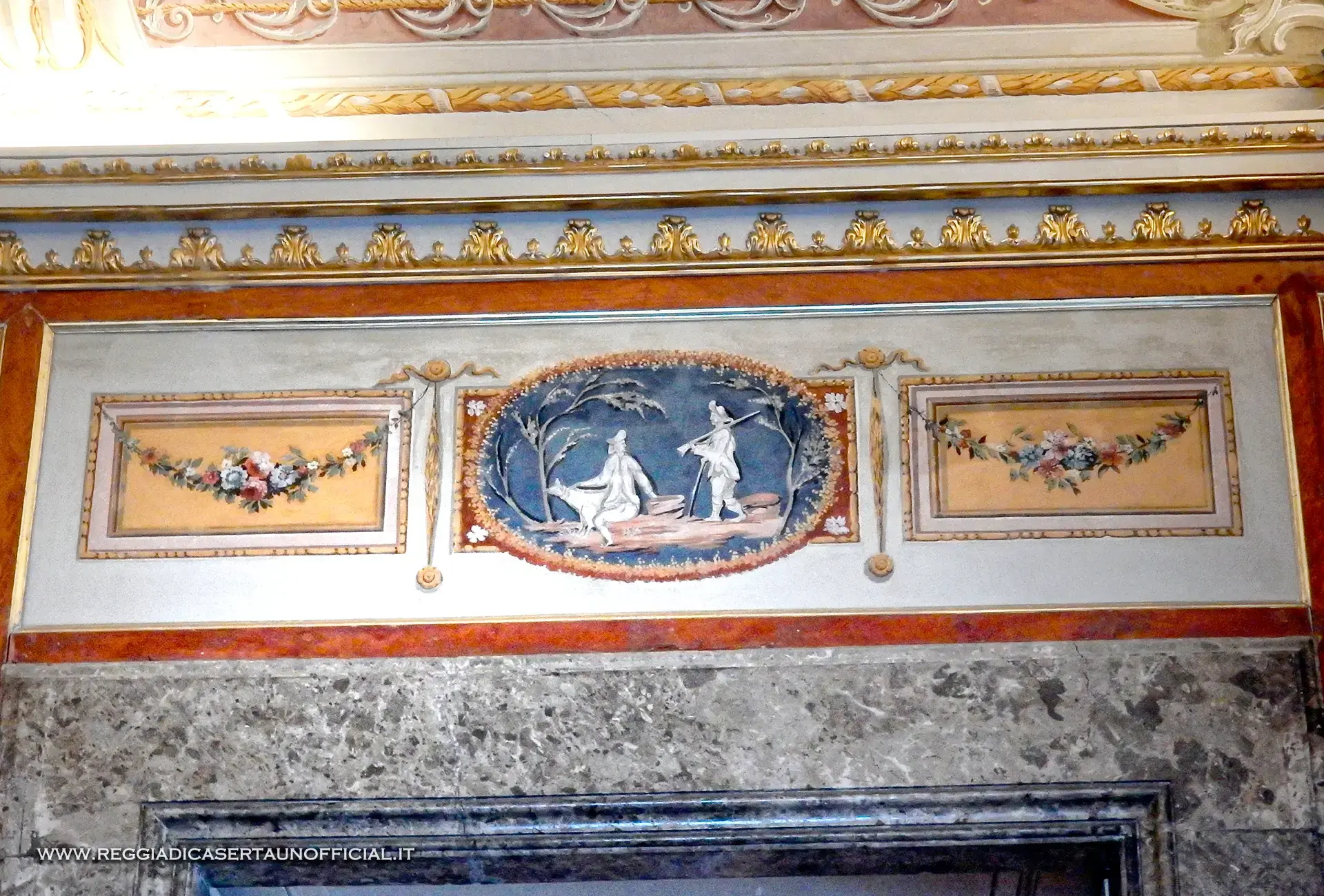
Details of an overdoor painting
The wallpaper
The walls are frescoed and framed by floral-patterned paper decorations dating from the second half of the 18th century. A large floral festoon frames the section that is now frescoed but was once covered with similar decorative papers.
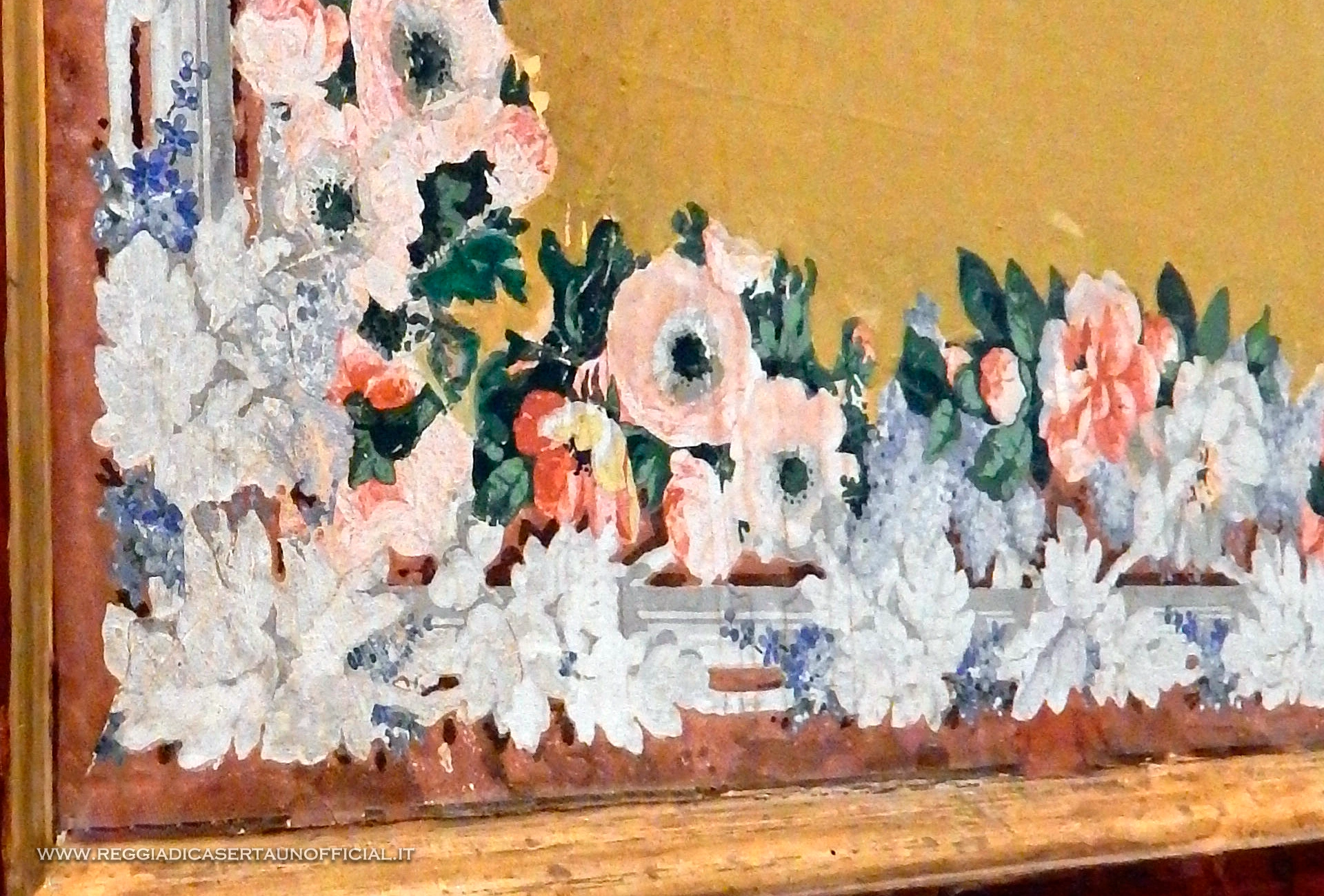
Floral-patterned paper from the second half of the 18th century
Paintings
The Library’s First Reading Room features several paintings, including harbor views and allegorical subjects.
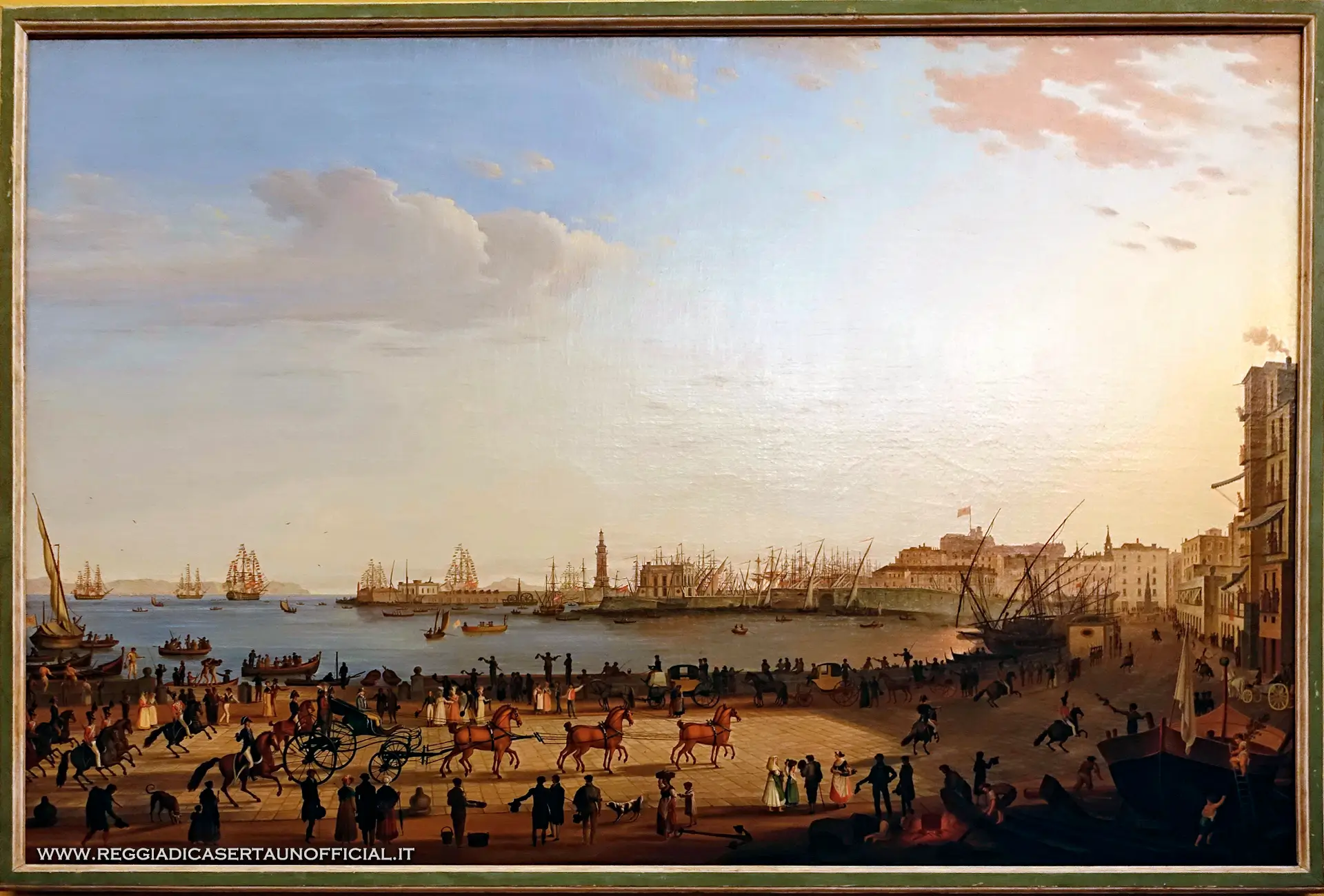
Antonio Veronese – Ferdinand’s Walk in Mergellina, 1827
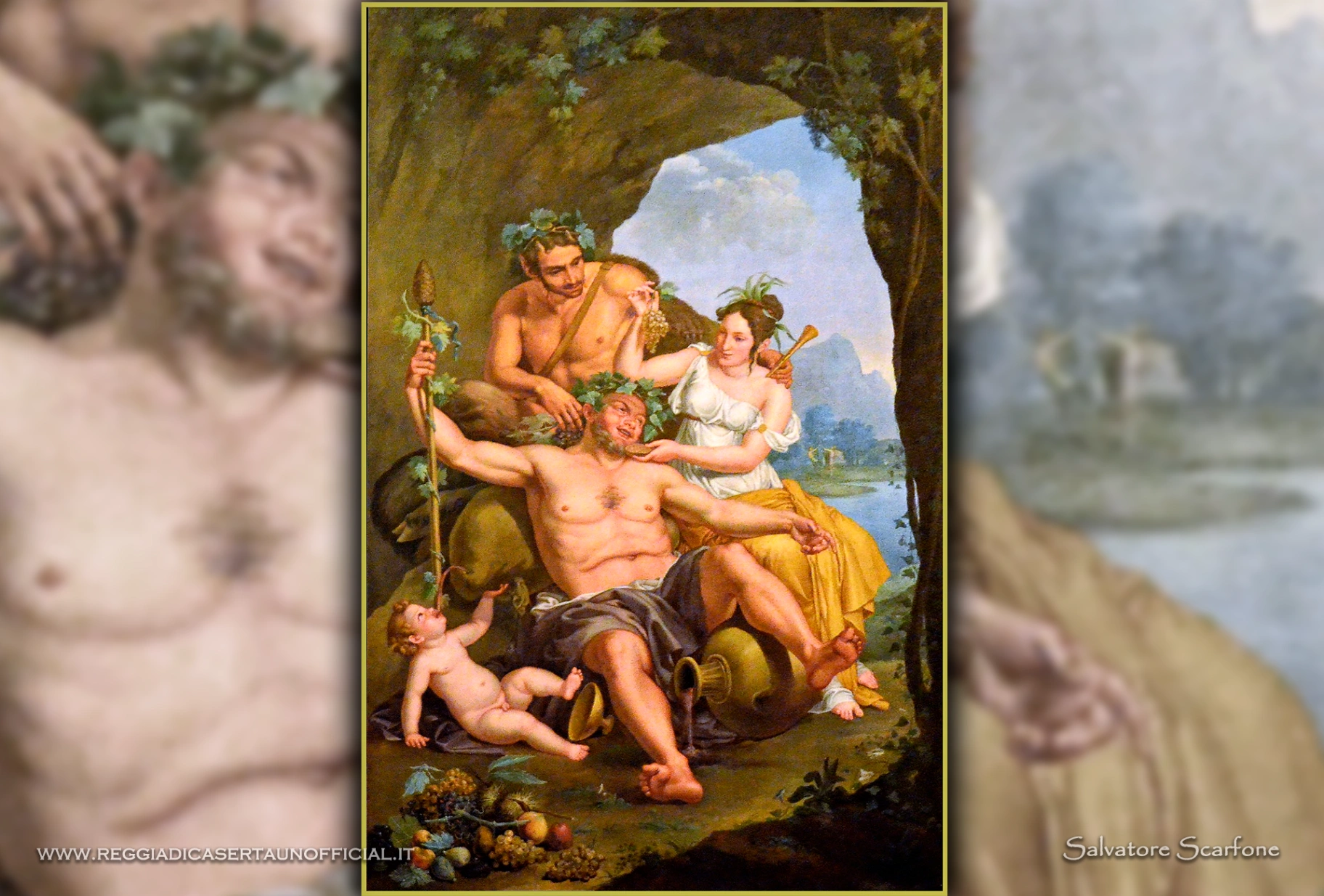
Heinrich Friedrich Füger – Allegory of Autumn
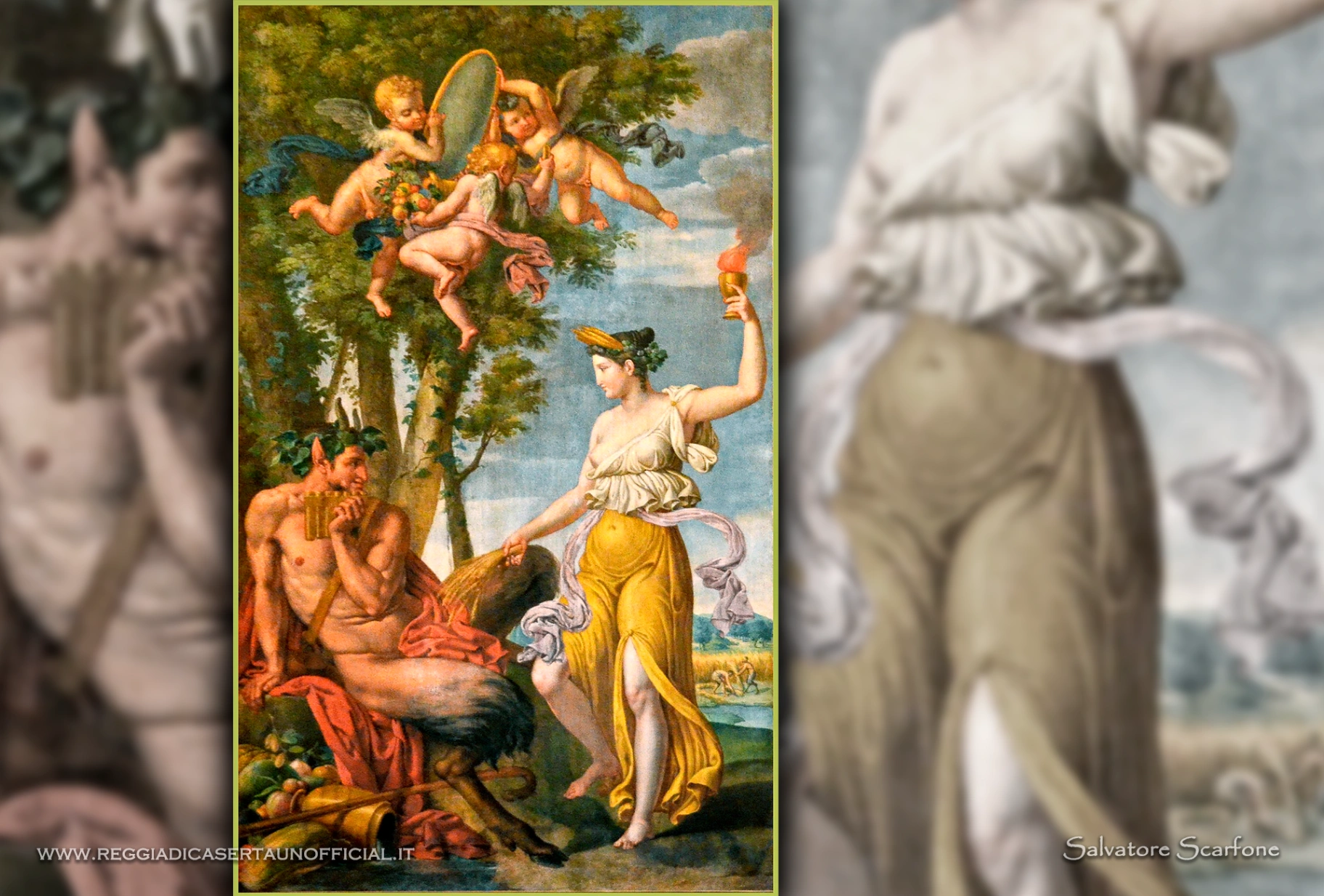
Heinrich Friedrich Füger – Allegory of Summer
Furnishings
The Library’s First Reading Room features furnishings from various periods:
- Empire-style console tables and chairs in white wood and gold. The console tables feature tops made of French Breccia Rossa marble.
- Neoclassical-style flower vases in white alabaster, resting on square bases of statuary marble.
- A mid-18th-century clock in burnished and gilded bronze depicting “The Abduction of Europa,” created by Michel Balthazar.
- Antique volumes from the Palatine Library, such as Joachim Bauhin’s Historia Plantarum Universalis (1650).
- A French Empire-style pendulum clock from 1825. It is shaped like a small temple, featuring rosewood columns and a pediment, with gilded bronze decorations.
- 18th-century Murano glass chandelier
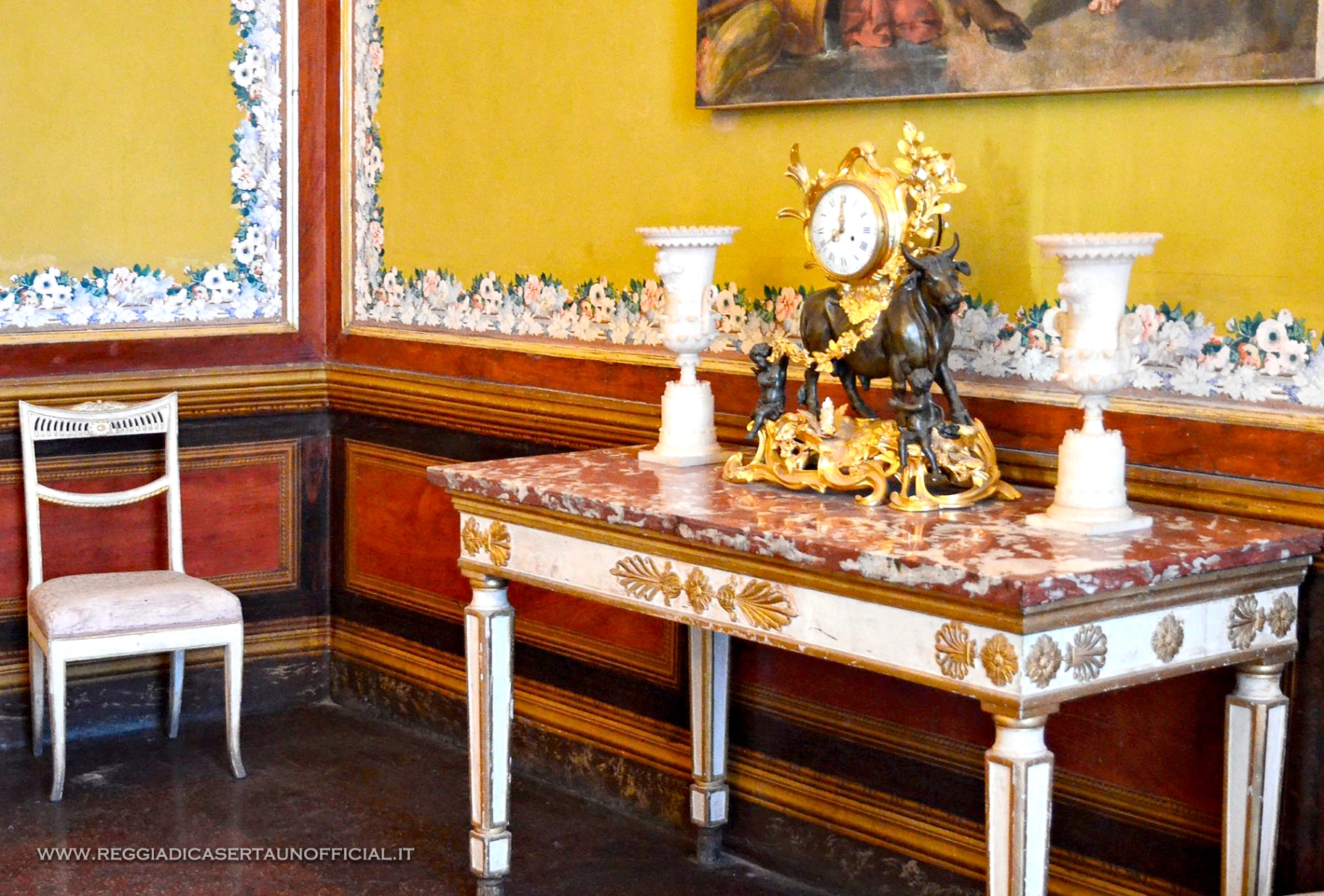
On the console table, a pair of alabaster vases and a French clock depicting “The Abduction of Europa”
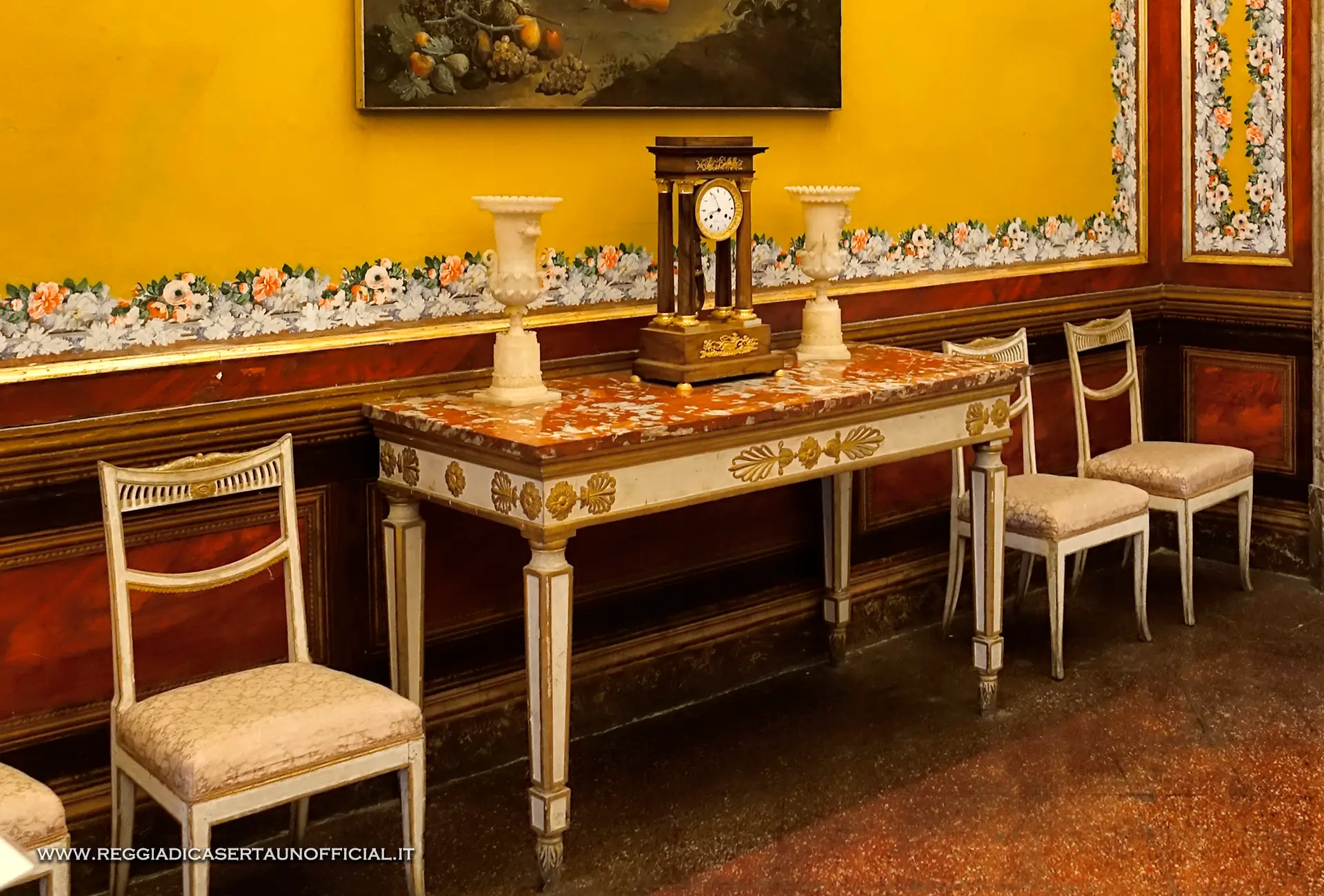
On the console table, a pair of alabaster vases and a French temple-style clock.
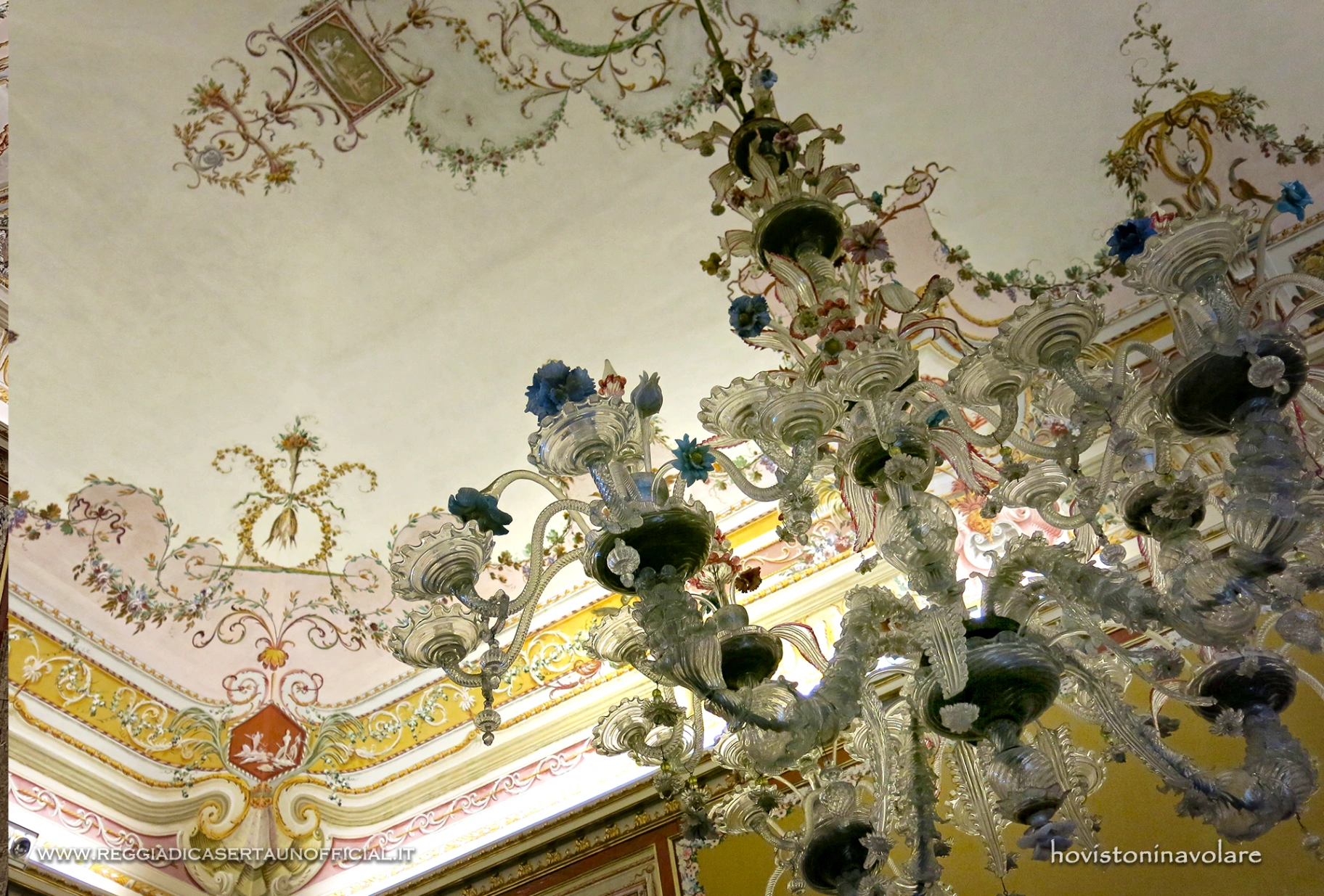
18th-century Murano glass chandelier
External link