The Surrender of Caserta and the End of Nazi-Fascism in Italy
On April 29, 1945, the Caserta Surrender was signed at the Royal Palace of Caserta; it marked the first capitulation of the German army and the tangible end of the war and of Nazi-Fascism in Italy—and, shortly thereafter, in Europe.
The Surrender at Caserta
On April 29, 1945, the Royal Palace was the setting for an event of extraordinary historical significance: the unconditional surrender of German troops in Italy. This event spared tens of thousands of lives and prevented unimaginable damage to the industrial north and to our cultural heritage; above all, it allowed the war to end much sooner.
The key figures in this operation were Allen Dulles—an agent of the OSS (US intelligence service) who would later head the CIA—and General Karl Wolff, the commander of the Nazi SS in Italy and Wehrmacht Plenipotentiary, who was the primary proponent of a separate surrender.
The negotiations and the Operation Sunrise
The day the Caserta Surrender was signed
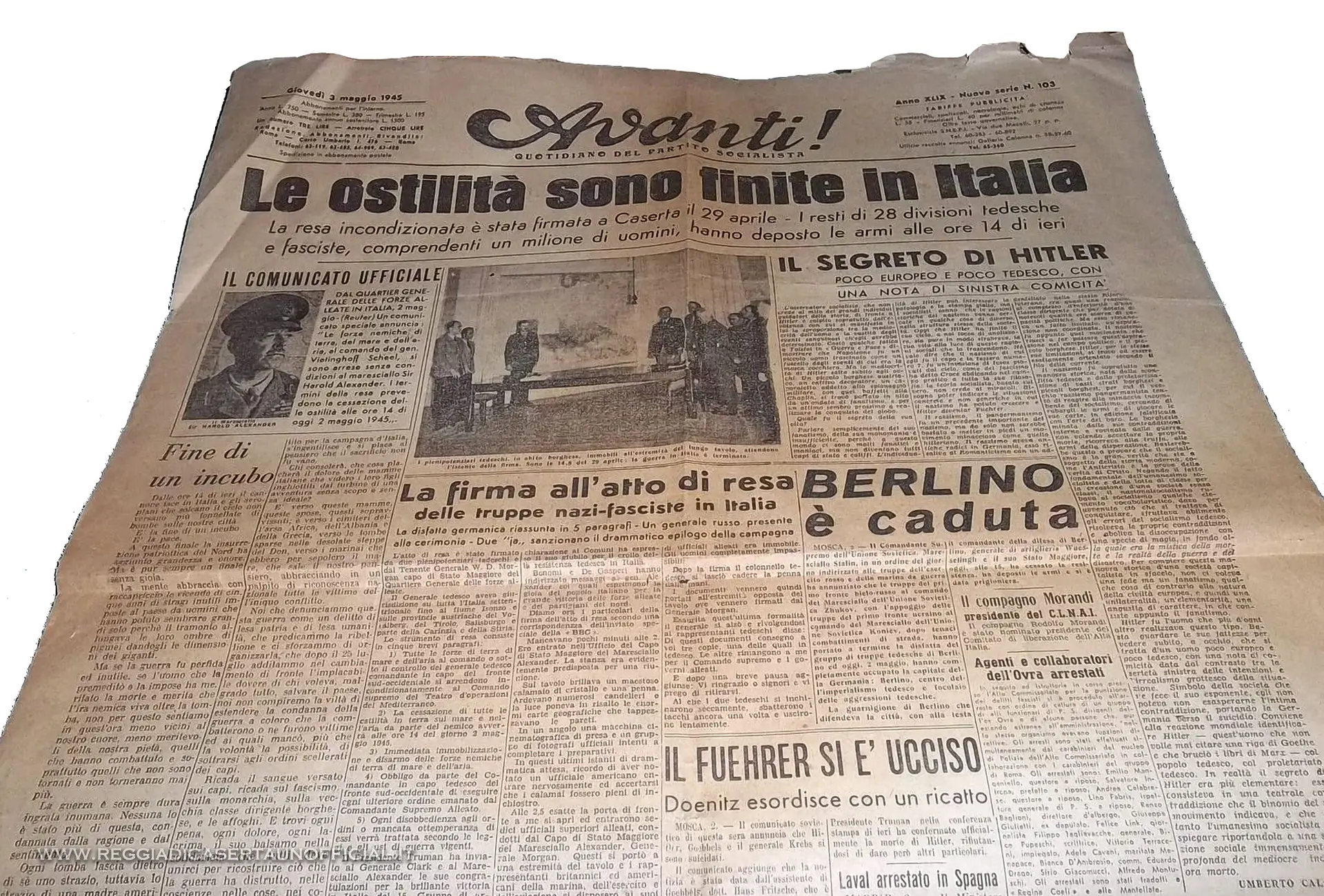
The daily newspaper *Avanti!* reported on May 3, 1945, the news of the unconditional surrender signed at Caserta.
The Caserta Surrender agreements in 5 points:
1
All land, sea, and air forces under the command or control of the German field commander of the Southwestern Front surrender unconditionally to the Supreme Headquarters of the Mediterranean Theater of Operations.
2
The cessation of all hostilities on land, at sea, and in the air by the enemy will take place at 14:00 hours on May 2, 1945.
3
Immediate immobilization and disarming of enemy land, naval, and air forces.
4
Obligation on the part of the German Commander-in-Chief of the Southwestern Front to carry out any further orders issued by the Supreme Allied Commander.
5
Any disobedience to orders or failure to comply with them will be dealt with in accordance with the laws and customs of war in force.
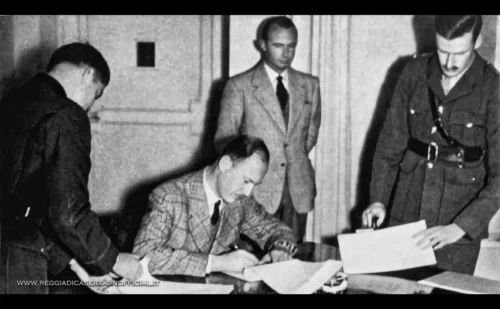
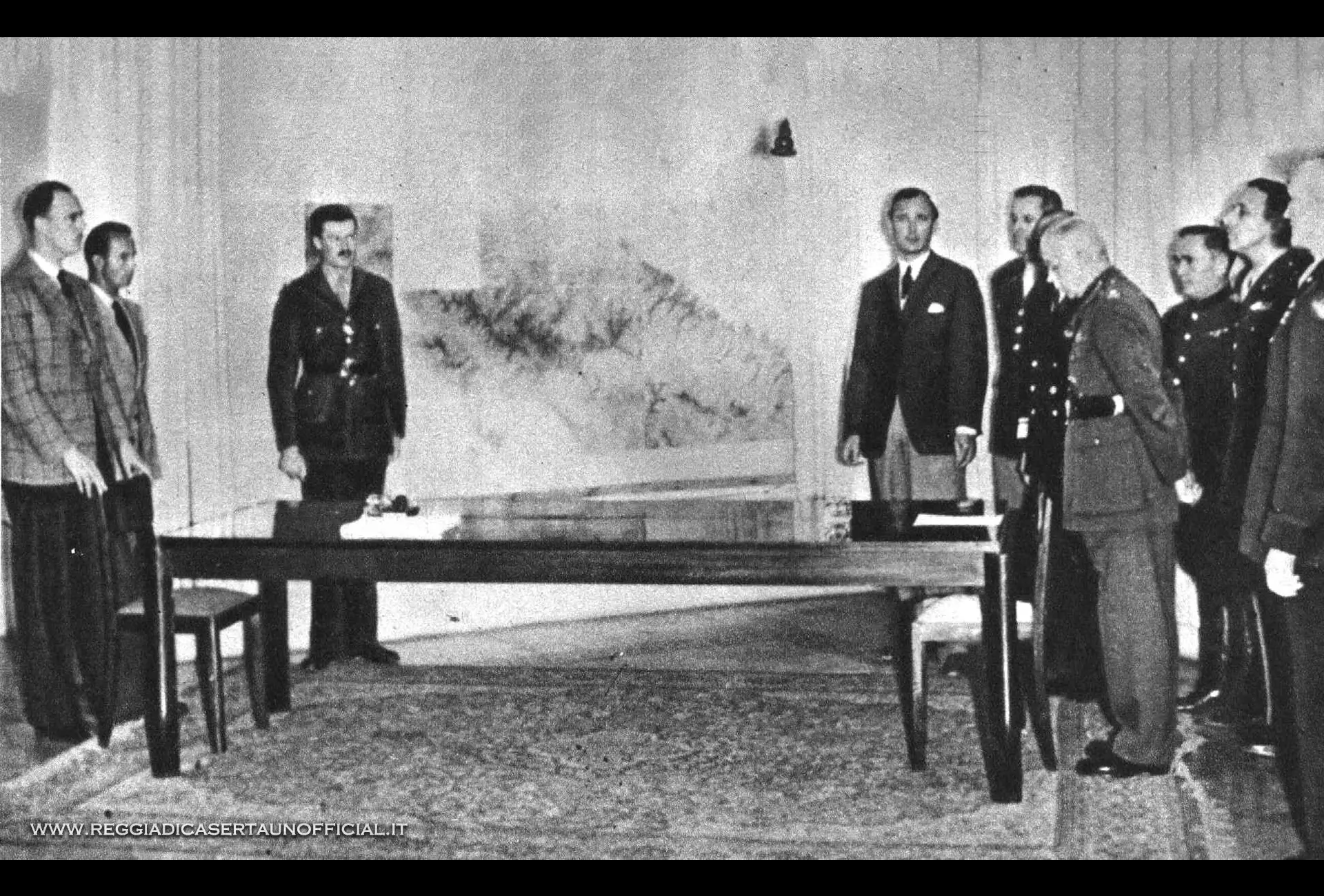
Photographs of the signing of the Surrender at Caserta
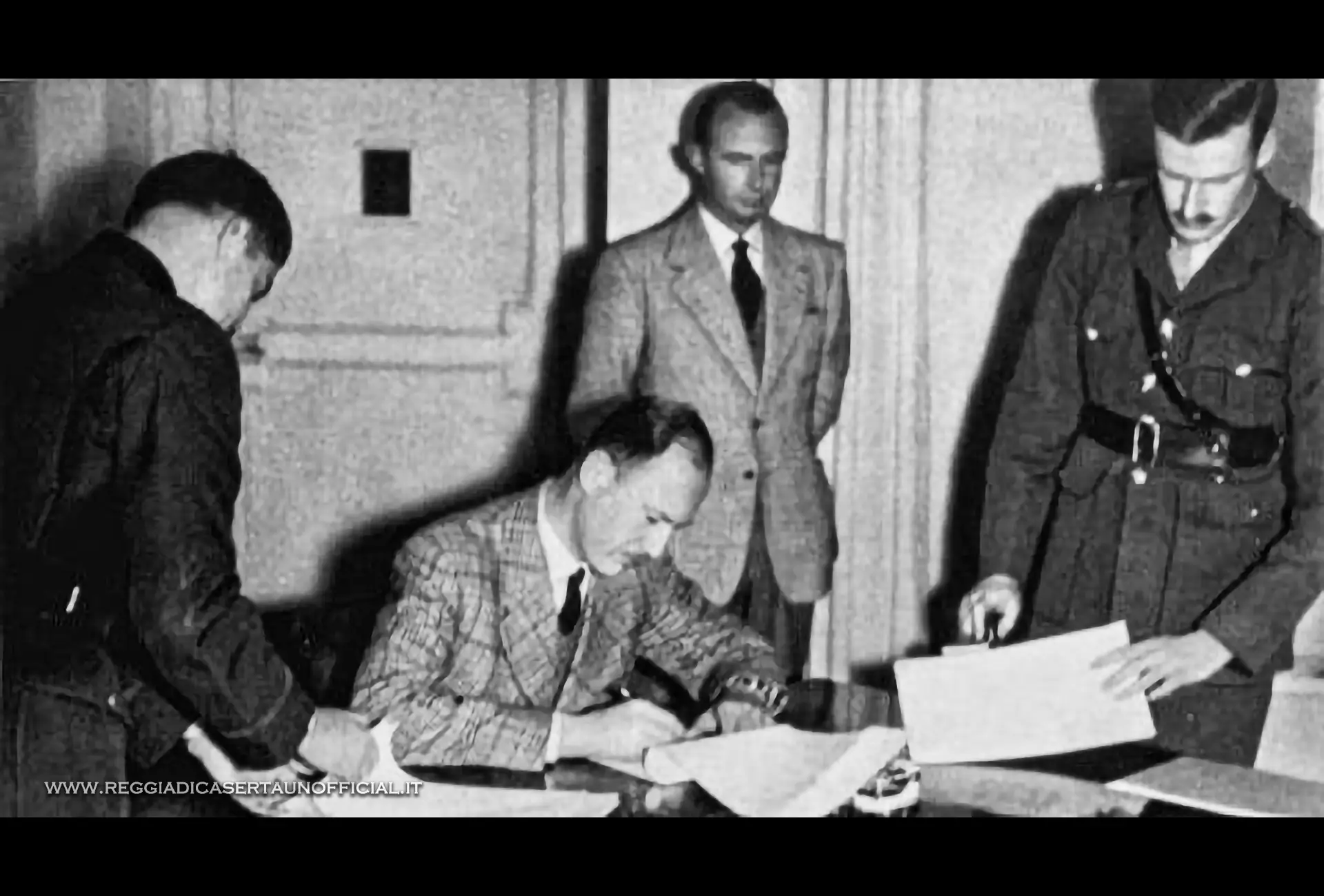
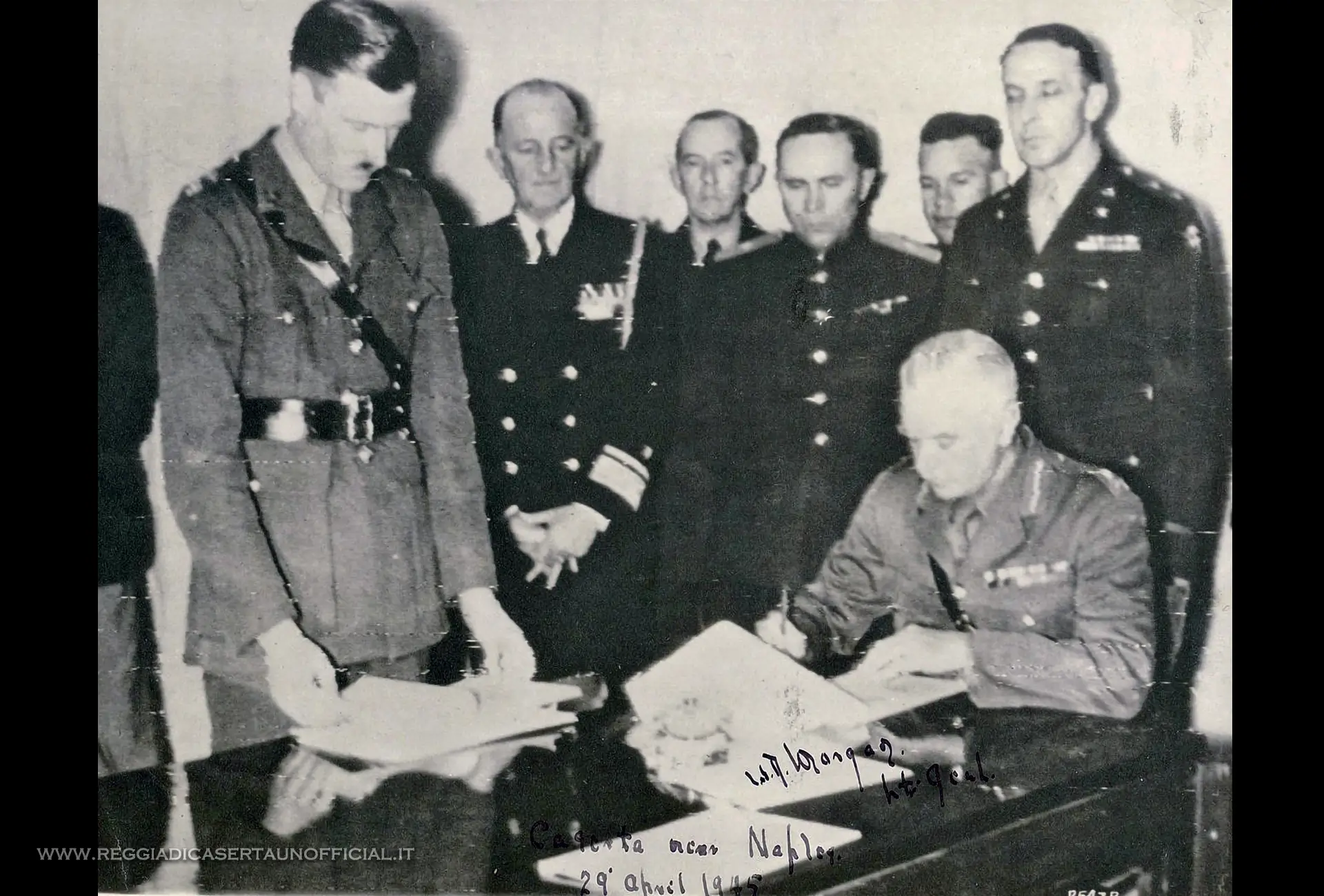
Video of the signing of the Caserta Surrender
Extended original footage (no audio)
Report by an NBC correspondent from the time (audio only)
This audio recording documents a report by a National Broadcasting Company (NBC) correspondent on the signing of the unconditional surrender of German forces in Italy—which took place in Caserta on April 29, 1945 (the first formal surrender since Allied troops entered Europe)—as well as the reading of a statement issued by President Harry Truman.
Official footage of Germany's surrender in Europe.
This silent newsreel from World War II, produced by Official Films for a domestic audience, documents the end of the conflict in Europe. Boisterous celebrations take place in New York City's Times Square on May 8, 1945 (30 seconds). At the one-minute mark, U.S. armed forces meet the Soviet army on the banks of the Elbe River. In the Caserta area, German troops surrender en masse, and Nazi regime delegates sign the terms of capitulation (1:30). In Nuremberg—the historic site of famous Nazi rallies—a symbolic swastika is covered by the U.S. flag (2:30) and subsequently demolished via controlled explosions (3:00). At 3:10, General Montgomery receives German officers, including General von Friedeburg; they present an armistice proposal, but Montgomery rejects it because it does not include surrender to the Soviets as well. The Germans later return to the negotiating table and, after 25 hours, sign the total capitulation (4:30). At 5:30, General Jodl is seen in Reims signing the capitulation documents again, officially formalizing the end of the war in Europe. At 7:40, General Eisenhower appears holding the pen used to sign the capitulation. At 7:55, the war-torn Germany is shown, with buildings reduced to ruins; Hamburg is completely devastated (8 minutes). On the banks of the Rhine, 50,000 German prisoners of war are seen in a holding area (8:30). At the 8:50 mark, Allied officers visit Berlin and the area adjacent to the Reichstag, the building where German resistance came to an end. At 9:20, footage shows the Chancellery complex, the Brandenburg Gate, and the Hotel Adlon. At 9:55, Marshal Zhukov arrives in Berlin alongside the leaders of the Allied powers to ratify the surrender with German Field Marshal Keitel; the signing at this stage constitutes the official ratification of the surrender agreements. At 11:56, Generals Omar Bradley, Courtney Hodges, Hood Simpson, Alexander Patch, and Dwight Eisenhower appear.
Difficulty until the end
However, the difficulties were not over, and the outcome of the operation remained uncertain until the very last moment. General Wolff—the key architect and negotiator of the surrender—was unable to convince Kesselring, the Supreme Commander of all German forces in Italy, and even risked execution for treason. Only the news that Hitler had taken his own life at dawn on April 30th in his bunker in besieged Berlin broke the deadlock and allowed the already-signed surrender to be implemented.
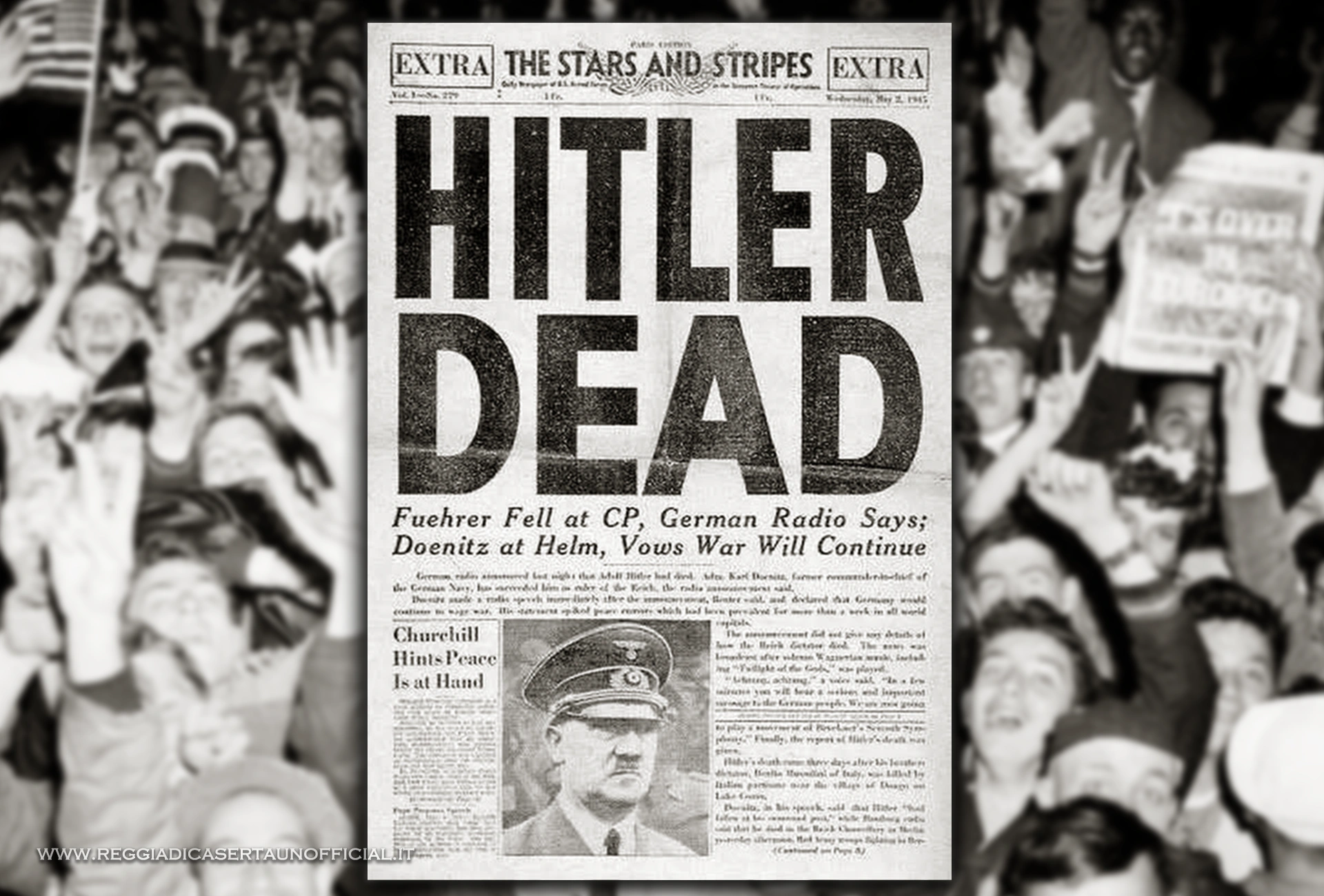
Hitler's death undoubtedly facilitated the Nazi-Fascist surrender.
Half of Italy was at risk of being destroyed by the Nazis.
Hitler ordered that central and northern Italy be blown up.
Added to this was the awareness that fierce German resistance would have meant the near-total destruction of Northern Italy’s industry—an immense economic and social blow, and one felt so keenly that, as early as 1944, the Vatican had sought a negotiated solution. Through Cardinal Schuster, it established contacts involving industrialists who had taken refuge in Switzerland and Italian nobles, acting as intermediaries between the Germans and the CLNAI (National Liberation Committee for Upper Italy); the latter, since February 1944, had not only been militarily coordinating the struggle of 60,000 partisans against Nazi-Fascism but had also increasingly assumed the role of a political interlocutor.
Much of the concern stemmed from the certainty that Hitler had ordered a retreat only after implementing a “scorched earth” policy across the entire country north of the Gothic Line. Factories, seaports, airports, art sites, bridges, and Alpine tunnels had already been mined; it would have taken only the signal to unleash hell. The Surrender of Caserta not only averted the destruction of the industrial North but also saved our cultural heritage—including museums (for instance, the Uffizi Gallery was handed over to the Allies intact) and historic art cities.
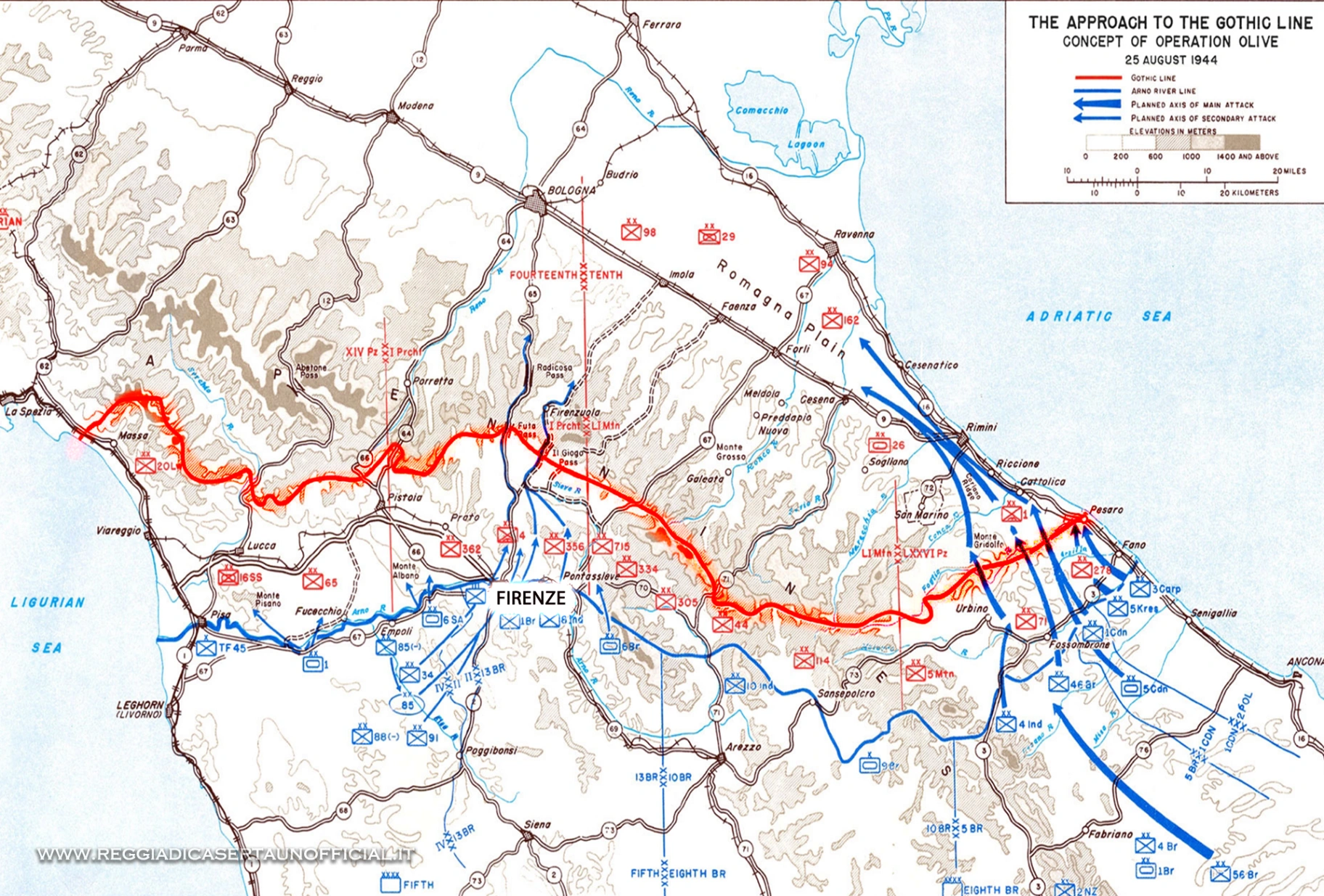
Hitler planned to blow up everything situated between the Gothic Line and the Alps. Had it not been for the Caserta Surrender agreement, Central and Northern Italy would have been devastated by Nazi bombs.
The Surrender of Caserta: the Basis for the total capitulation of Nazism
The Surrender of Reims, signed on May 7—just days after the one at Caserta—sealed the total defeat of the Third Reich; yet, while that surrender formally ratified the complete military collapse of Nazi Germany, the Caserta agreement marked the capitulation of an army—still largely intact and comprising 23 divisions—that had until then caused significant trouble for the Allied forces (the US Fifth Army and the British Eighth Army). Buoyed by their successes in Africa, the Allies had anticipated a rapid advance up the peninsula—aiming to reach Bologna in two days and Venice in four—but instead took a full 19 months to reach the Po River due to fierce German resistance in the Apennines. Consequently, without the Caserta surrender, they feared the unknown obstacles they might face at the fortified Alpine bastion—the dreaded *Alpine Redoubt*—which would have significantly delayed their advance into Germany, thereby playing into the hands of the Russians and potentially altering the postwar geopolitical landscape.
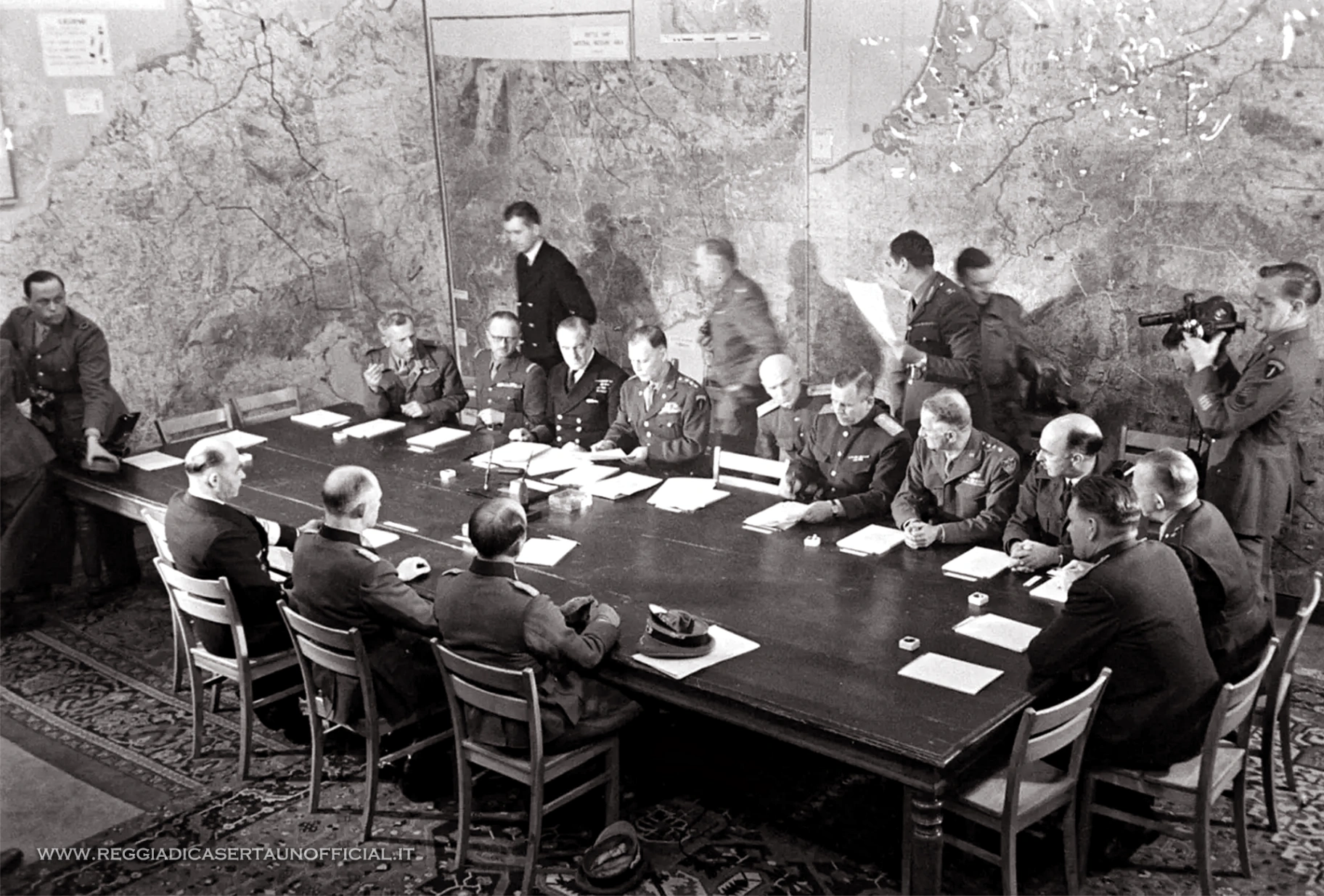
The Surrender of Reims, which marked the definitive defeat of Nazism, would have been impossible had the Surrender of Caserta not taken place first.
Did the true italian Liberation took place on April 25 or April 29?
Partisans had been active since late 1943, and while many more joined their ranks in 1945, this alone certainly does not suffice to explain such a rapid “liberation” in the face of a force comprising 61,000 Wehrmacht troops and 12,000 Italians from the RSI (Italian Social Republic)—equipped with 13,000 horse-drawn wagons and 7,100 motor vehicles. Nor can the sheer scale of the Allied war machine account for it, given that the Germans had received orders to resist to the bitter end. Perhaps the answer to this valid question should be sought primarily in Caserta—specifically at the Royal Palace, which housed the Allied Forces Headquarters under the command of General Harold Alexander.
Indeed, while acknowledging the high moral ideals that inspired much of the Resistance and the popular uprising of April 25th, one cannot overlook the fact that the “Liberation” was undoubtedly facilitated by the successful conclusion of the secret Operation “Sunrise,” which aimed to secure the separate surrender of German troops in Italy.
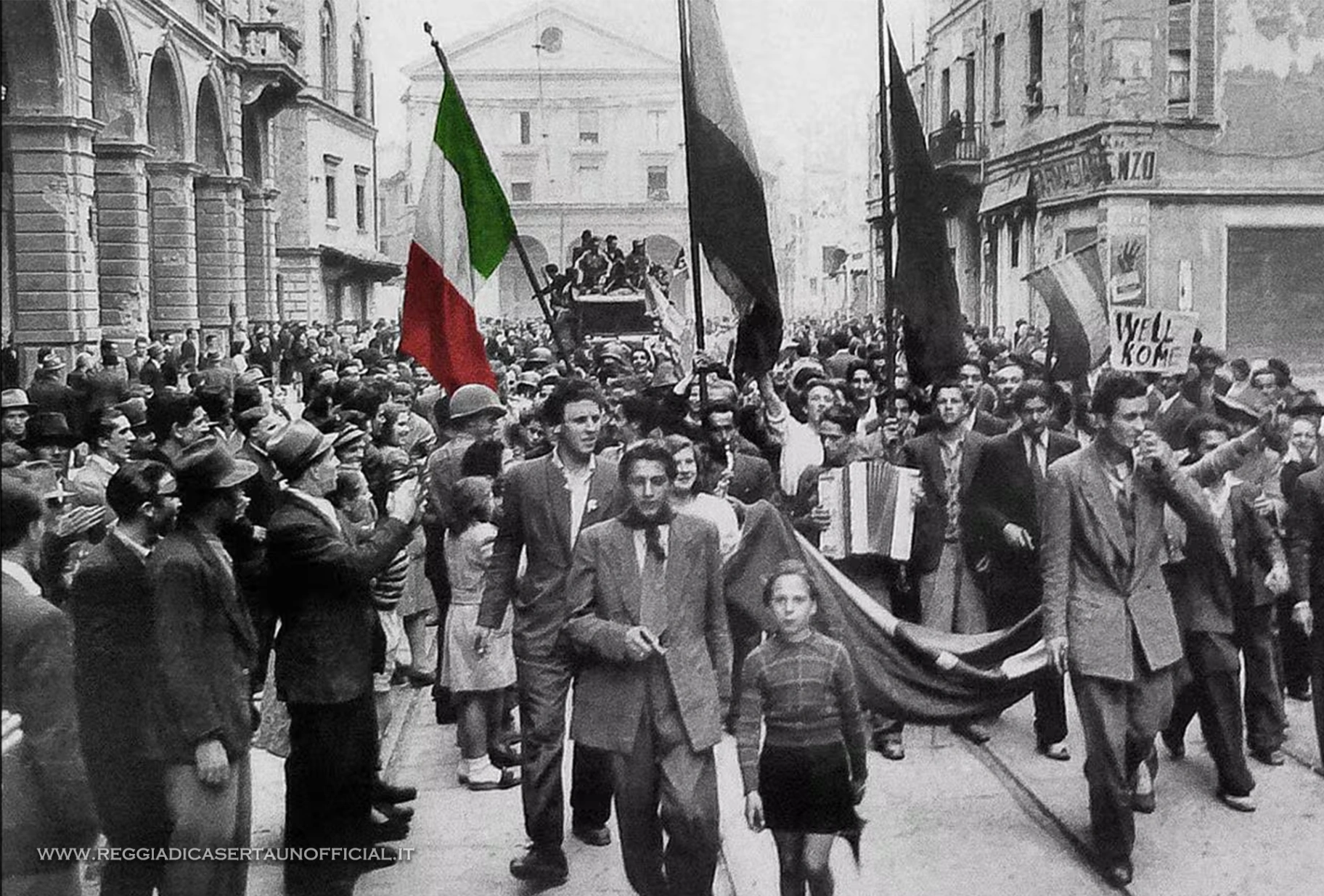
While the significance of the Resistance and the popular uprising of April 25th remains, it cannot be denied that the “Liberation” was certainly facilitated by agreements already reached with Germany—which were to be signed four days later in Caserta—and by the fact that the uprising encountered virtually no resistance from the German side.
The CLNAI already knew about the imminent signing of the surrender.
Naturally, the CLNAI (National Liberation Committee for Northern Italy) was kept constantly updated on the progress of Operation Sunrise; taking into account the state of the negotiations and the fact that Allied forces had crossed the Po River on April 24, the Committee proceeded to proclaim an armed uprising on the morning of April 25, when the famous call to arms was broadcast—delivered in the resounding voice of Sandro Pertini—with the rallying cry: “Present the Germans with the dilemma: surrender or perish.”
Sandro Pertini: "Surrender or perish!"
It was 8 a.m. on April 25, 1945, when a call to the Italian people rang out loudly over the radio. It was Sandro Pertini who, in a booming voice, read the communiqué from the CLNAI (National Liberation Committee for Northern Italy), urging the people in territories still occupied by Nazi-Fascist forces to join the partisans and rise up with the cry: “Surrender or die!”
“Citizens, workers! A general strike against the German occupation, against the Fascist war, for the salvation of our lands, our homes, and our factories. Just as in Genoa and Turin, confront the Germans with the dilemma: surrender or die!”
Town halls had to be seized before the arrival of Allied troops, who—since April 9—had been attacking the German front south of the Po River. Indeed, by May 1st, the whole of Northern Italy had already been liberated.
The Nazi retreat and the partisans
Why is April 25th celebrated, but not April 29th?
For all these reasons, the choice of April 25, 1945—the day Milan and Turin were liberated—as the date marking Italy’s “Liberation” from the horrors of dictatorship and war is more than understandable. Above all, it serves as a tribute to the restored pride of so many Italians—particularly the young—who were willing to risk their lives, and in many cases die, for the ideal of Liberty. Thus, April 25 is a date that should exalt and celebrate enduring, essential human values, rather than simply evoke the events of war.
The Surrender of Caserta: A Pivotal, Little-Known Event
Despite this, the Surrender of Caserta has consistently been overlooked and denied its proper historical significance in Italy—even now that the relevant documentation has been declassified. Proof of this lies in the fact that when it was finally mentioned on a commemorative plaque marking the fiftieth anniversary of the Resistance, the term “unconditional surrender” was actually altered to “armistice.”
Therefore, while the Liberation Day of April 25th stands as a symbol of the Italian people’s moral, political, and military redemption—a process that began on September 8, 1943—and holds immense historical value deserving of due remembrance and respect, the same should apply to the Surrender of Caserta. After all, that event made the proclamation of the insurrection possible and prevented further casualties—including among civilians—as well as additional destruction, particularly of vital industrial facilities. Acknowledging the Surrender of Caserta during the April 25th celebrations would demonstrate great historical, civic, and political maturity.
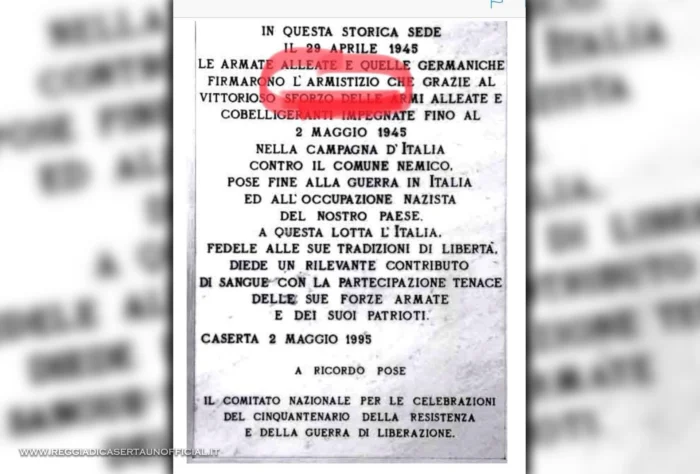
This plaque was placed in the Royal Palace of Caserta (and later removed) to mark the fiftieth anniversary of the Surrender of Caserta. The glaring error was writing "armistice" instead of "unconditional surrender." On that day, Italy surrendered unconditionally; it did not sign an armistice!
Operation Sunrise: The Secret Documents
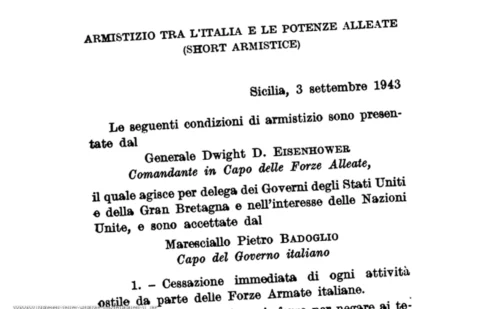
The Armistice Treaty of Cassibile of 1943
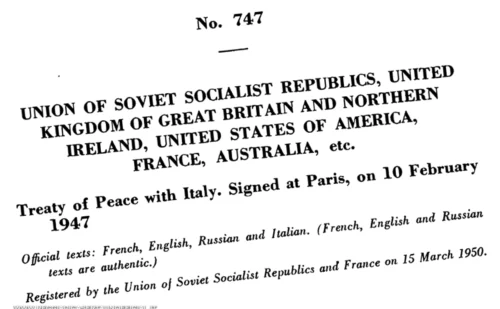
The 1947 Treaty of Peace with Italy
The Treaty of Peace with Italy, signed on February 10, 1947, between Italy and the Allied and Associated Powers victorious in World War II, established the terms of peace following Italy’s defeat. The document mandated significant territorial concessions—including the cession of Istria and other territories—imposed military limitations, and stipulated economic obligations and war reparations. Furthermore, the treaty addressed matters concerning Italian colonies and relations with other states. Entering into force on September 15, 1947, it marked a turning point in Italy’s international relations and the definition of post-war borders.