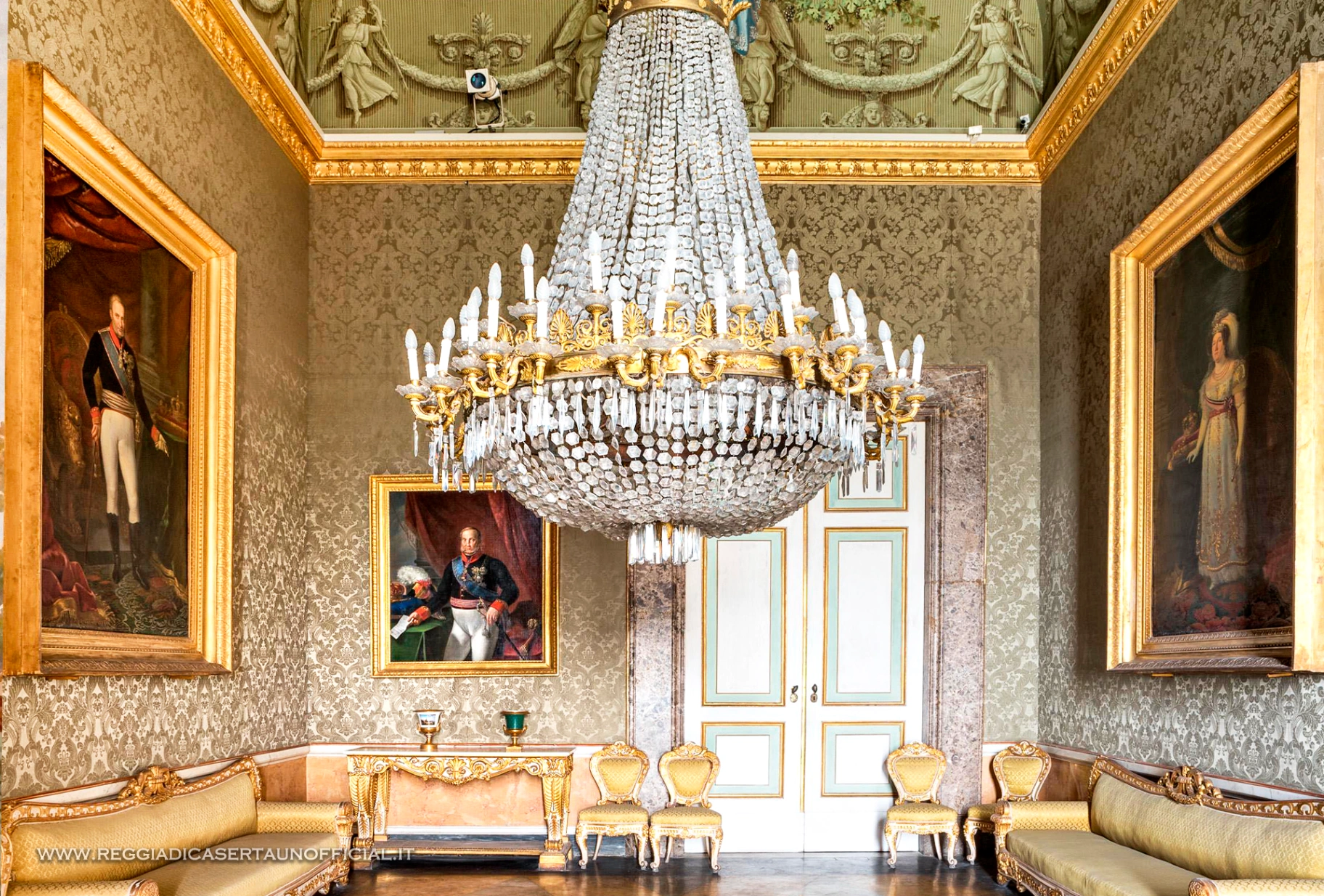
The Antechamber of King Francis II of Bourbon in the Royal Palace of Caserta
The Antechamber of King Francis II of Bourbon served as a place for visitors to wait to be received by the King.
Description
The Antechamber of King Francis II of Bourbon is part of the royal suite reserved for the King; according to Vanvitelli’s project, it was intended to serve as the King’s private chapel.
The antechamber served as a waiting room for court ceremonies, where guests, nobles, and diplomats would wait—according to their rank—before being received by the sovereign. This arrangement reflected court protocol and fostered an atmosphere of anticipation and respect for the monarch. Furthermore, the antechamber was a space for social interaction, where nobles exchanged views and discussed political matters, always with due regard for established hierarchies.
Decorations and furnishings of King Francis II's Antechamber
The fresco
The ceiling of the hall is painted with a *trompe-l’œil* depicting a Bacchanal by the painter Franz Hill.
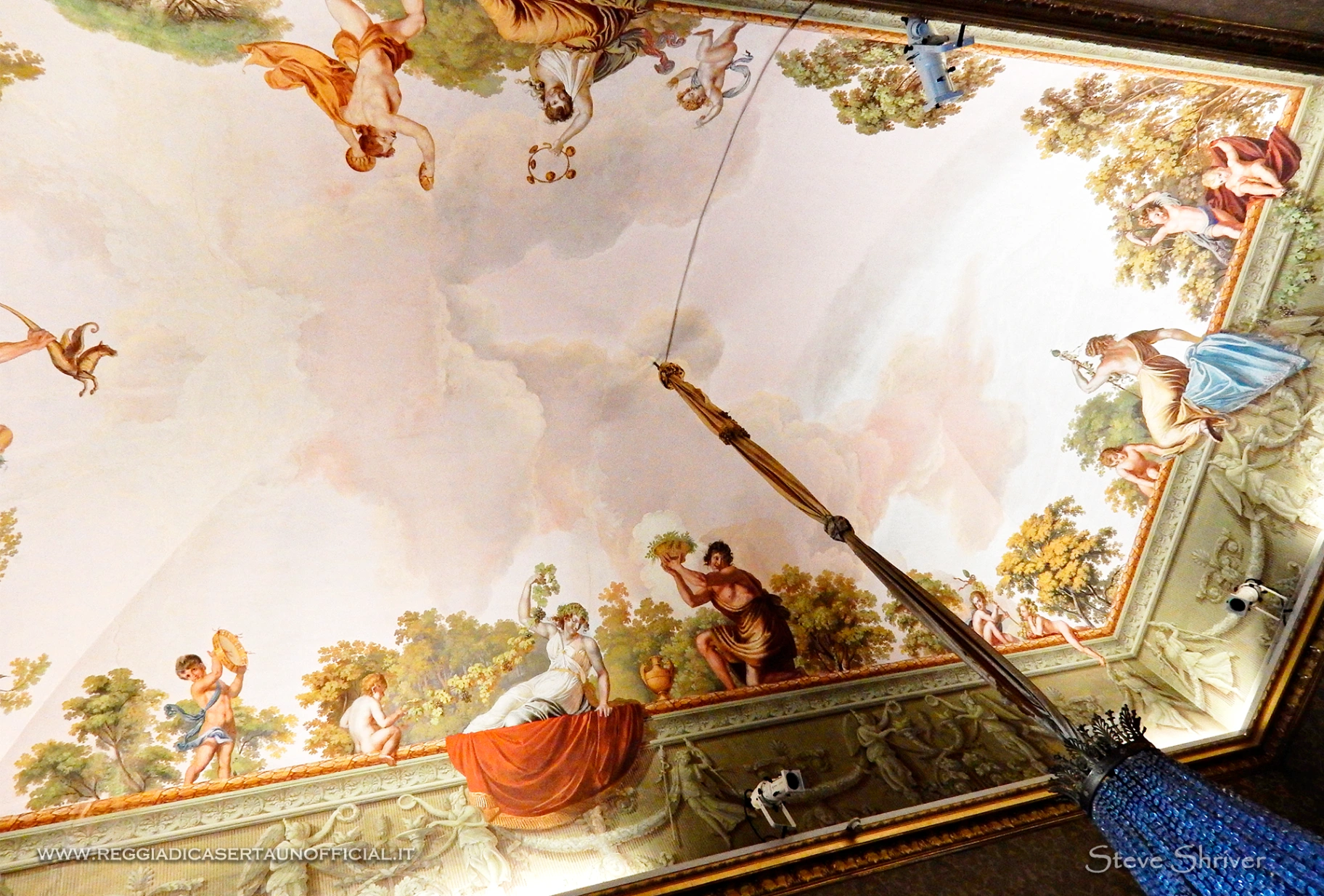
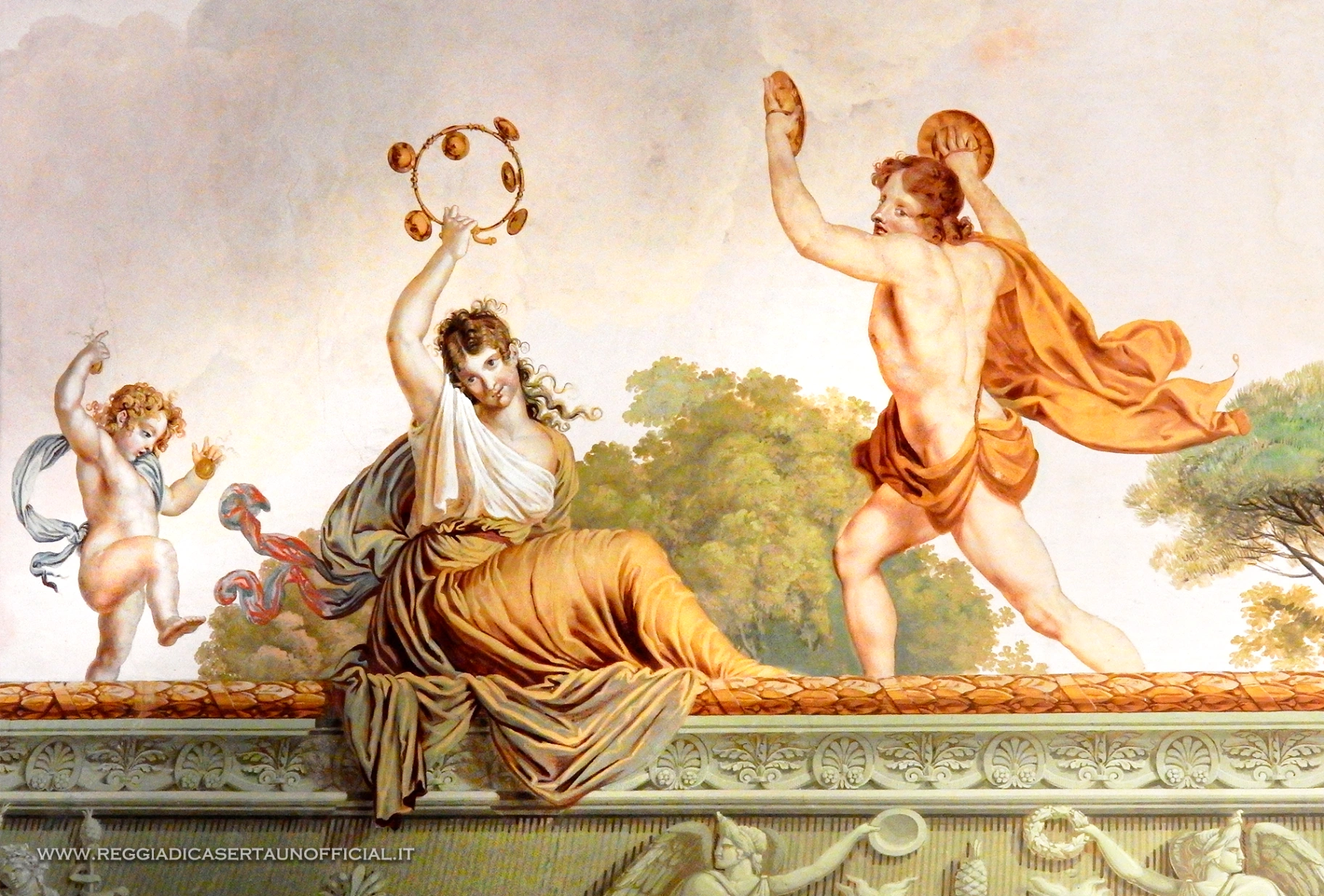
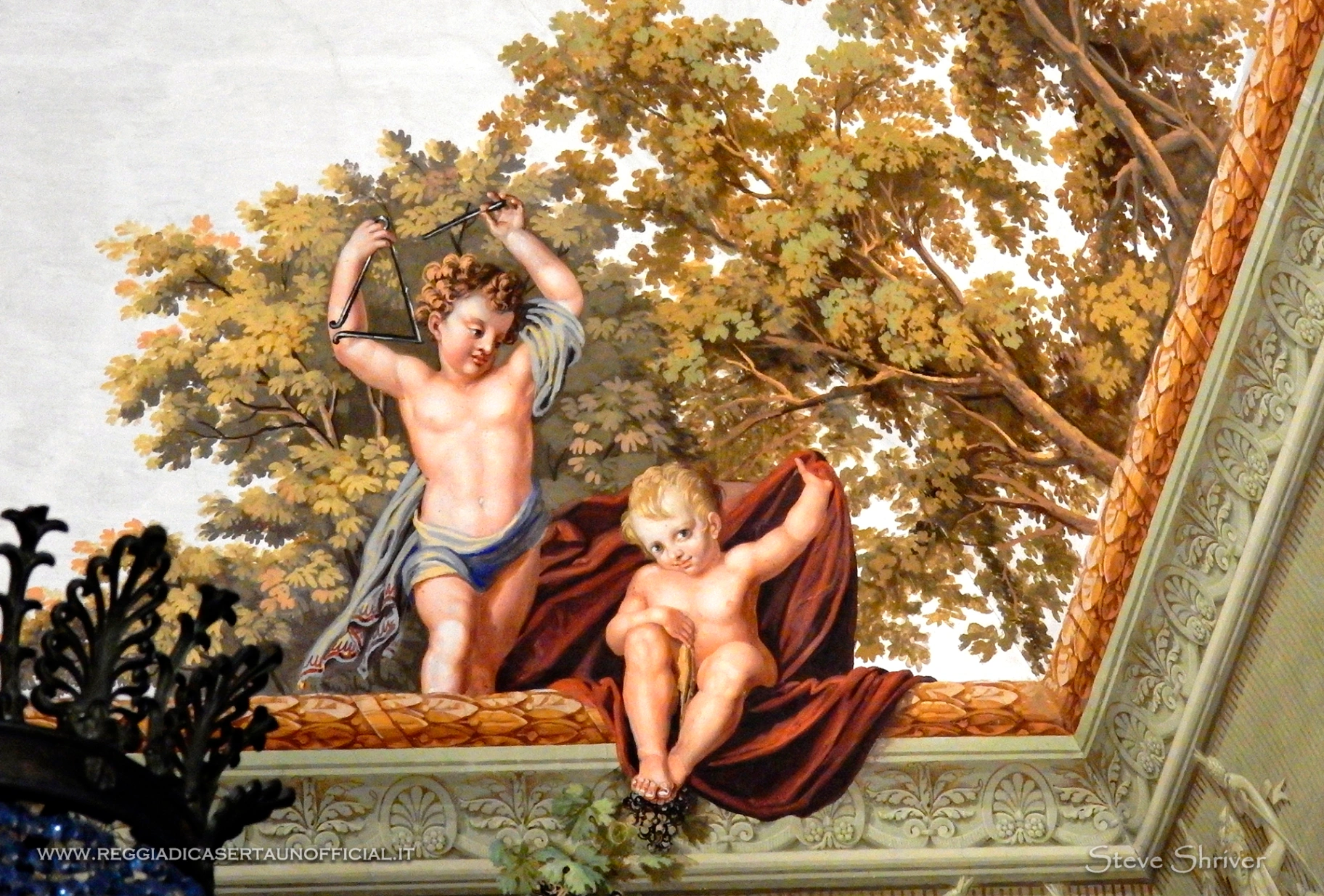
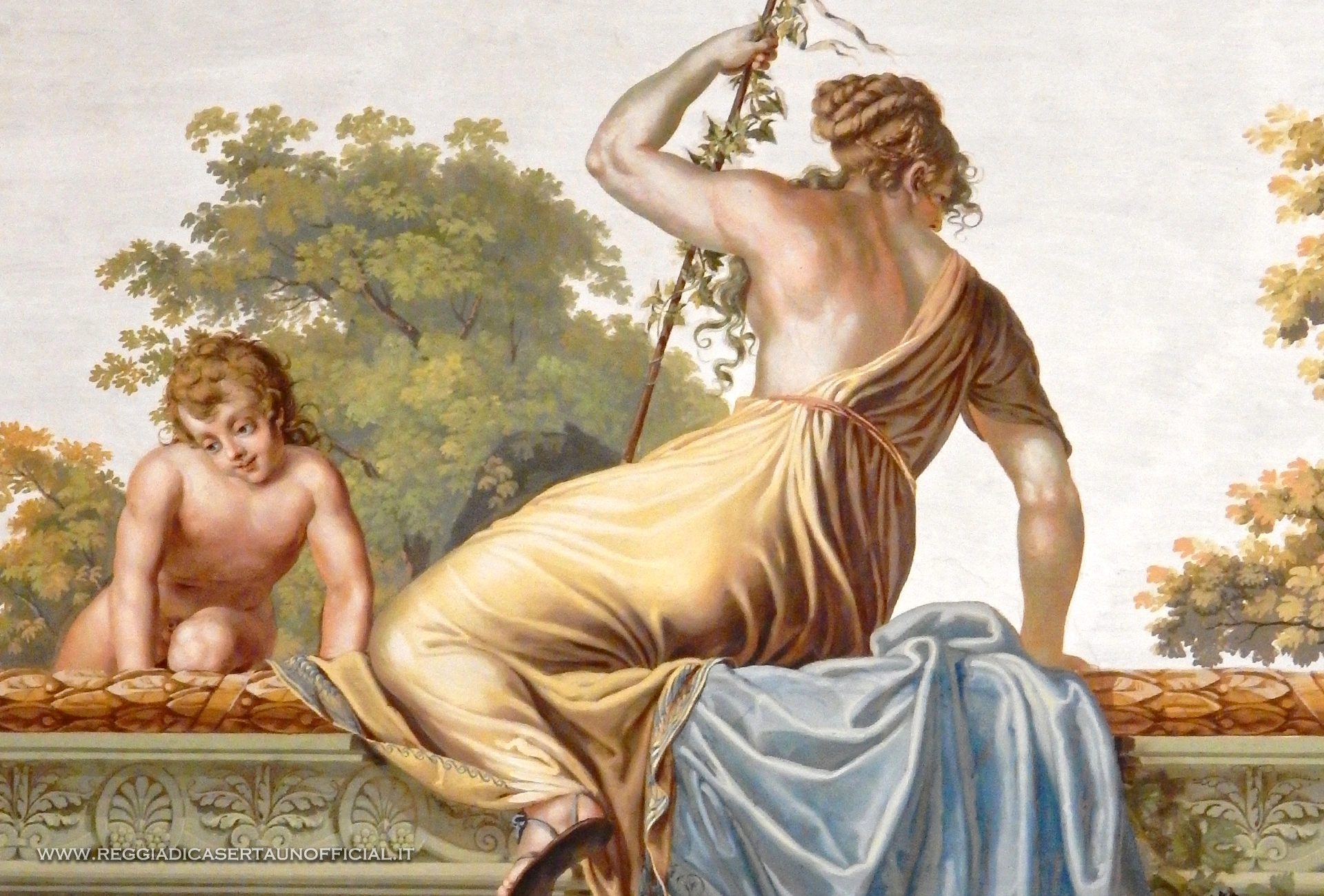
The fresco: general view and details
Paintings
Portraits of Francis I and Ferdinand II of Bourbon are displayed on the walls, along with two canvases by the painter Carlo De Falco depicting Francis I of Bourbon and his wife, Queen Maria Isabella, Infanta of Spain.
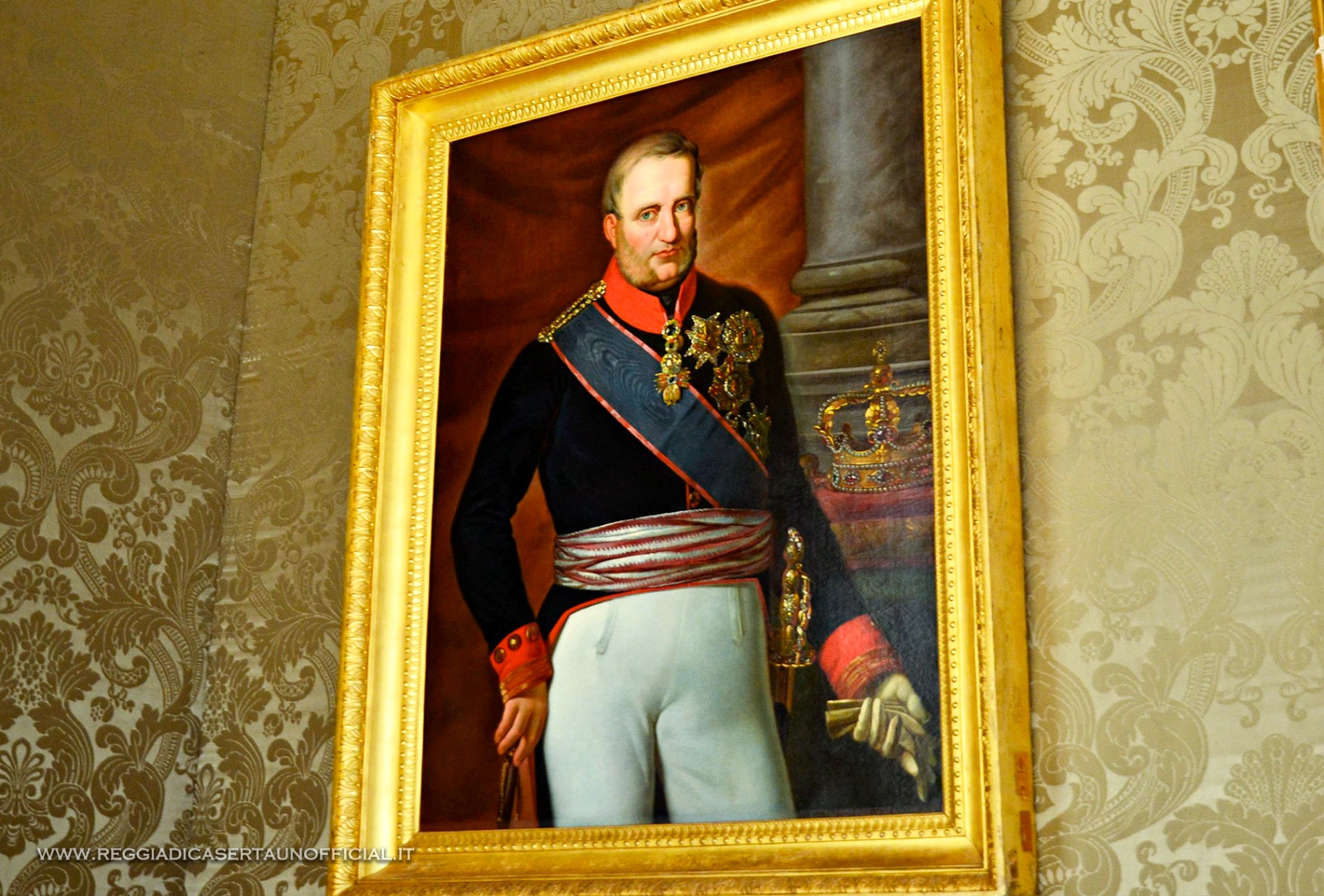
Furnishings
The furnishings in this room include pieces in the Neo-Baroque style, while others retain a Late Empire influence. Of particular note is a console table—crafted by the Royal Hardstone Workshop (*Reale Laboratorio delle Pietre Dure*), established in Naples in the 18th century by Charles of Bourbon—featuring floral elements and a string of pearls set against a *pietra paragone* (black touchstone) background; the preparatory drawing for this piece, by Gennaro Cappella, is held in the Royal Collections.
The room’s furnishings are completed by two Meissen porcelain vases: one features medallions depicting a city view and a female portrait, while the other is decorated with a pattern of small gold stars on a green background.
A Neoclassical clock sits on the console table to the right.
- Console table with a hardstone inlay (*pietre dure*) top. The top dates to the 18th century and was created in Naples at the Royal Hardstone Workshop based on a design by Gennaro Cappella, whereas the wooden base dates to the mid-19th century.
- Neoclassical clock
- Pair of Empire-style vases
- Pair of console tables
- Chairs and sofas dating from 1830–1840
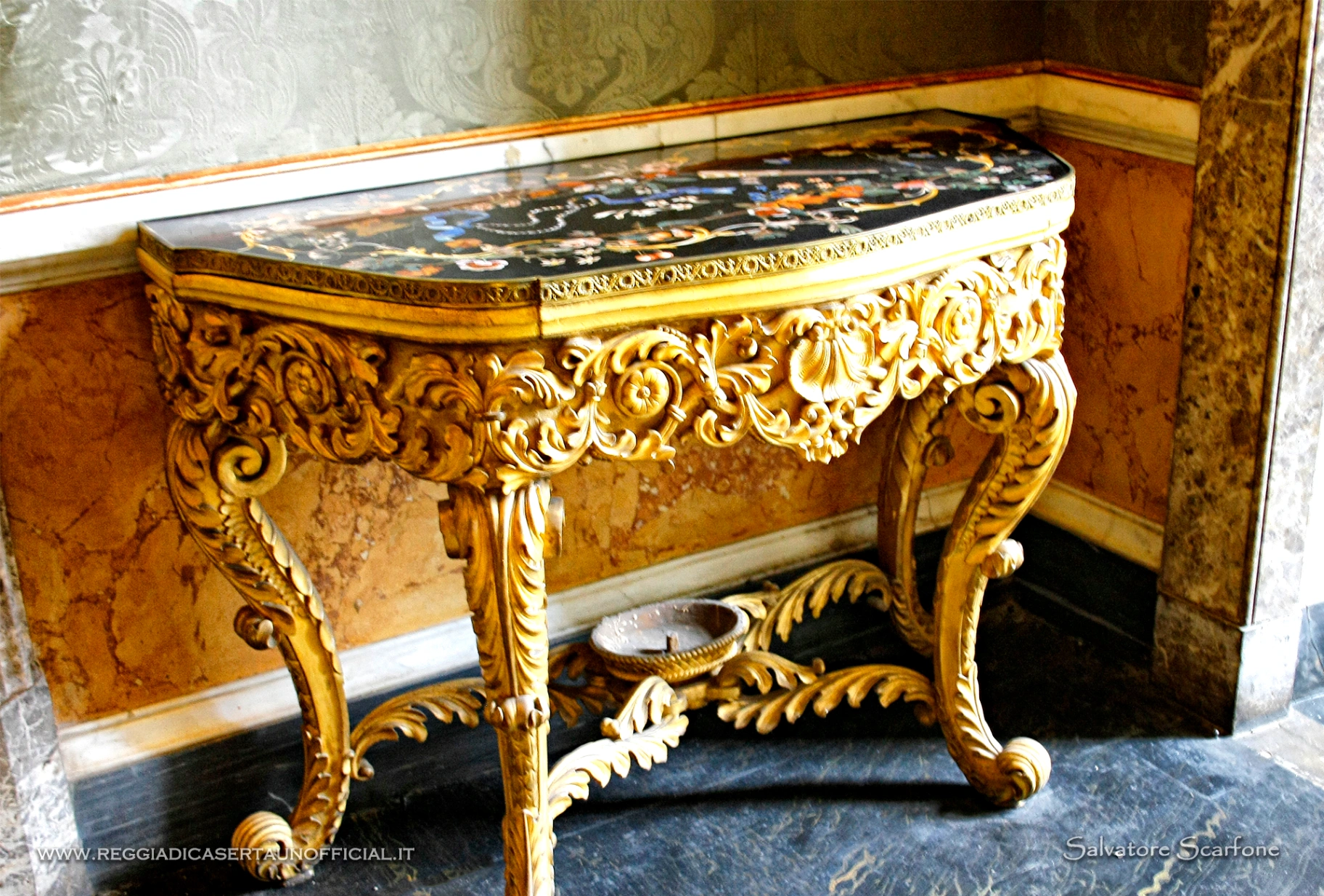
Neo-Baroque console table with a hardstone inlay top
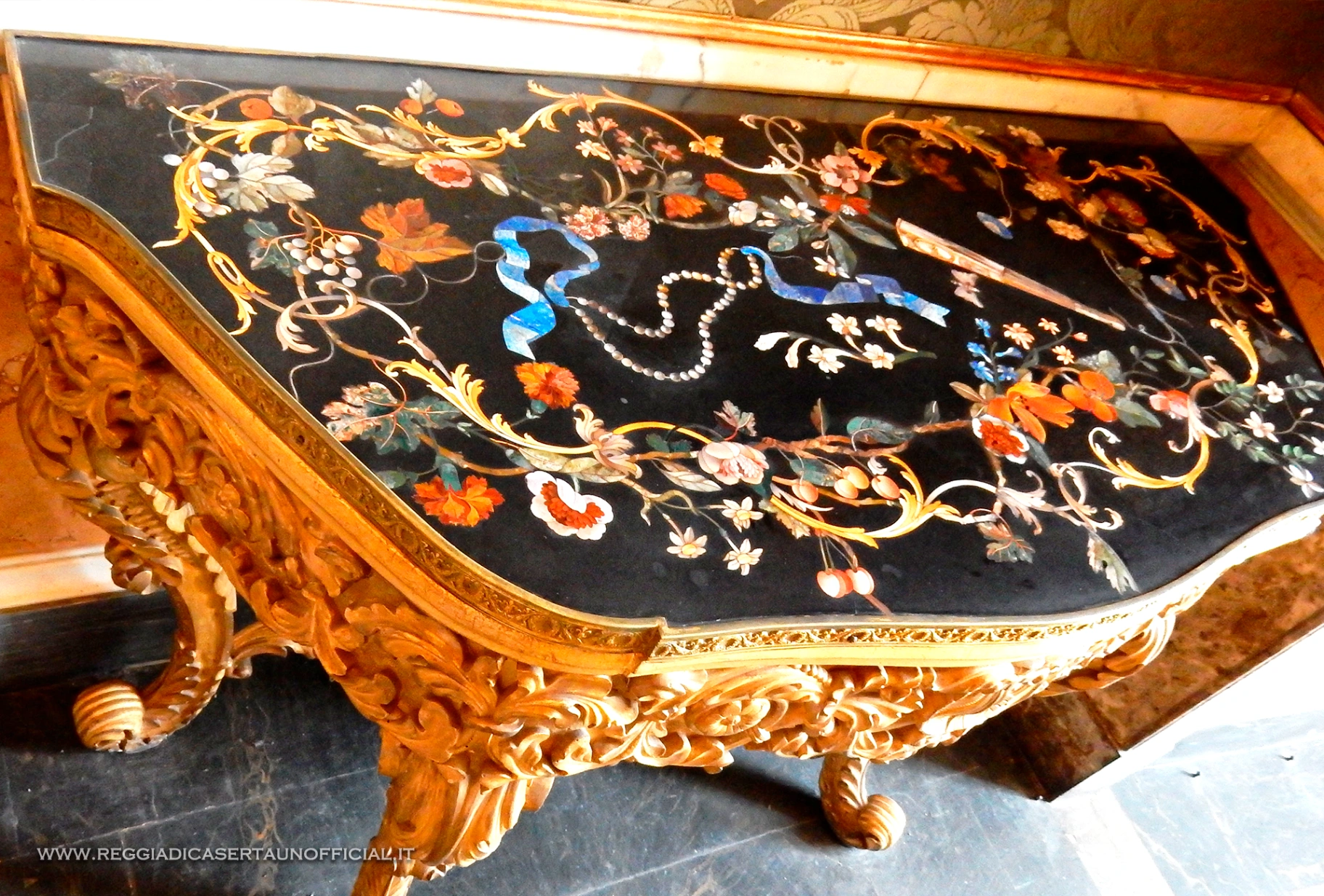
The console’s exquisite hardstone top (marbles and semi-precious stones).
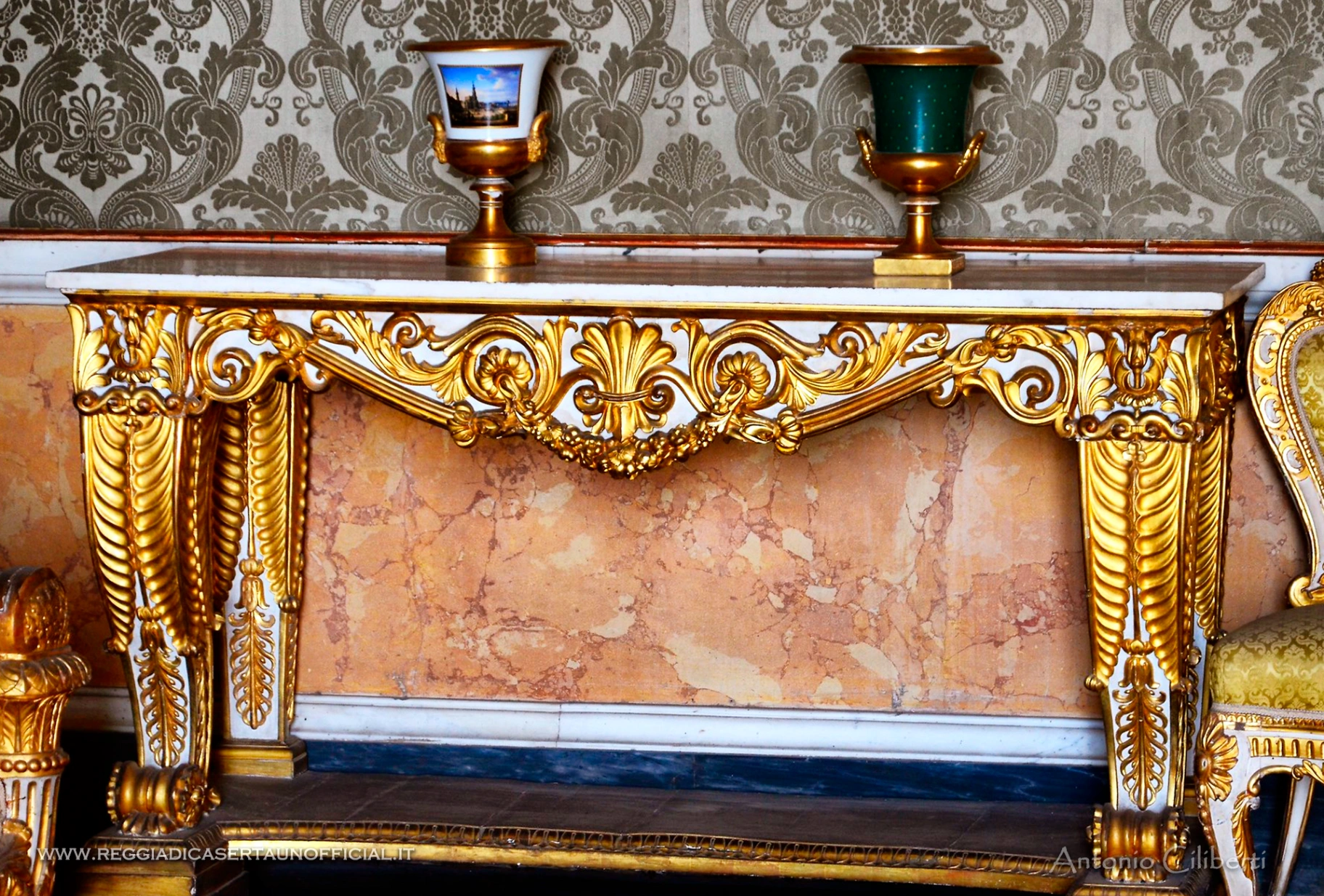
Late Empire style console table with Neo-Baroque influences. 1830–1840
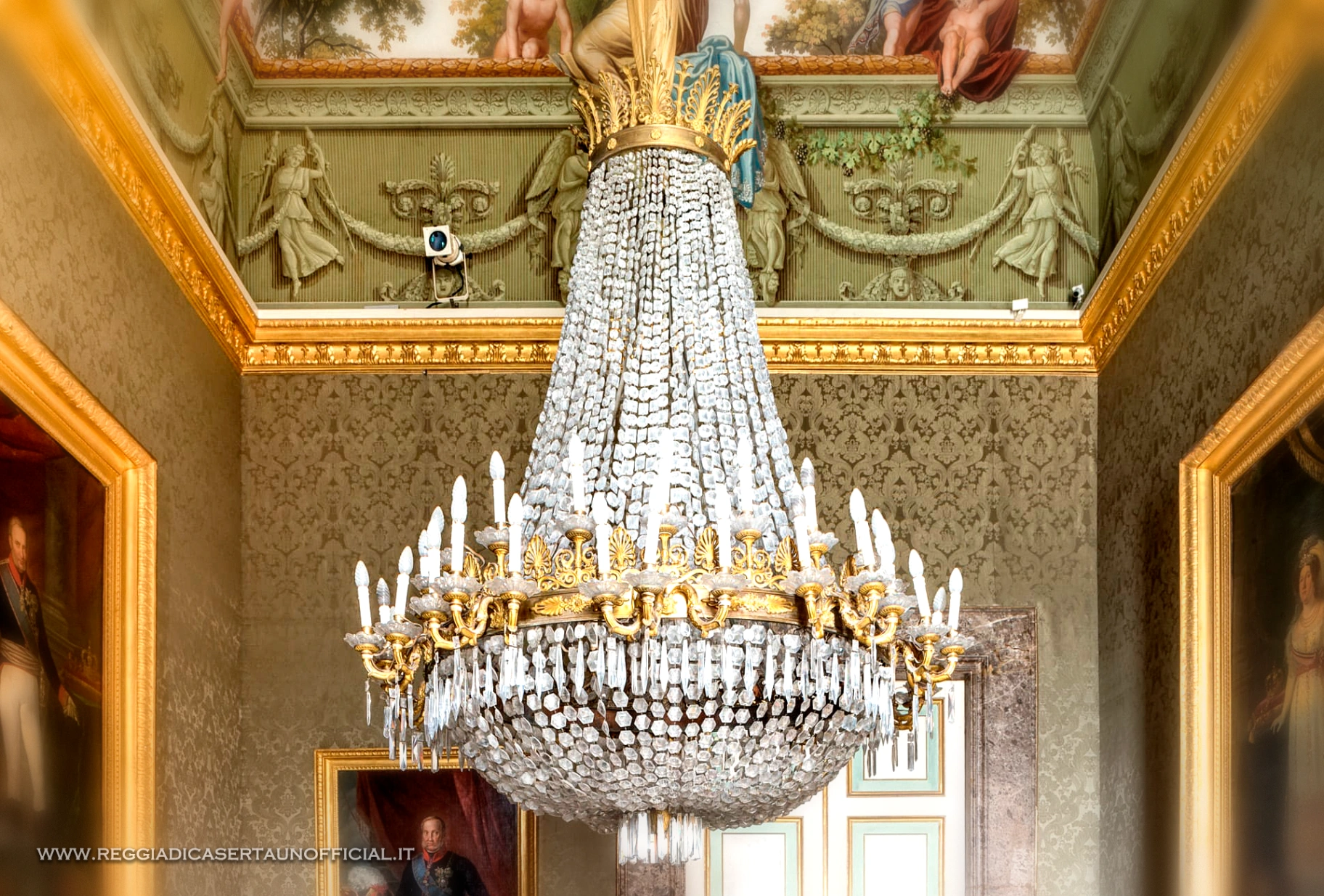
Empire-style crystal and gilt-bronze chandelier.
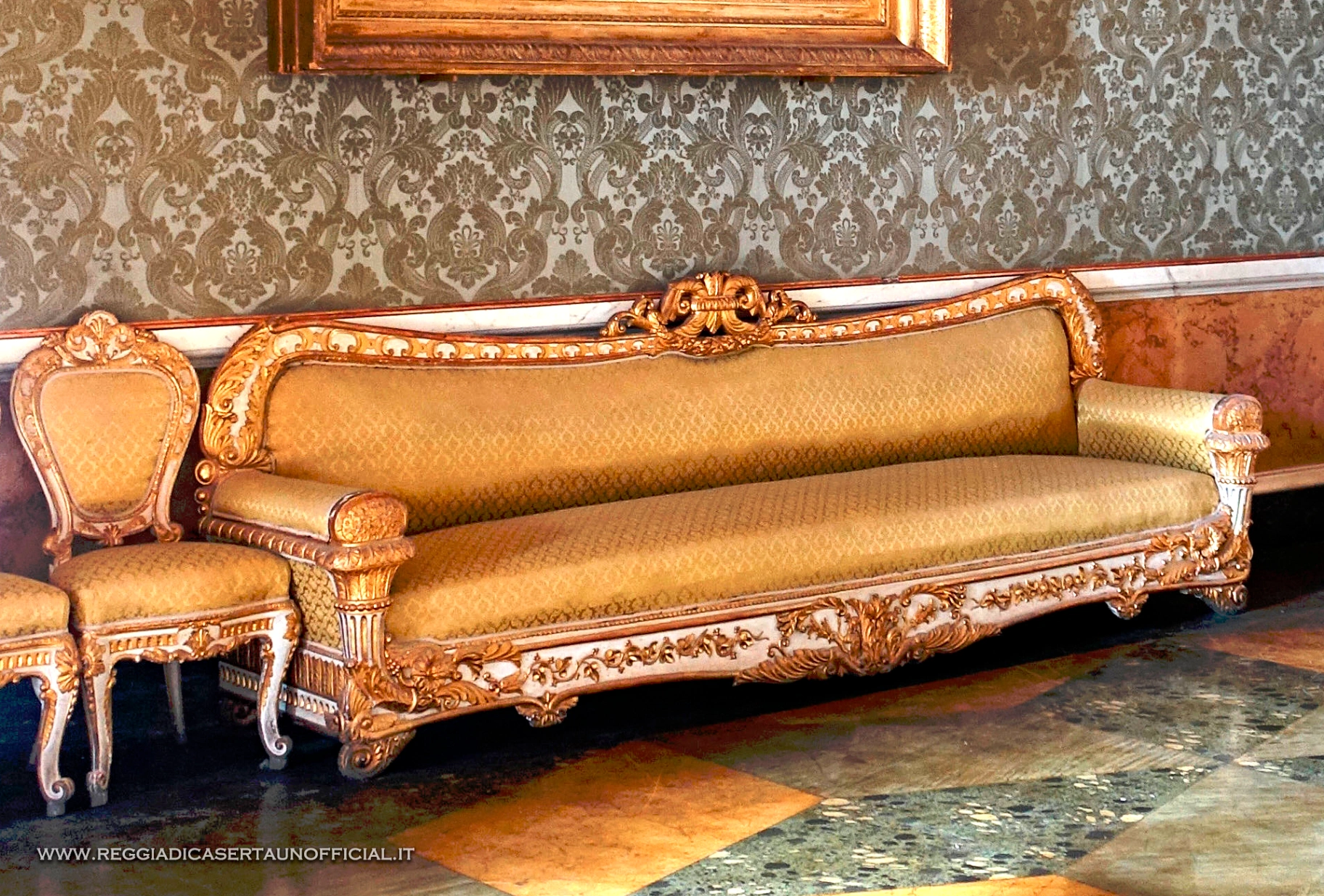
Sofa and chairs in a transitional style blending Late Empire and Neo-Baroque elements.
The sofa features a double scroll joined by a stylized fleur-de-lis. The backrest and seat are upholstered in amber-colored silk. The underlying structure is white, embellished with gilded phytomorphic motifs.
External link