Discover buildings that reflect architectural influences and echoes of the Royal Palace of Caserta and the spread of Luigi Vanvitelli’s ideas. From European royal palaces to public buildings, explore a journey through similarities, architectural models, and the potential influence of this magnificent Bourbon masterpiece.
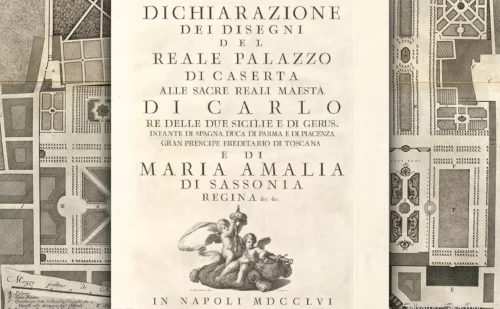
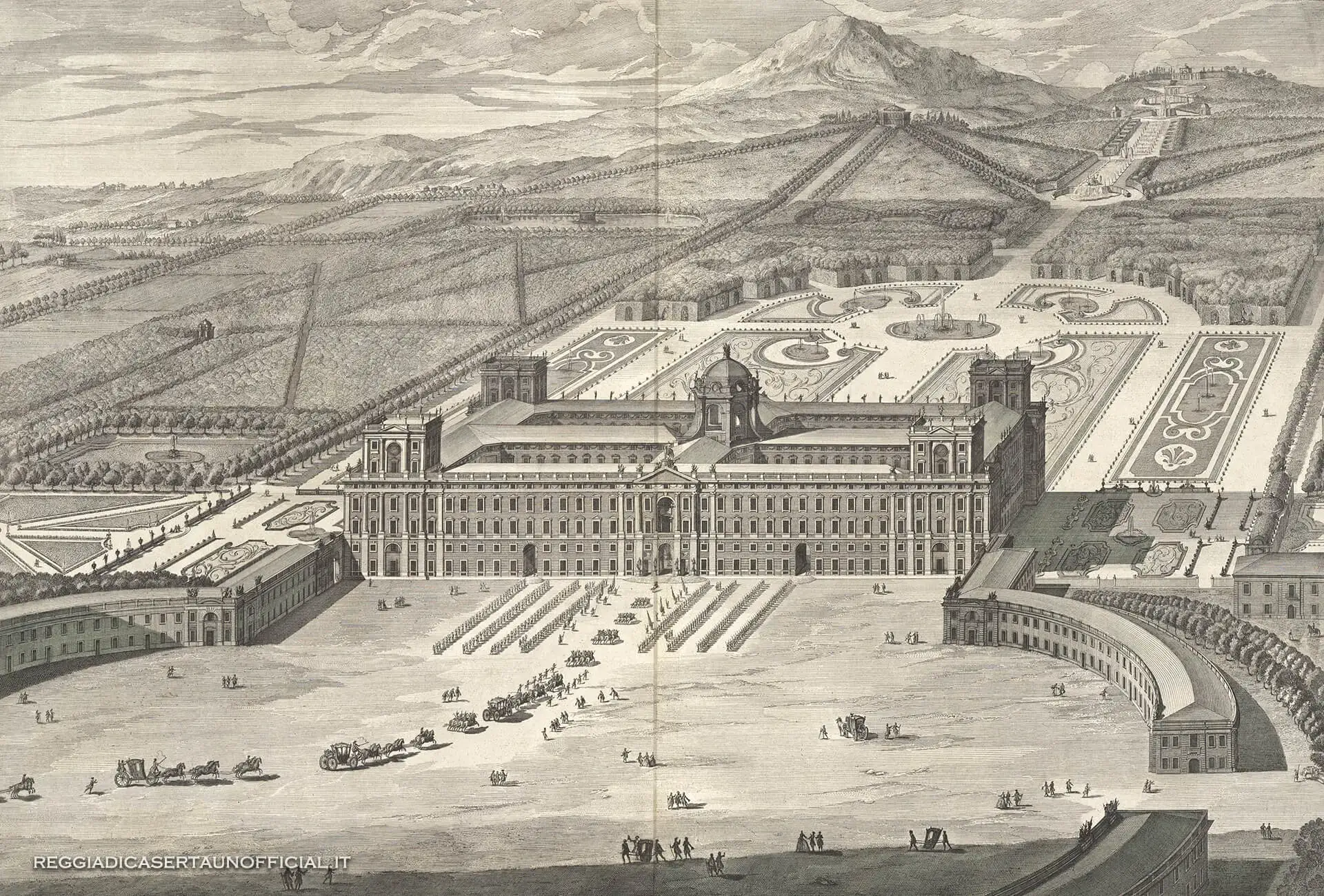
Many buildings were inspired by the projects of the Royal Palace of Caserta which, by the will of King Charles of Bourbon, were printed and disseminated throughout Europe in 1756.
The inspiration was often taken from the initial project which was then modified during construction, therefore we find buildings with decorative elements such as the large central dome not currently present in the Royal Palace of Caserta, but foreseen in the project.
Furthermore, the pupils of Luigi Vanvitelli, the architect, worked throughout Europe and in Russia, spreading the teachings of their Master.
The influence of the design did not always result in a faithful copy of the actual building. Some architects drew inspiration from the original design drawings—which included elements that were subsequently modified or never built—while others developed similar solutions, in turn inspiring other architects.
Thus, the designs for the Royal Palace of Caserta and the works they inspired were—over time, and partly due to the spreading taste for the Classical era—increasingly taken to extremes, eventually giving rise to a new style that came to be known as Neoclassical.
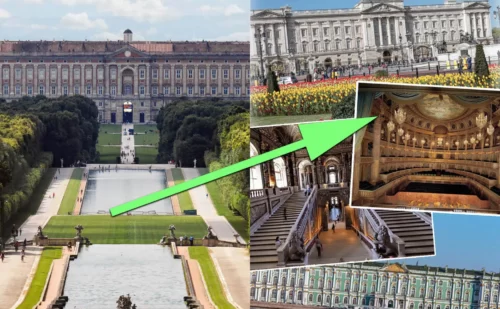
The Royal Palace of Caserta not only inspired the external facades of many subsequent buildings, but also the interiors. A brilliant feature of Luigi Vanvitelli‘s project was to create a single building but which has detached sections inside. The Reggia not only has inside buildings completely detached from the rest (the Court Theater) it was born to be both a royal palace and seat of offices of the Kingdom, therefore each section is detached from the others and equipped with separate entrances and unconnected floors between them. Over time, this way of designing gave rise, for example, to the current university hospitals, or large multifunctional buildings.
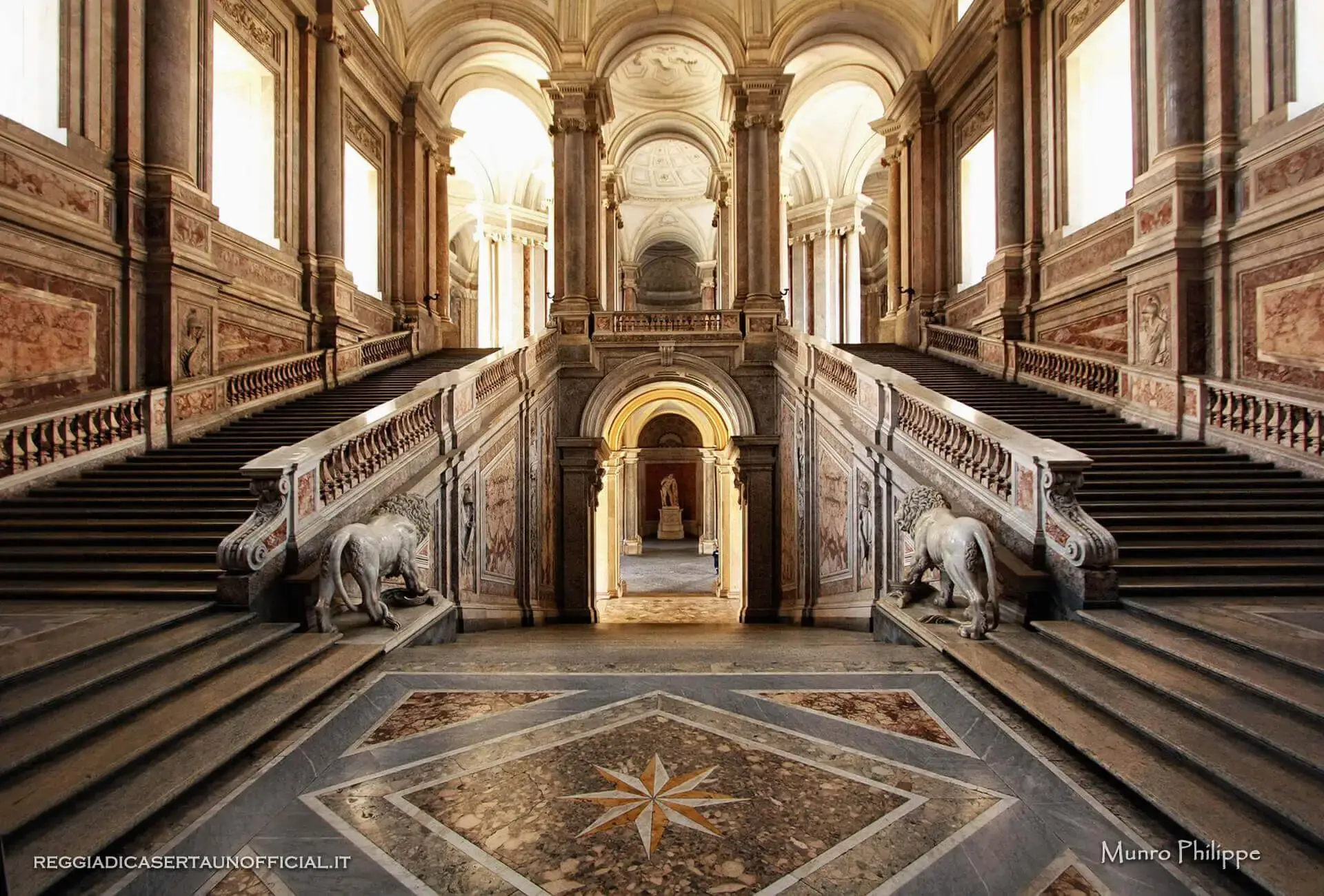
Observing all the architectures built or modified after the publication of the Declaration of Drawings Royal Palace of Caserta IN THE 1756, it is often possible to recognize their influence. For example, the Grand Staircase of the Royal Palace of Caserta was used as a model for the construction of the most beautiful staircases in the world. In fact, it is easy to find its style (central staircase from which two lateral staircases branch off and end in a large tripartite wall) even through a simple web image search.
Have you found a palace or building that you think was inspired by the Royal Palace of Caserta? Report it!