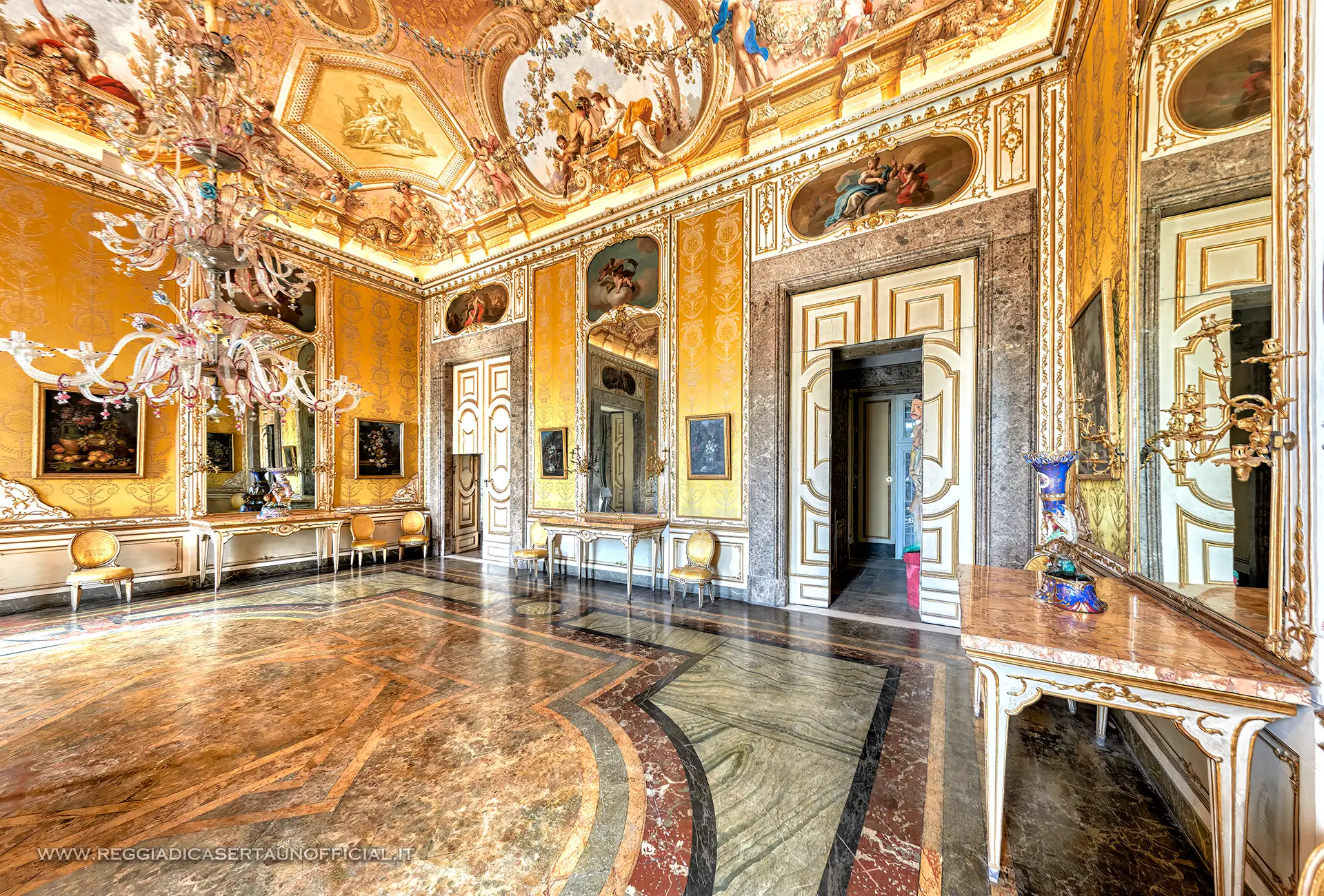
The Autumn Hall, the former Royal Dining Room
The so-called Autumn Room of the Royal Palace of Caserta was the room where the Royal Family dined
Description
The Autumn Room, formerly known as the “Room next to the Audience Room” and currently called the Autumn Room due to the central fresco on the vault, was most likely used during the Bourbon era for royal dinners. This room, like many others, was designed by Carlo Vanvitelli, who inherited the construction site of the Palace from his father Luigi Vanvitelli.
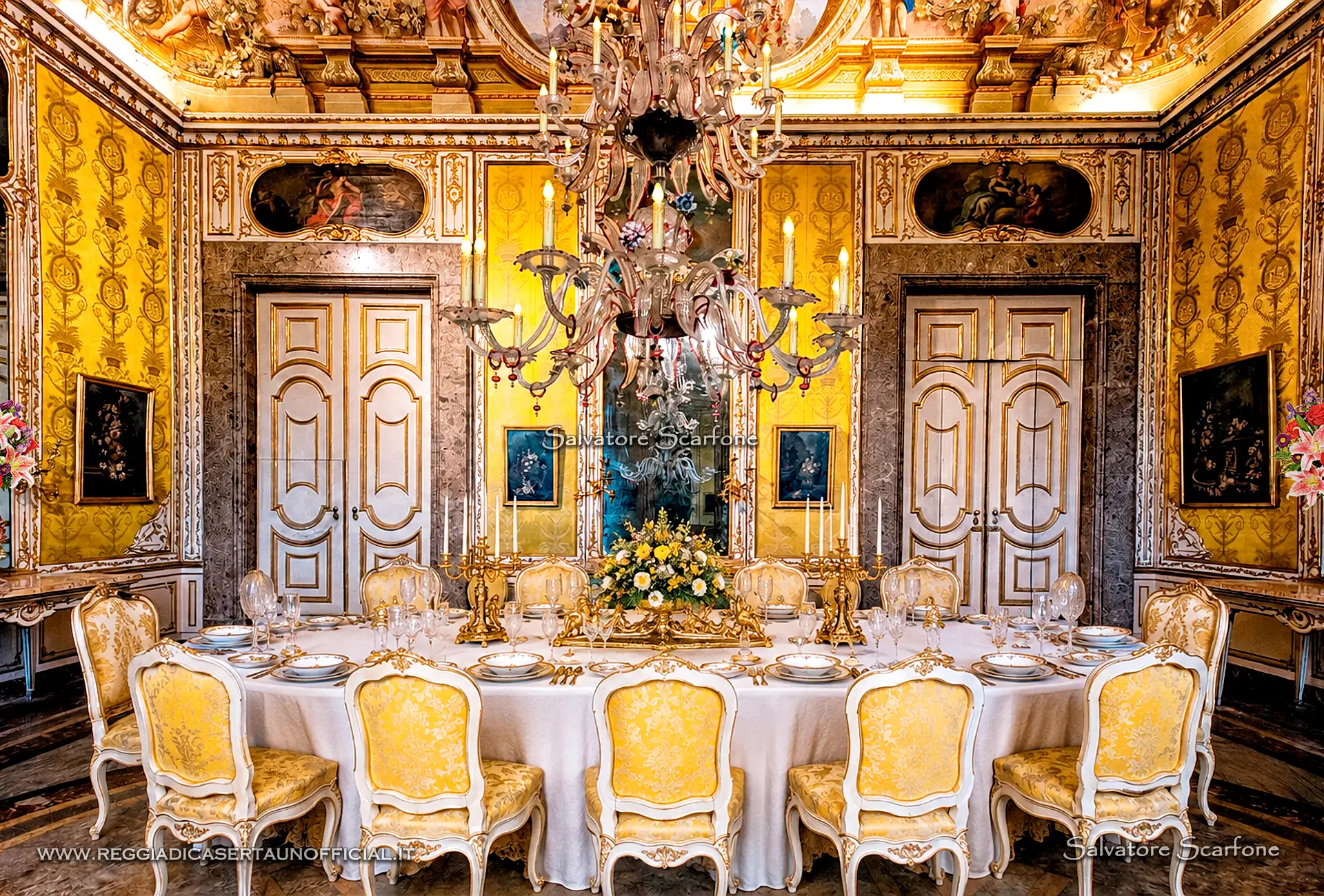
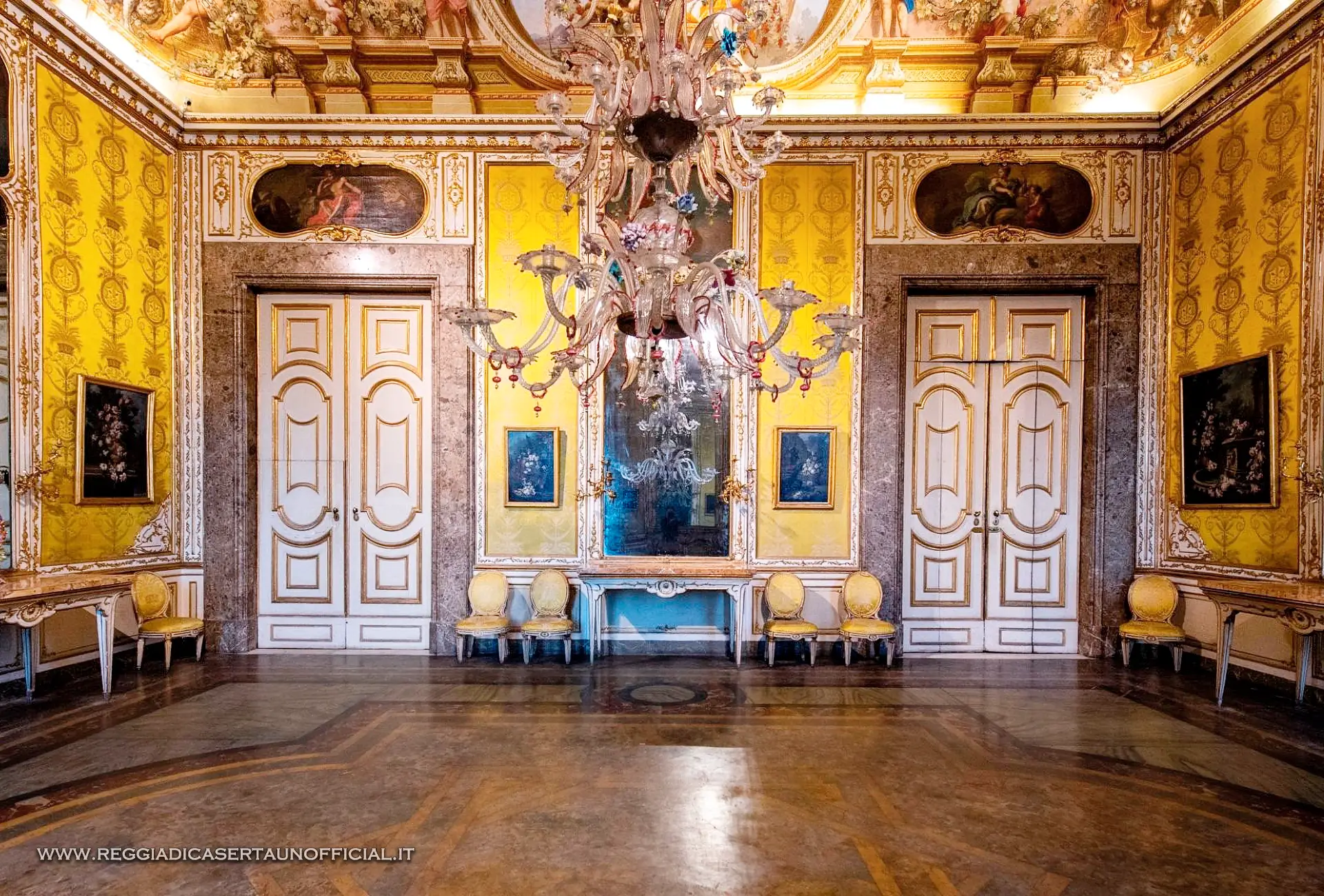
Imaginary reconstruction of the Royal Dining Room
Decorations and furnishings of the Autumn Room
The fresco
The fresco in the so-called Winter Room, formerly the Dining Room, is by Antonio De Dominici and depicts “The Marriage of Bacchus and Ariadne” (1799). The fresco decorations, featuring festoons and tendrils, are by Giacomo Funari.
In “The Marriage of Bacchus and Ariadne,” the narrative focuses on Ariadne, daughter of King Minos of Crete, who assisted Theseus in killing the Minotaur, the terrible Cretan monster that fed on human flesh. After this feat, she fled the island with Theseus, who, without remorse, left her on the island of Naxos. The young woman was saved by Bacchus, who took her as his wife. In Dominici’s fresco, the artist adopts an idyllic tone: there are no orgiastic scenes of satyrs and bacchantes, nor of nymphs and sileni, but rather pairs of grape harvesters singing joyful songs while cupids scatter vines around them. At the center of the vault are Bacchus and Ariadne. All this profoundly reflects the Neapolitan soul, not so much in the characters and behavior of the figures, but in the interpretation of the nature of this people, sober and sentimental, always ready to be moved and exalted, who get drunk not on wine, but on sun, perfumes, and song.
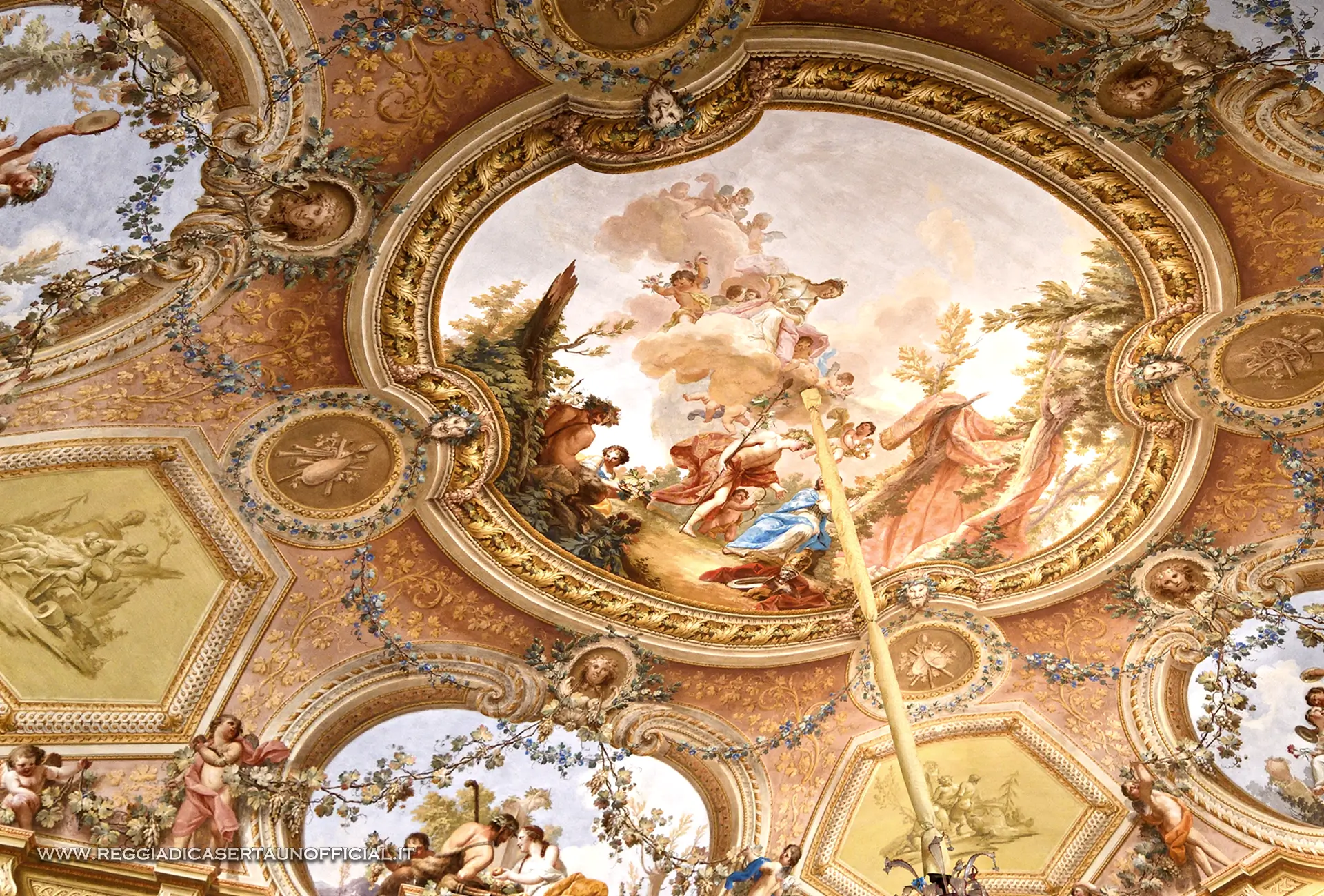
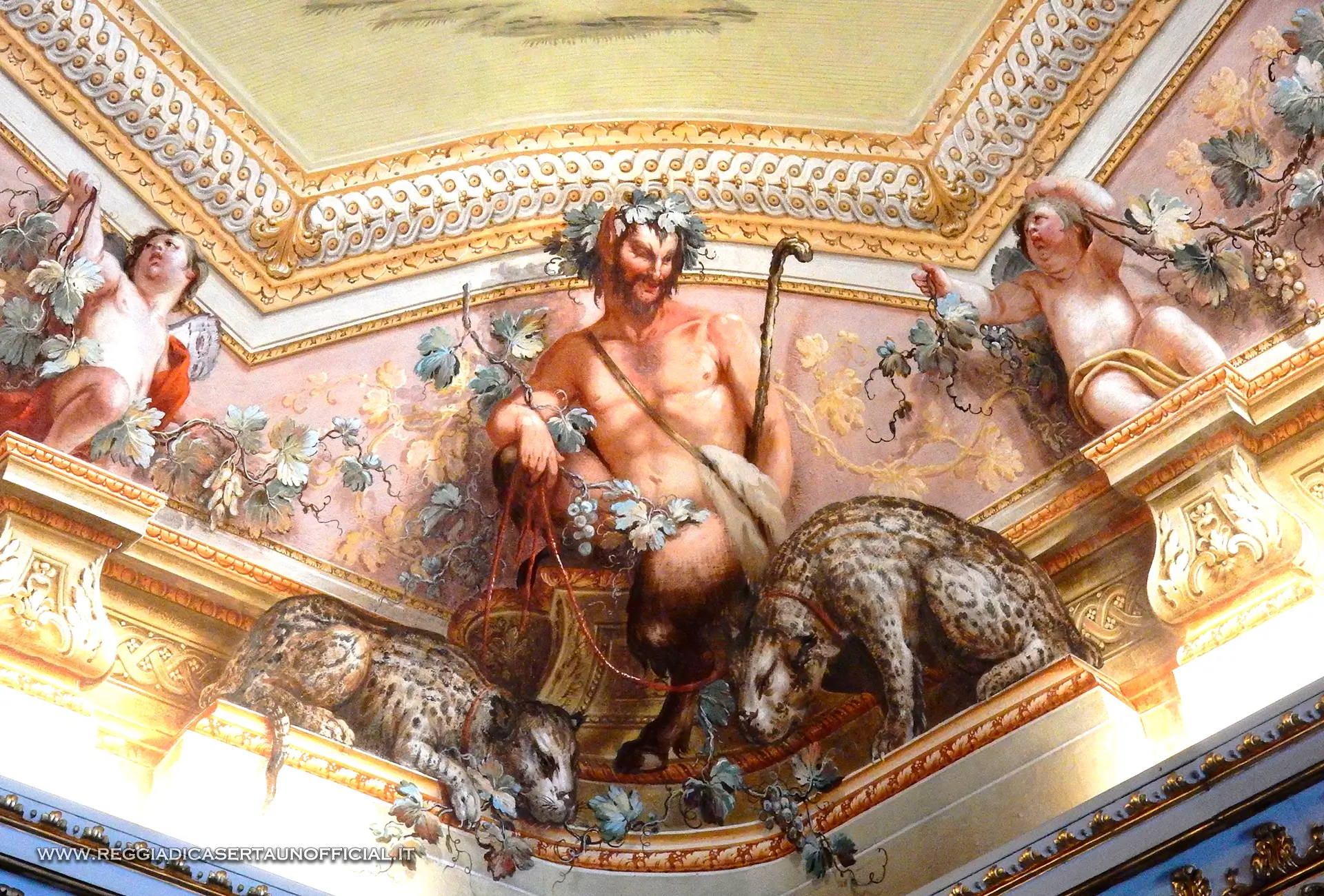
L’affresco della volta
Paintings
The deities above the doors are depicted in oil on canvas by Gaetano Starace: Ceres, Diana, Vulcan, Saturn; Juno, Apollo, Neptune and Mars.
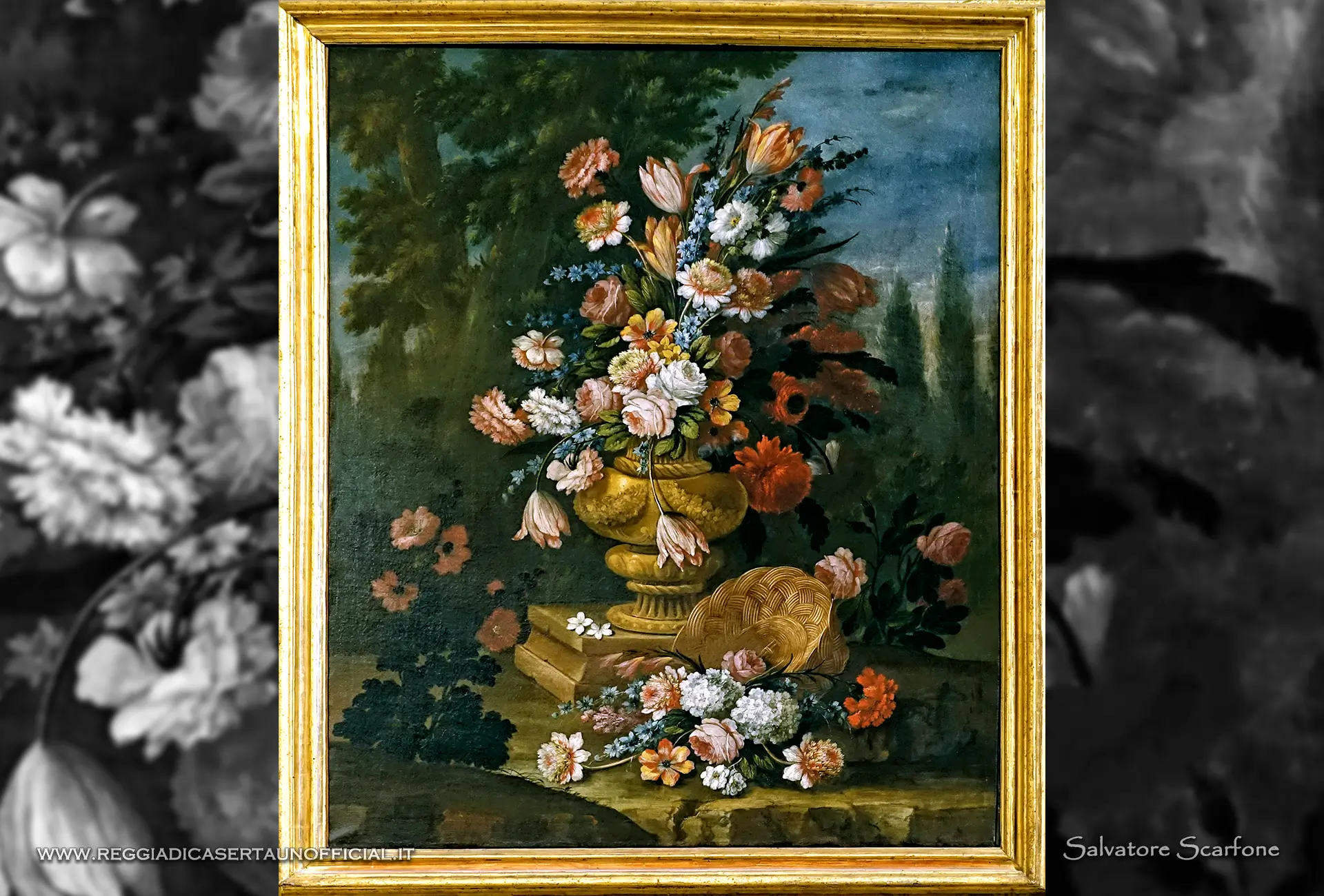
Still Life – Giacomo Nani (1668)
Giacomo Nani (Porto Ercole 1698 – Naples 1755) was a painter known for his still lifes. A pupil of Andrea Belvedere and Gaspare Lopez, he distinguished himself with a naturalistic style. His importance extends as a major decorator for the Capodimonte porcelain factory, founded in 1740.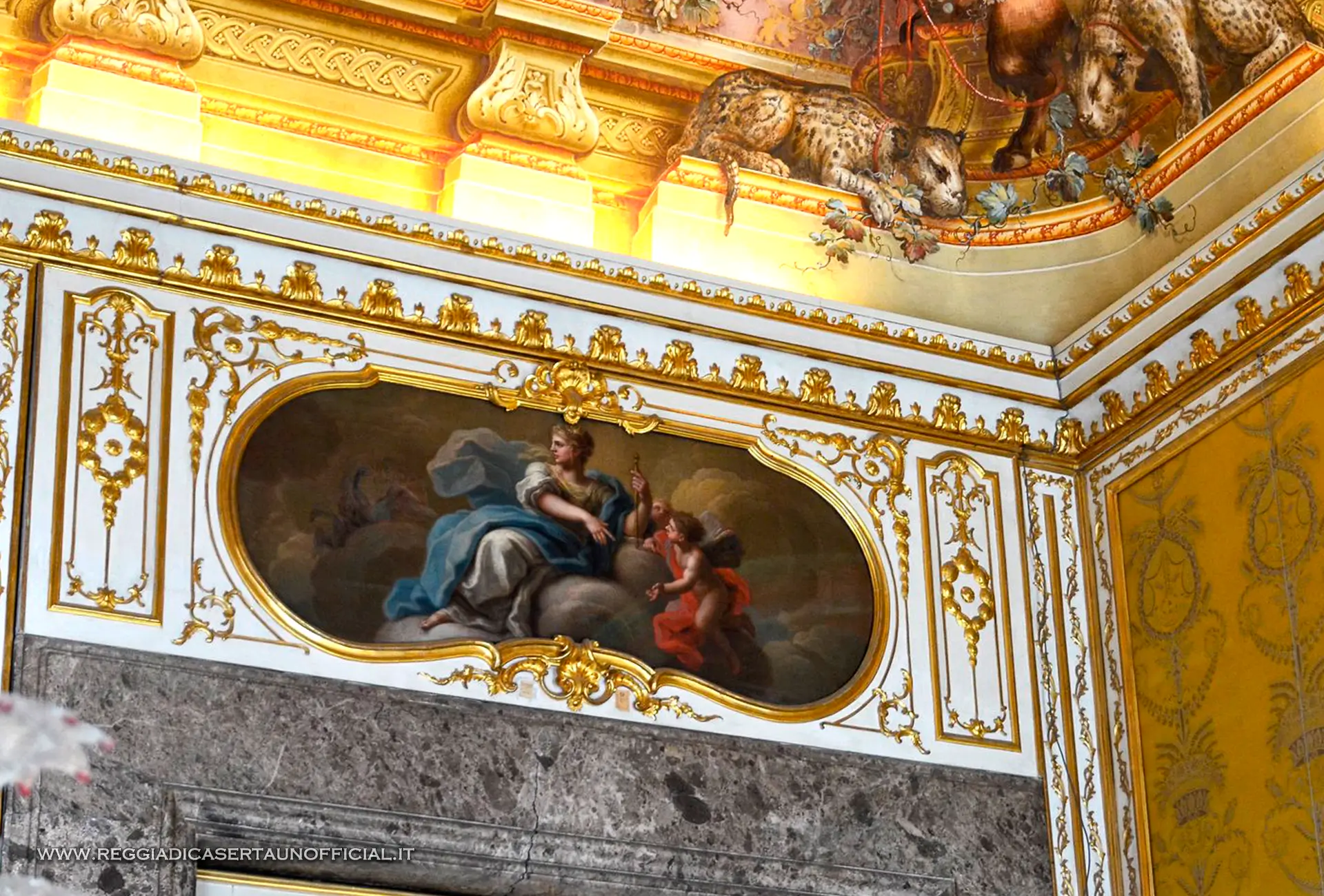
“Juno” – Gerolamo Starace-Franchis
The painting is part of a series of six overdoors and six overmirrors for which the painter requested an appraisal in March 1781. Girolamo Starace Franchis was among the greatest decorators active in Naples during the reign of Ferdinand IV of Bourbon.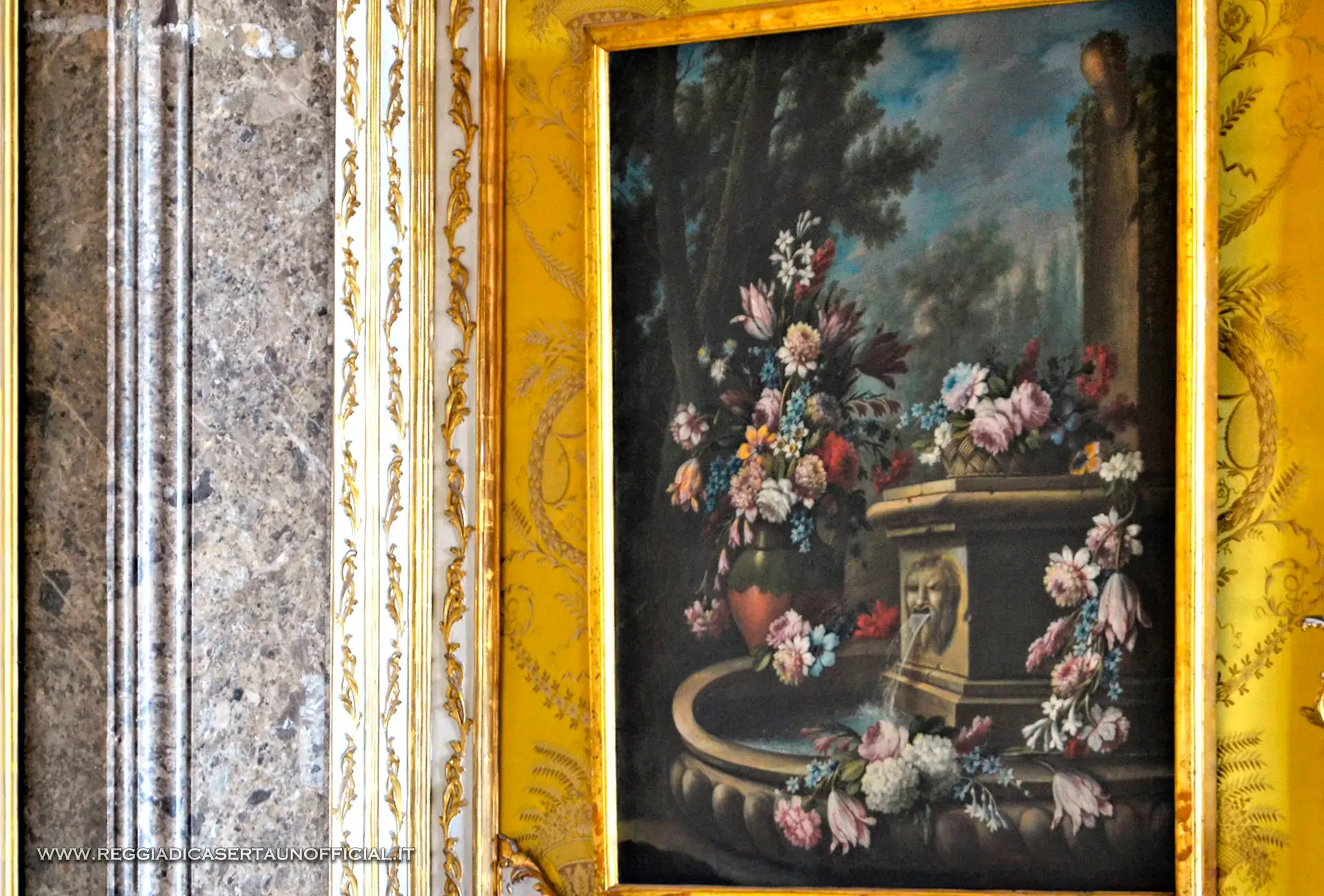
Still life
Furnishings
The room features three imposing 4-meter-high console tables, each featuring a Murano mirror and a painting positioned atop. A distinctive feature of several rooms in the Royal Palace of Caserta is the use of enormous mirrors crafted from a single piece, a rarity in 18th-century palaces where, to save money, multiple smaller pieces were usually stacked. During that era, mirrors were a symbol of status and were extremely expensive, even more so for those of extraordinary size like those found in the Royal Palace of Caserta.
As in the previous rooms, the carvings and wood and lead paneling framing the walls were created by Gennaro Fiore (second half of the 18th century), while the gilding and paintings of the backgrounds were executed by Bartolomeo di Natale (documented in Caserta in the 1780s). Gennaro Fiore was active between 1775 and 1776 in Caserta in the Royal Palace, later leaving the position to his sons.
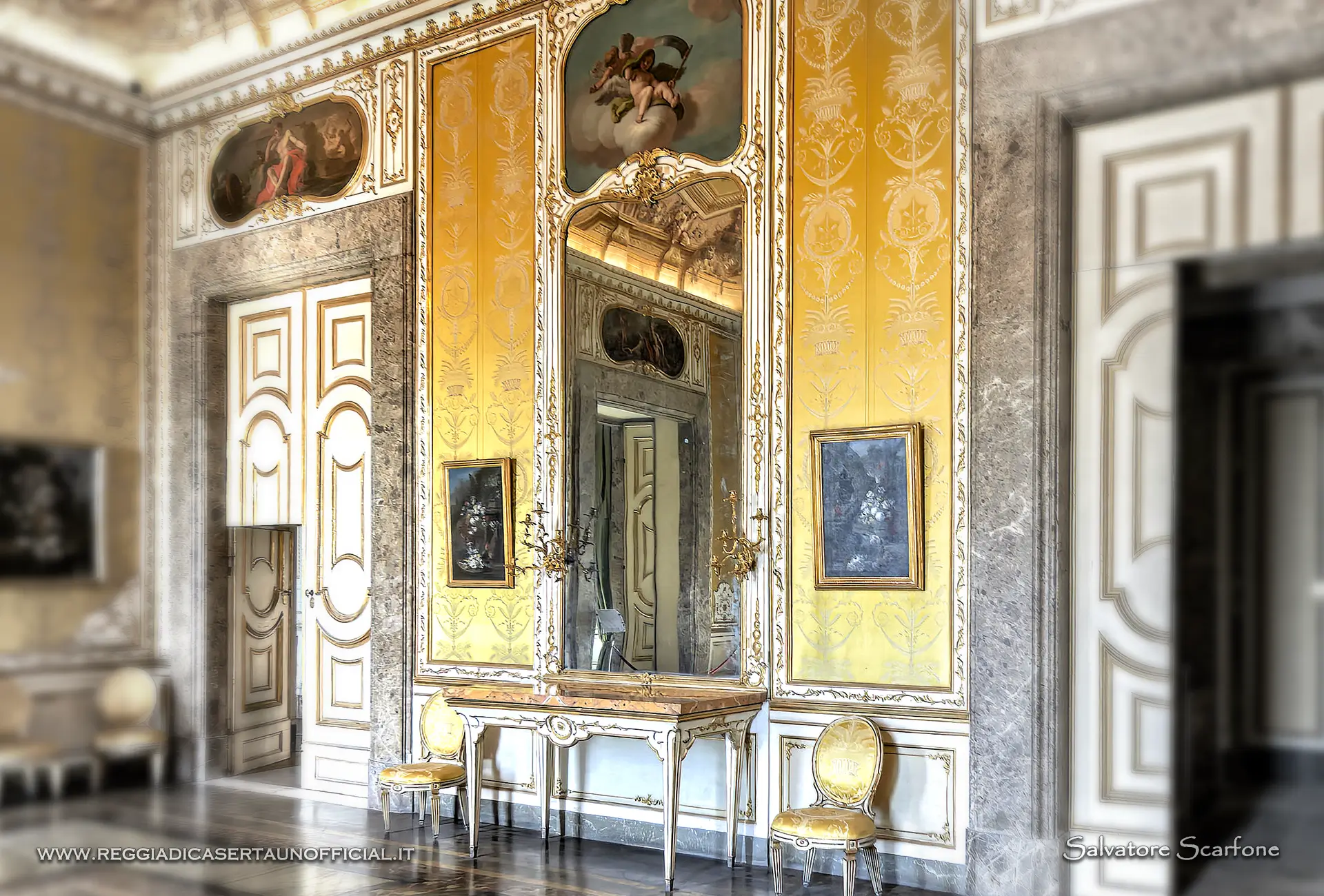
Console table and mirror by Gennario Fiore. 4 meters high.
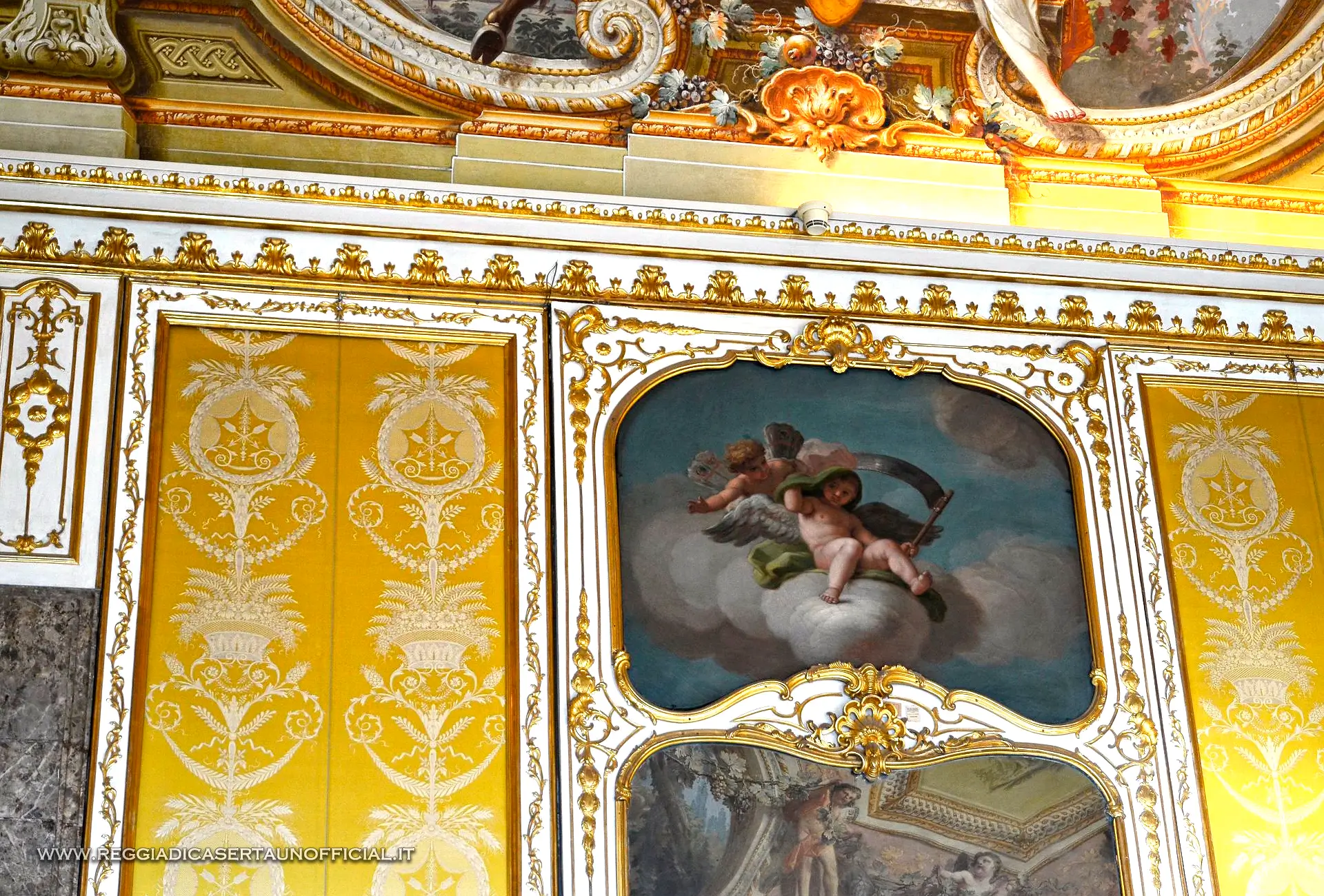
The upper part of the mirror. The upholstery is made of San Leucio silk
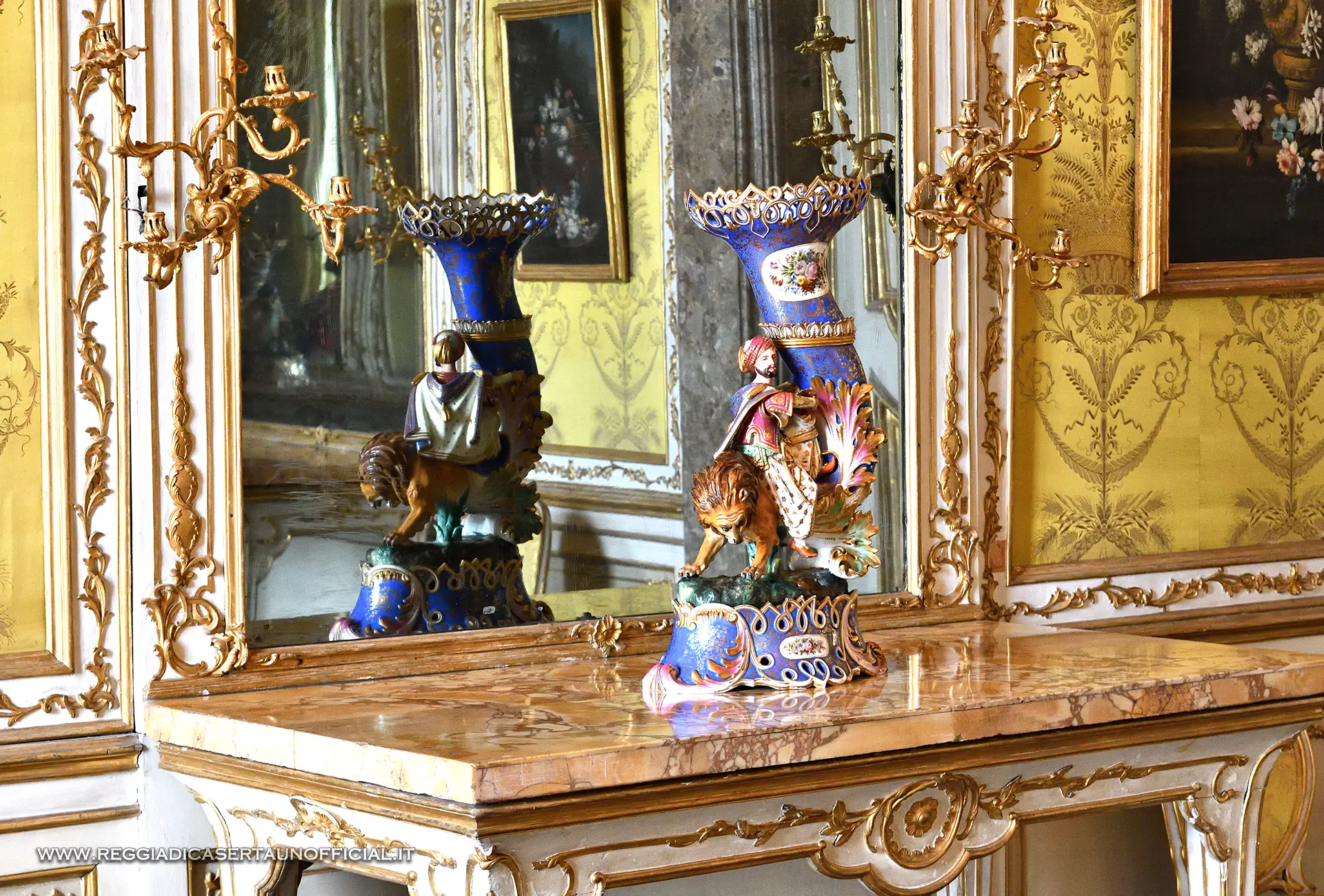
One of two vases, 78 cm tall, made by the Royal Factory of Capodimonte (1743-1759). It features an oriental figure riding a tiger from which a cornucopia, a symbol of abundance, emerges.
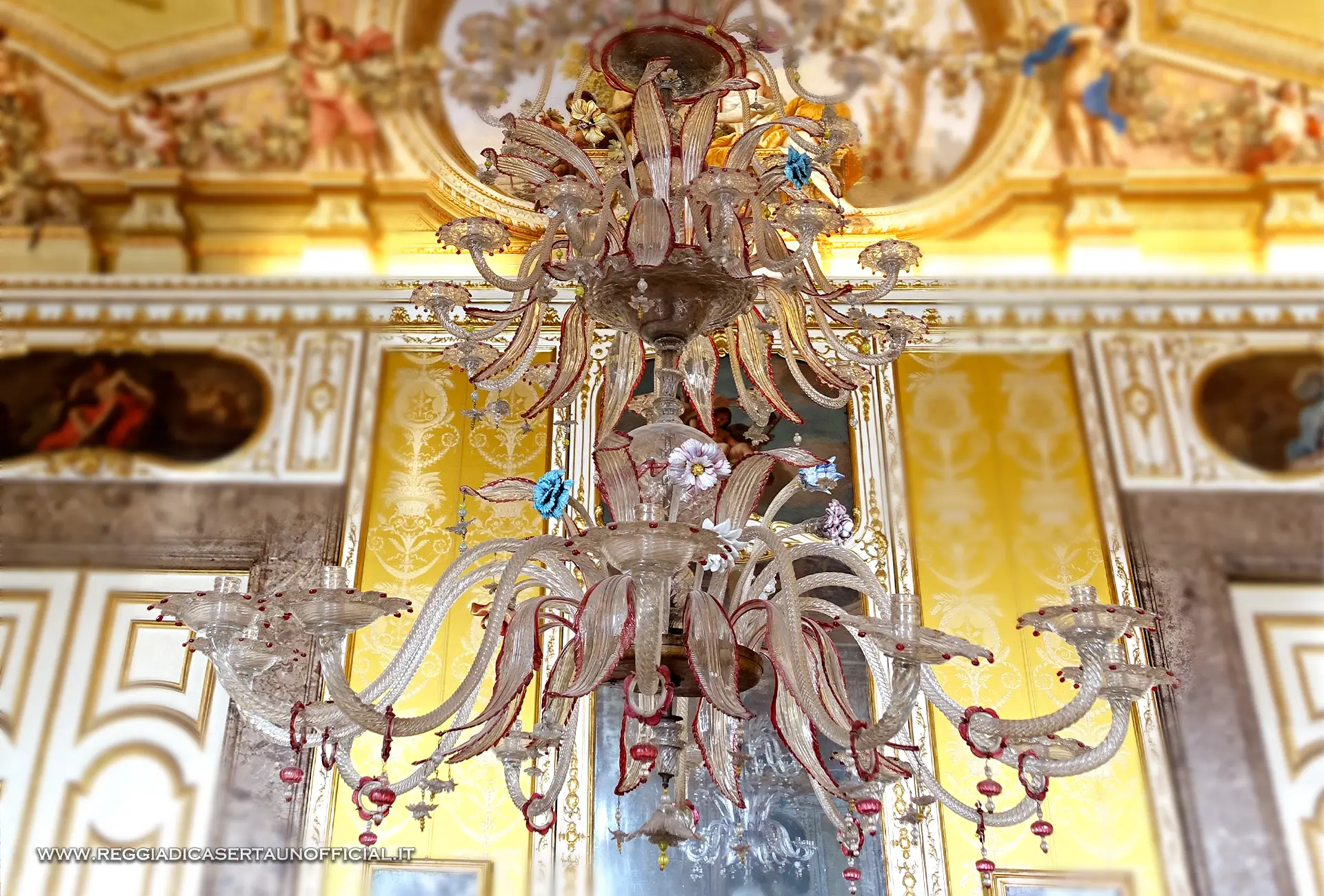
18th-century Rezzonico chandelier in Murano glass. 234 cm tall