
Parterre and Old Wood of the Royal Palace of Caserta
Discover the Parterre and the *Bosco Vecchio* (Old Wood) of the Royal Palace of Caserta: from the spectacular lawns designed by Luigi Vanvitelli to the ancient Acquaviva garden—featuring the *Castelluccia* and the impressive *Peschiera Grande*—which served as places of leisure and entertainment for the Bourbon court.
The Parterre
The parterre is the wide clearing you meet going out of the Palace main gallery. Its name comes from the French expression “par terre”, that means “on the ground”, since it had been designed following the French garden designs, with flowers representing fantastic weaves similar to coloured flower carpets. Vanvitelli could count on the cooperation of the French head gardener Martin Biancour. Because of a change in the design during the works, the flower beds described in the original design had been replaced by wide grasslands still present nowadays. In the middle of each flowerbed, in the first half of the XIX century, circular bushes of live oaks and laurels were planted to feed pheasants.
The parterre is crisscrossed by a network of paths arranged in a radial pattern. Its perimeter is defined by groves of holm oaks, linden trees, and hornbeams, trimmed to a height of ten meters; above this level, the foliage is allowed to grow freely, unconstrained by rigid, pre-set forms. The result is a continuous “green wall,” broken only by openings aligned with the paths. At the rear lies a semicircle featuring sixteen small niches that house decorative white marble busts; these statues are known as “capolinea” (terminal markers) because they serve to demarcate the park’s various zones.

The Old Wood
To the left of the parterre lies the *Bosco Vecchio* (Old Wood), which predates the construction of the Park itself. It was originally a garden attached to the estate of the Acquaviva family—nobles of Caserta who held the land before the Caetani family of Sermoneta sold the area to King Charles for the construction of the Royal Palace of Caserta.
The *Bosco Vecchio* was created between the late 16th century and the early decades of the 17th century by Princes Giulio Antonio (1578–1589) and Andrea Matteo Acquaviva (1594–1634). To preserve the natural environment, Vanvitelli decided not to radically alter its layout, choosing instead to simply make the vegetation—consisting of holm oaks, ivy, and butcher’s broom—denser. Its original function has also been maintained, as the area served as a sort of “secret garden” for the leisure and relaxation of the sovereign and the court.


The Castelluccia (Little Castle)
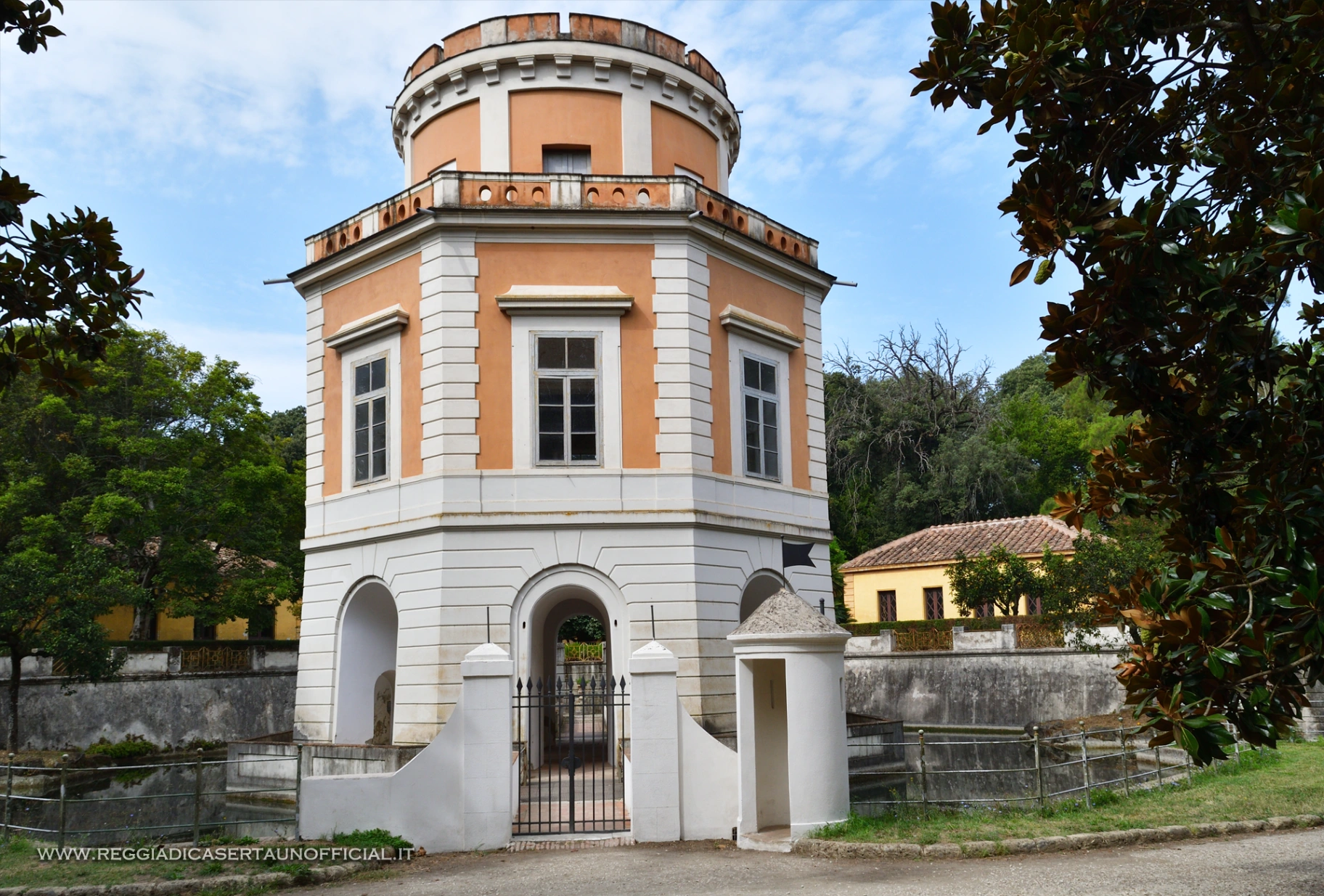
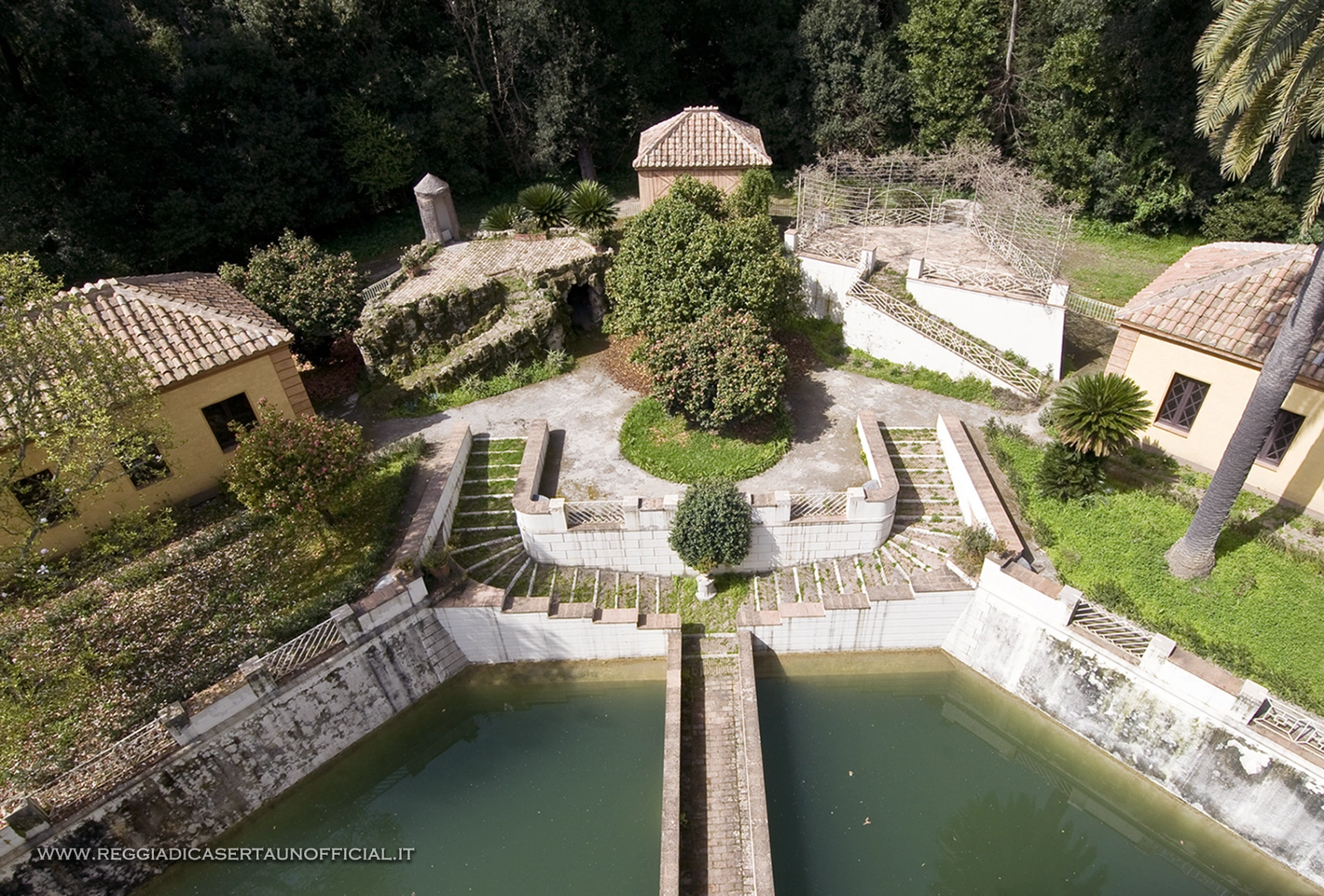
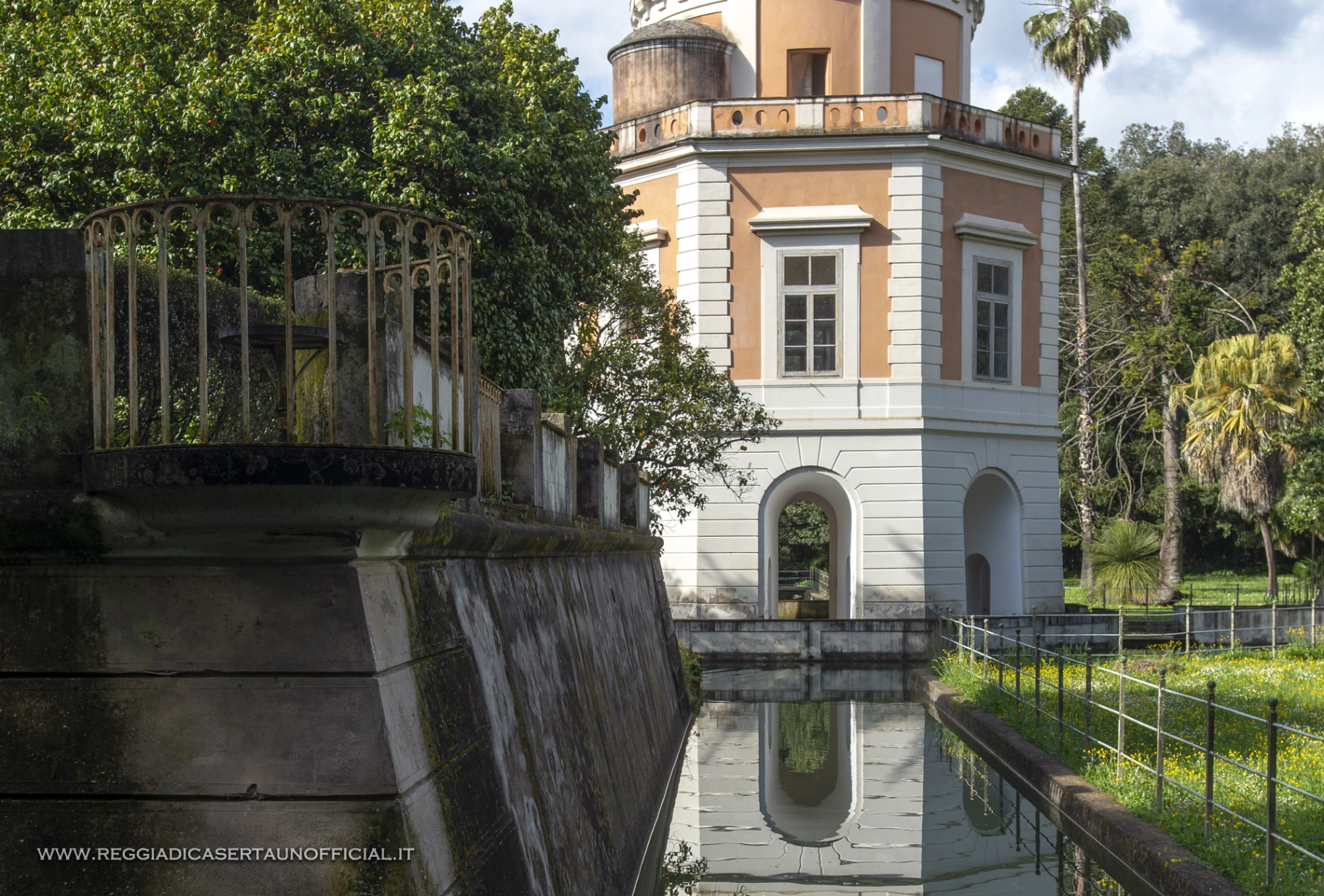
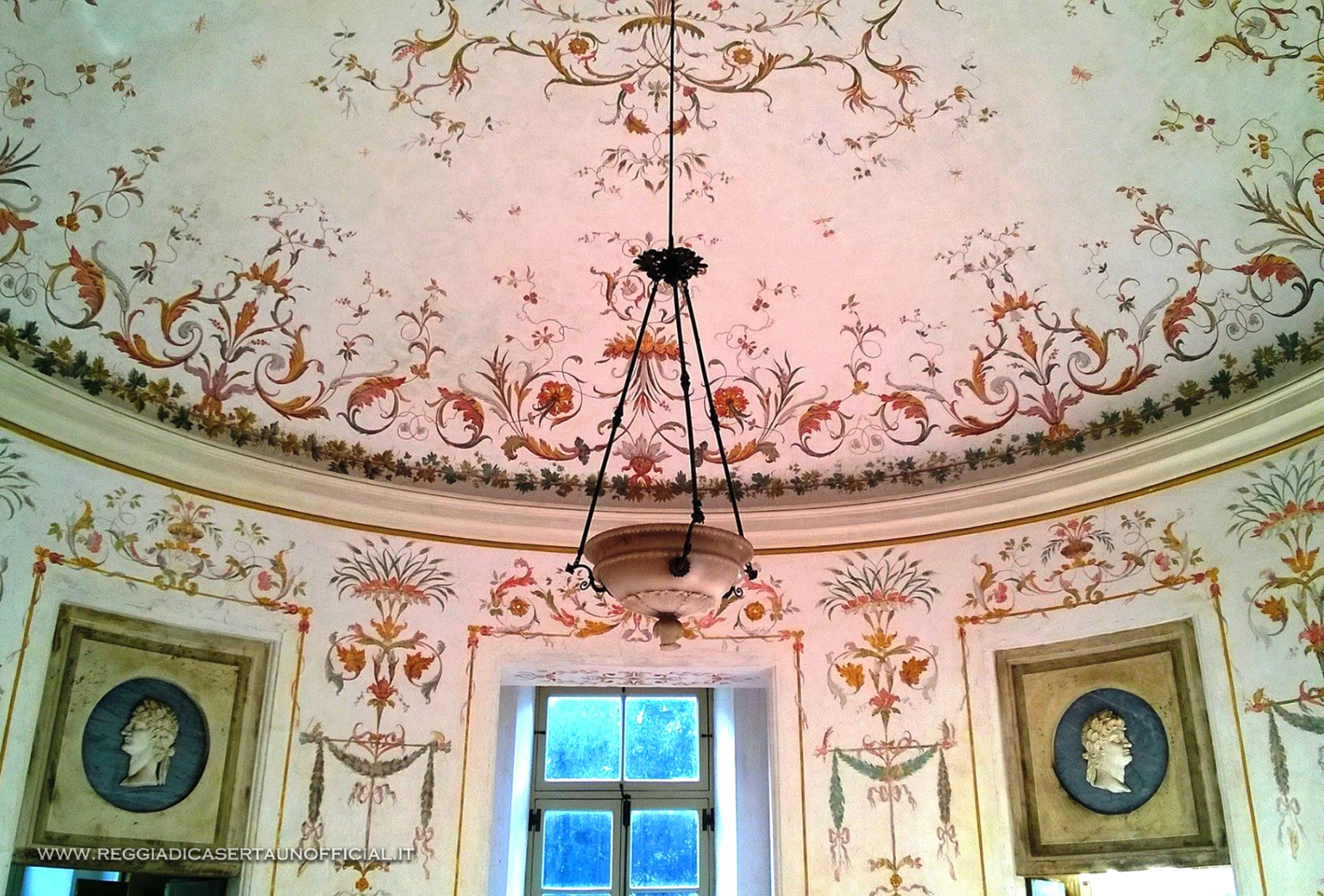
The Wood hides the Castelluccia, a little tower with an octagonal plan surrounded by a ditch. lt had been built on a previous structure dating back to the time of the Acquavivas, and in 1769 it was modified for the entertainment of the young king Ferdinand IV.
Up to 1773, it was the scenery of fake battles. So it was equipped with a bastion, watchtowers and military buildings, little barracks, guard places and demilunes.
After 1818, it once more became a lodge, assuming the current sober and elegant appearance. The rear part is equipped with a little formal garden with flowers, bushes, citrus trees and creepers. The area nearby shows wonderful specimens of exotic plants: magnolias, araucarias, palms. ln the area on the north of the Old Wood, in the middle of a wide clearing, there is the Great Fishpond, a wide basin with an elliptical form. It was made in 1769, contemporarily to the Castelluccia, and is the second entertainment architecture of the Park, also used for playing false naval combats.
La Peschiera Grande
To the north of Castelluccia there is a large fishpond, reachable through moss-covered roads that go beneath the centuries-old trees, creating an atmosphere of mysterious solitude.
The fishpond, measuring 300x120m, was excavated and built in 1769 by Francesco Collecini, Vanvitelli’s assistant, in just seventy-five days. Although it is said that three thousand people worked on the work, this is incredible considering that the excavation began in 1762 and was completed in 1763. It is inaccurate to think that Collecini secretly stimulated the King’s desire to have this attraction, since Vanvitelli himself had given instructions for the success of the work while he was in Milan for other projects. The wall part was built in just two and a half months.
The fishpond is one of the largest ever built, with a calm, solemn and bright landscape. On the small island in the centre, a pavilion open on all sides was originally supposed to be built, but the young King wanted a ballroom, rest rooms and toilets, thus leading to the creation of a small circular temple with four exedras. Although the project was never completed, the trees that now occupy the site form a green pavilion under which brigades of aristocratic fishermen once gathered.
