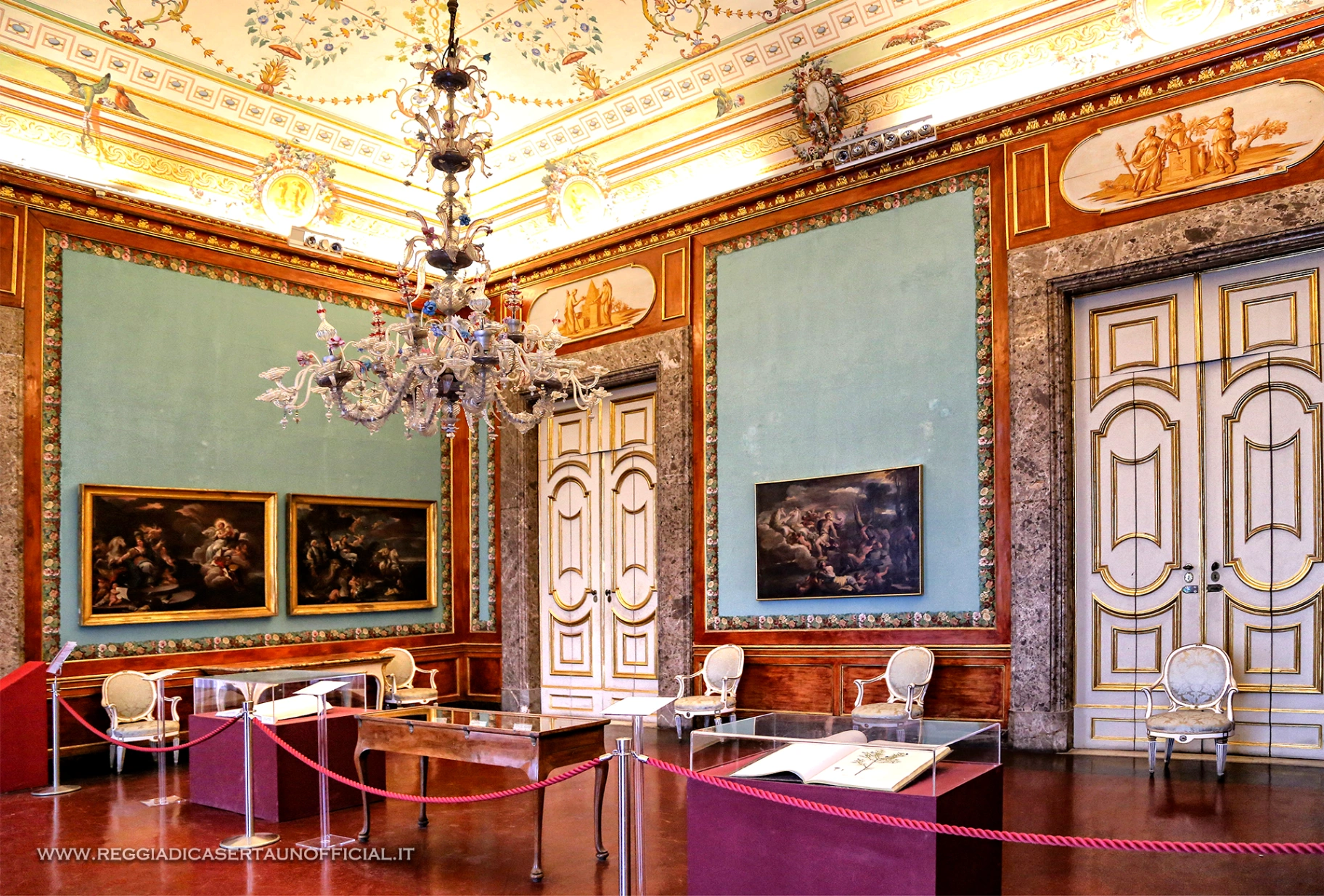
The Second Reading Room of the Royal Palace of Caserta Library
Designed by Vanvitelli as a princely bedchamber, the Second Reading Room was later used as Queen Maria Carolina's "conversation room."
Description
The so-called First Reading Room of the Palatine Library —based on the Vanvitelli’s project It was part of the suite reserved for the apartments of young princes and princesses and was intended to serve as a bedroom. It also served as “Her Majesty the Queen’s Conversation Room”—in other words, Queen Maria Carolina‘s sitting room.
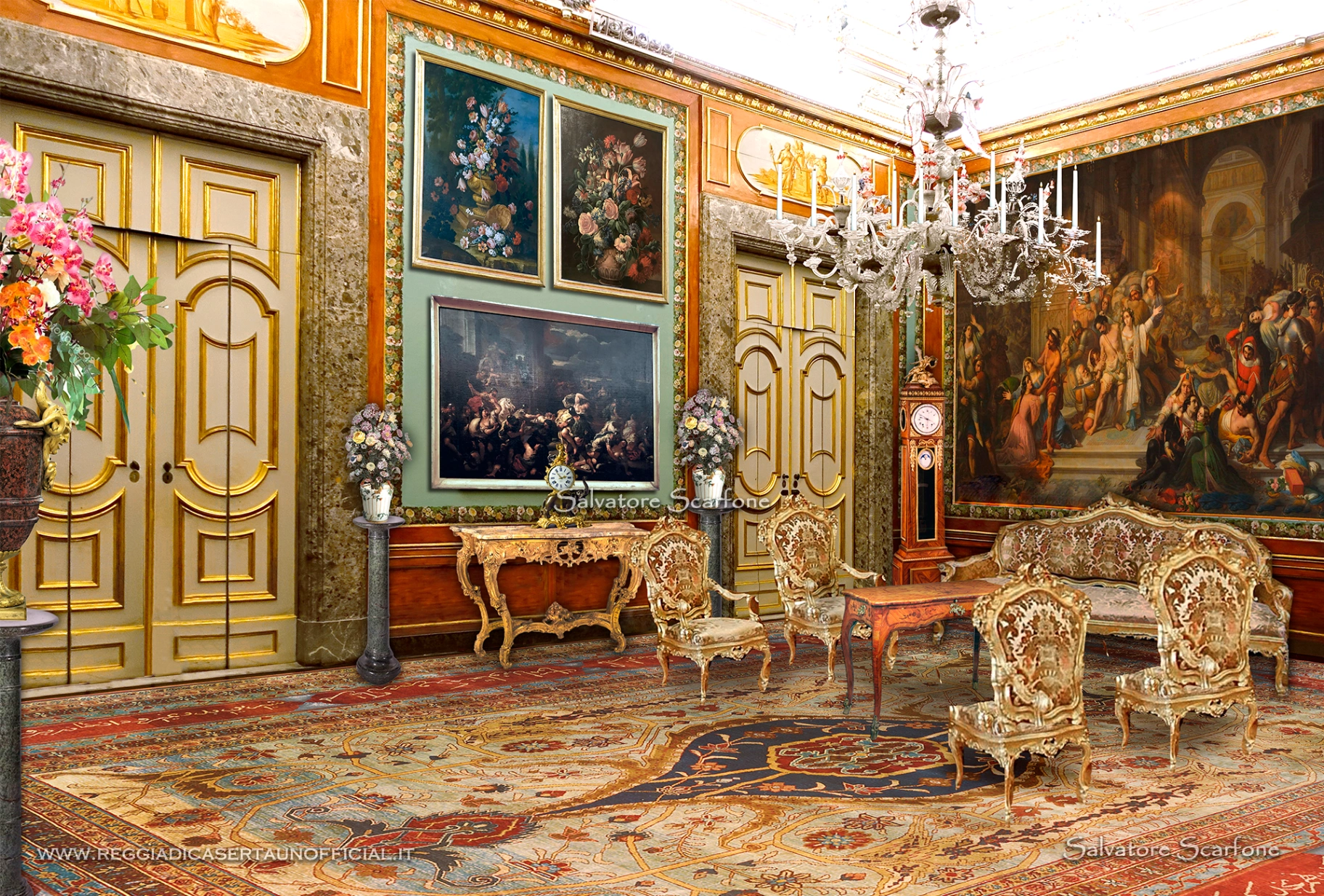
Imaginary reconstruction of Queen Maria Carolina’s drawing room, incorporating some of the furnishings from the Royal Palace.
Decorations and furnishings of the Second Reading Room
The fresco
The fresco and the overdoor paintings in the Second Reading Room are the work of the painter Gaetano Magri and his circle; they feature a distinctly Neoclassical style inspired by the paintings and archaeological finds discovered at the time in Herculaneum and Pompeii. The fresco is adorned with grotesque motifs, leafy branches, and floral festoons and garlands that intertwine and overlap.
The overdoor paintings feature monochrome frescoes depicting allegorical scenes of Vestal Virgins in a Classical style, created by the circle of the painter Gaetano Magri.
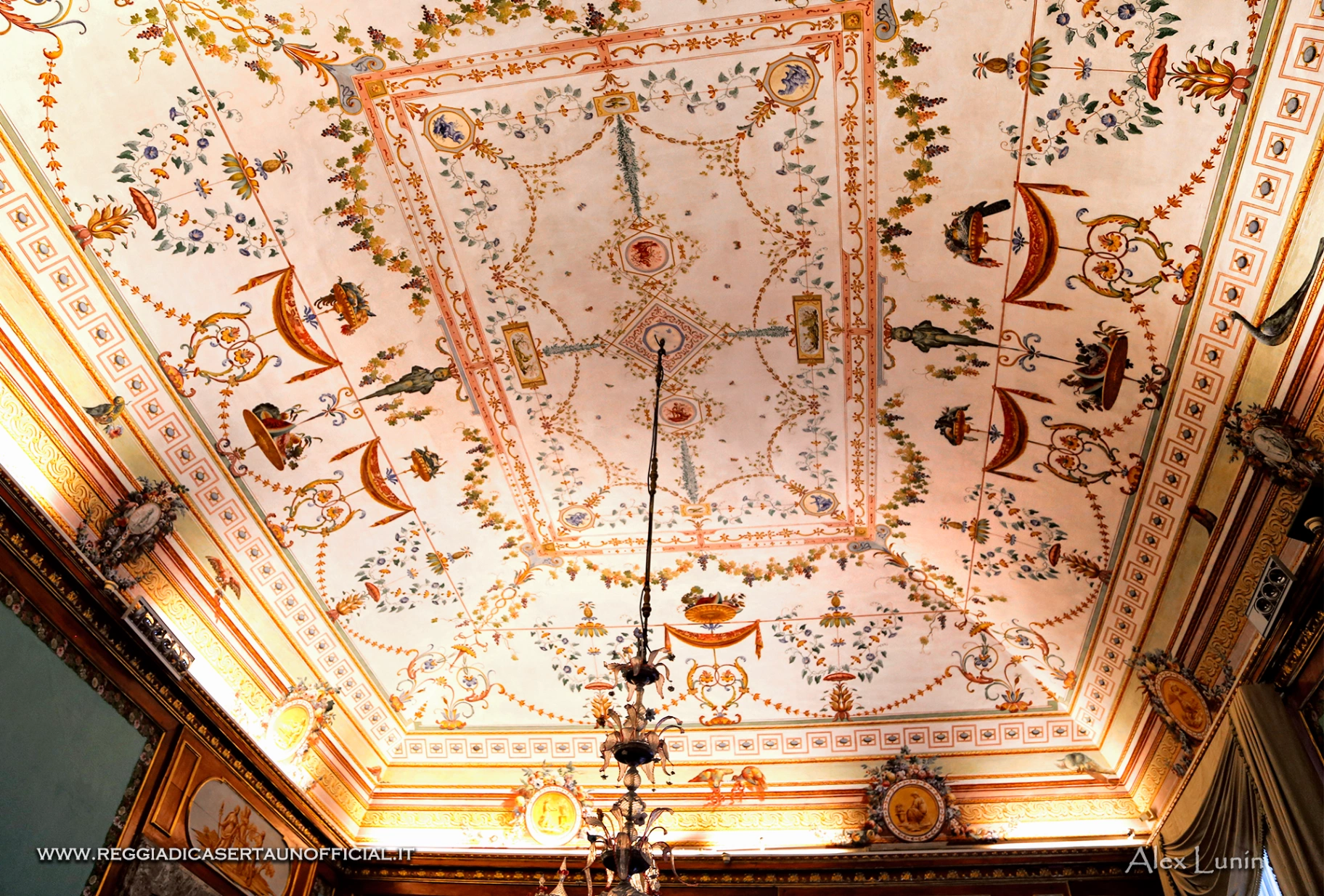
The fresco on the ceiling
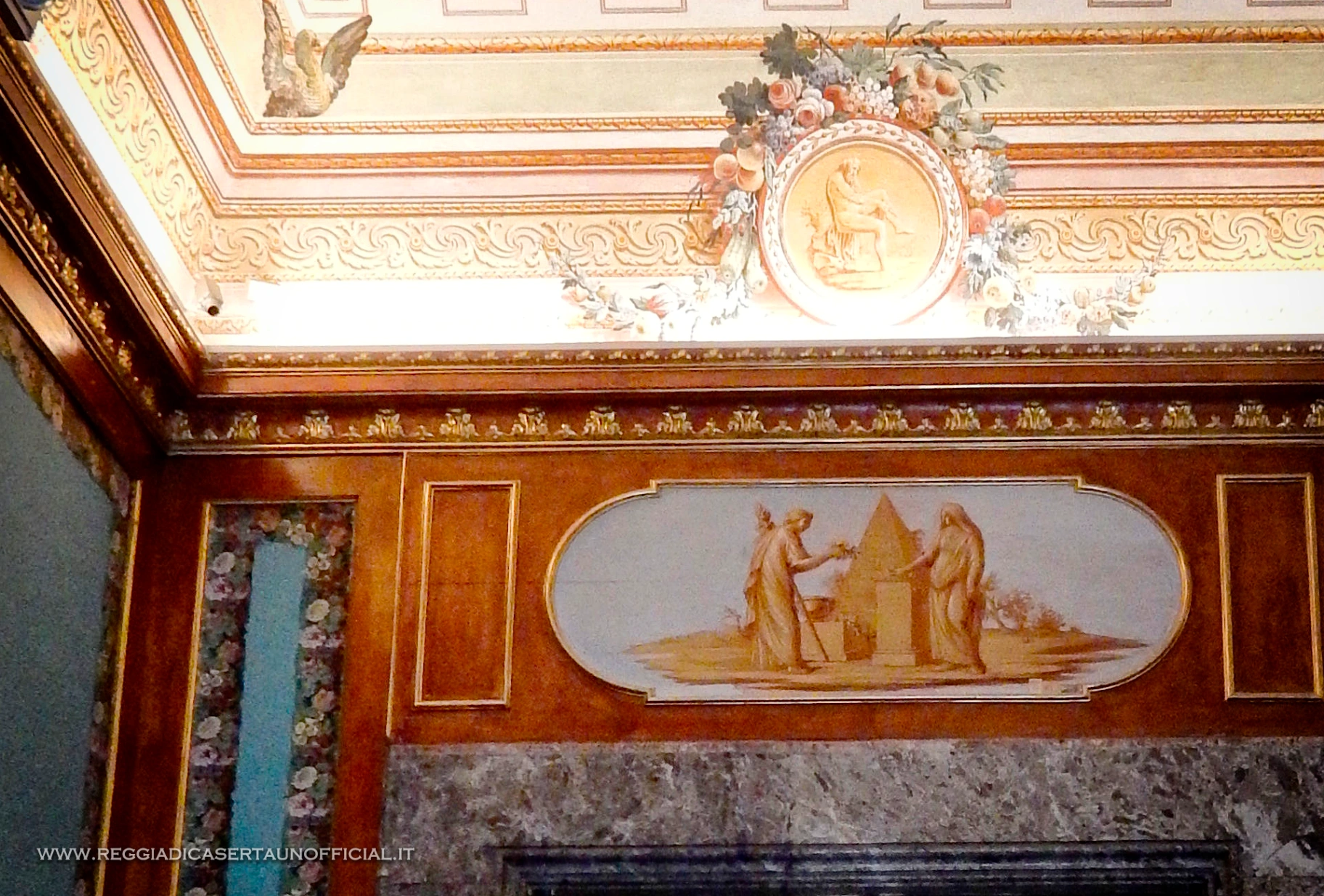
The overdoor, frescoed with a monochrome in the classical style, is the work of the circle of the painter Gaetano Magri.
Paintings
The walls of the Second Reading Room feature various paintings, including the following works by Luca Giordano (Naples, 18 October 1634 – Naples, 12 January 1705):
- Apollo and Marsyas(1702–1705)
- Allegory of Europe (1702–1705)
- The Rape of the Sabine Women(1702–1705)
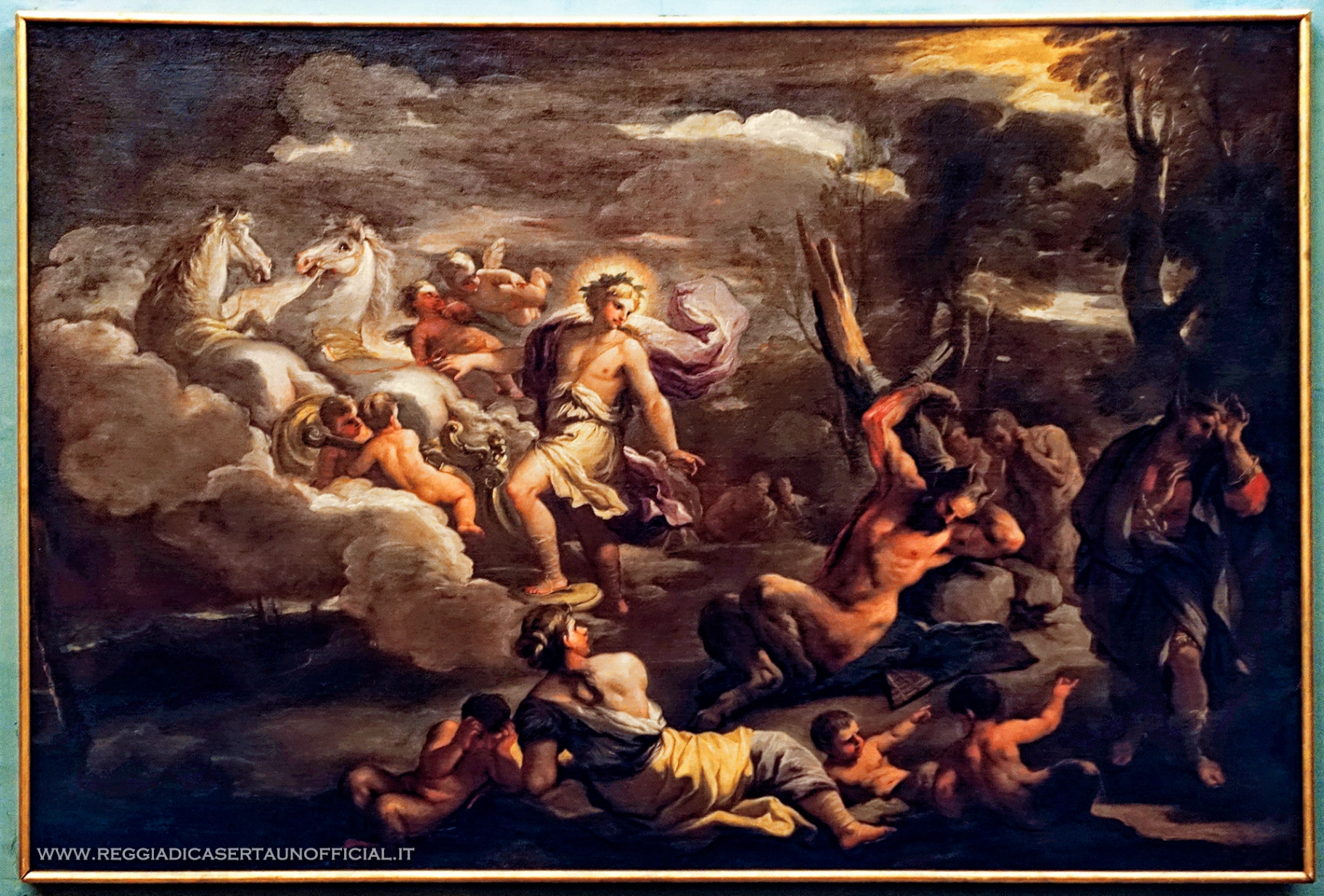
Luca Giordano – “Apollo and Marsyas,” 1702–1705
On the right, the satyr Marsyas is bound to a tree, where he is to be flayed by Apollo after losing a double-flute contest—an instrument Apollo had mastered. Apollo stands in a chariot drawn by two white horses. Surrounding them are putti, satyrs, and women. Luca Giordano draws upon elements of 16th-century Venetian painting, integrating them with the Neapolitan *luminismo* (style of dramatic lighting) characteristic of Mattia Preti. The work is deeply influenced by the grand tradition of Baroque decorative painting.The wallpaper
The walls are frescoed and framed by floral-patterned paper decorations dating from the second half of the 18th century. A large floral festoon frames the section that is now frescoed but was once covered with similar decorative papers.
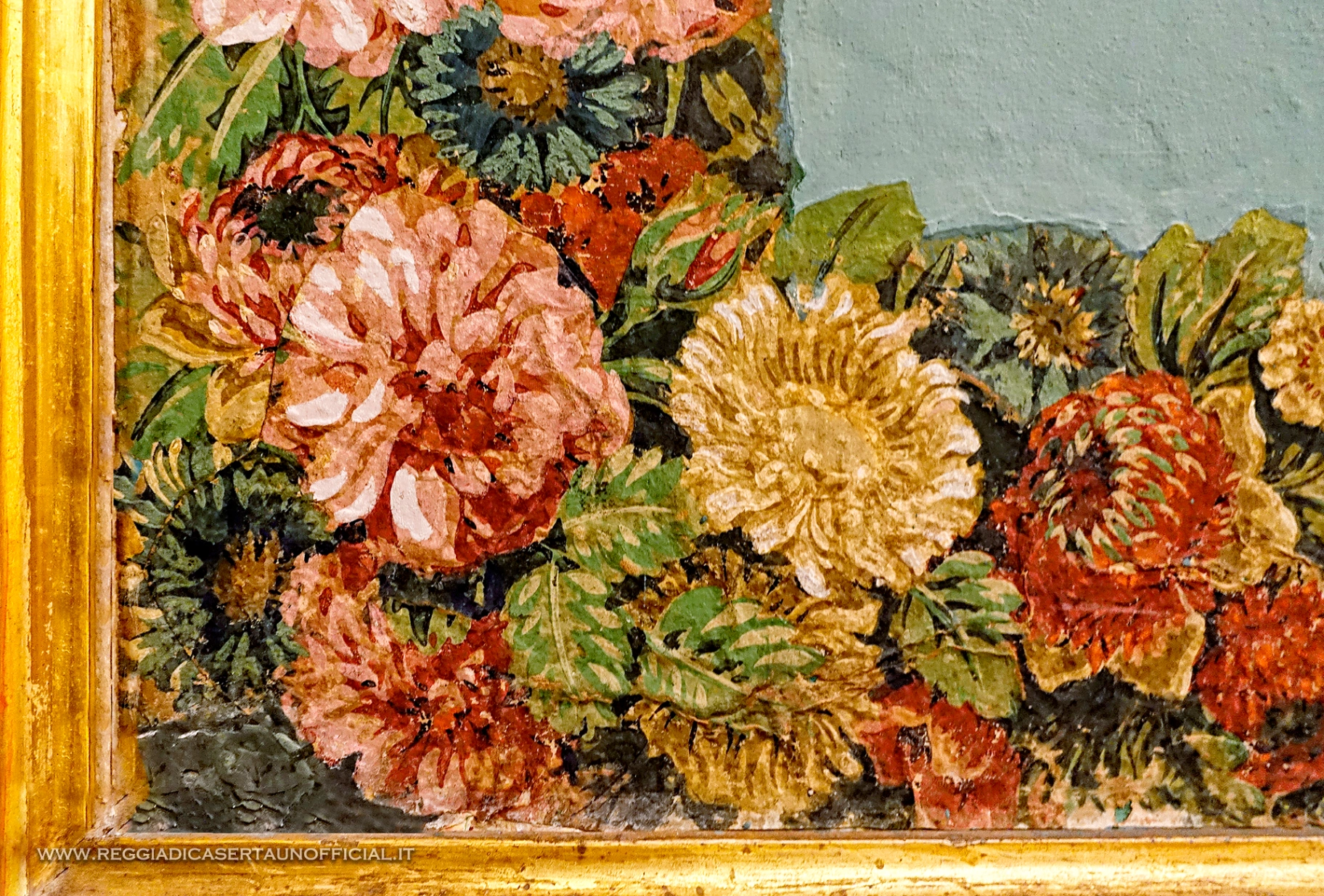
Floral-patterned paper from the second half of the 18th century
Furnishings
- Marble fireplace featuring a mantel supported by two volutes and a stylized shell motif on the front. The fireplace was most likely crafted by stonemasons associated with the sculptor Gaetano Salomone, who was highly active at the Royal Palace in the late 18th century.
- Display cases containing antique volumes from the Palatine Library
- Two console tables and several small armchairs in a transitional style between Rococo and Neoclassical.
- 18th-century Murano glass chandelier
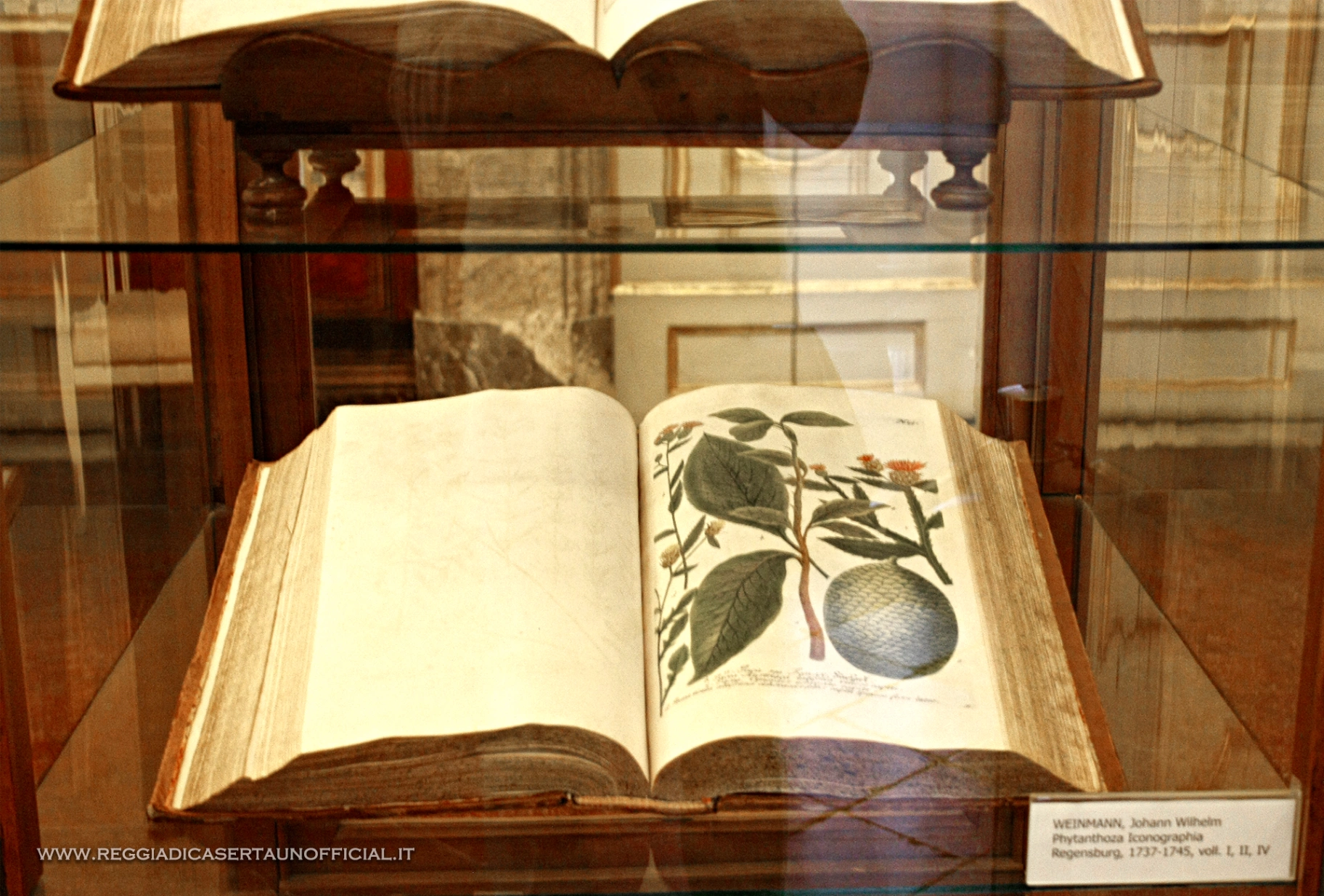
One of the ancient volumes on display from the Palatine Library
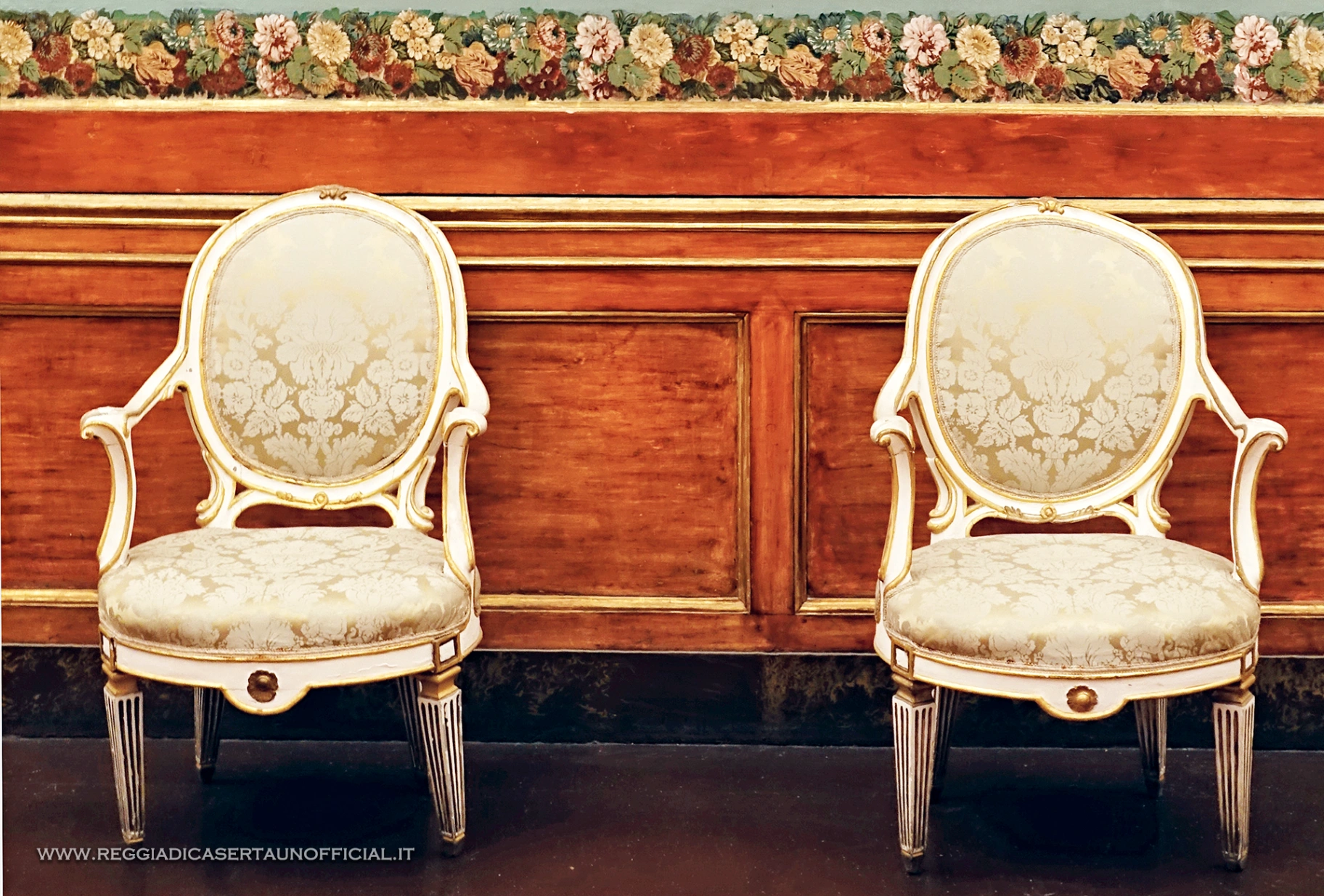
Armchair in white-painted wood with gold trim. It features a padded backrest and seat upholstered in new green damask fabric with a floral pattern. The armrests are contoured, and the legs are shaped like inverted pyramids.
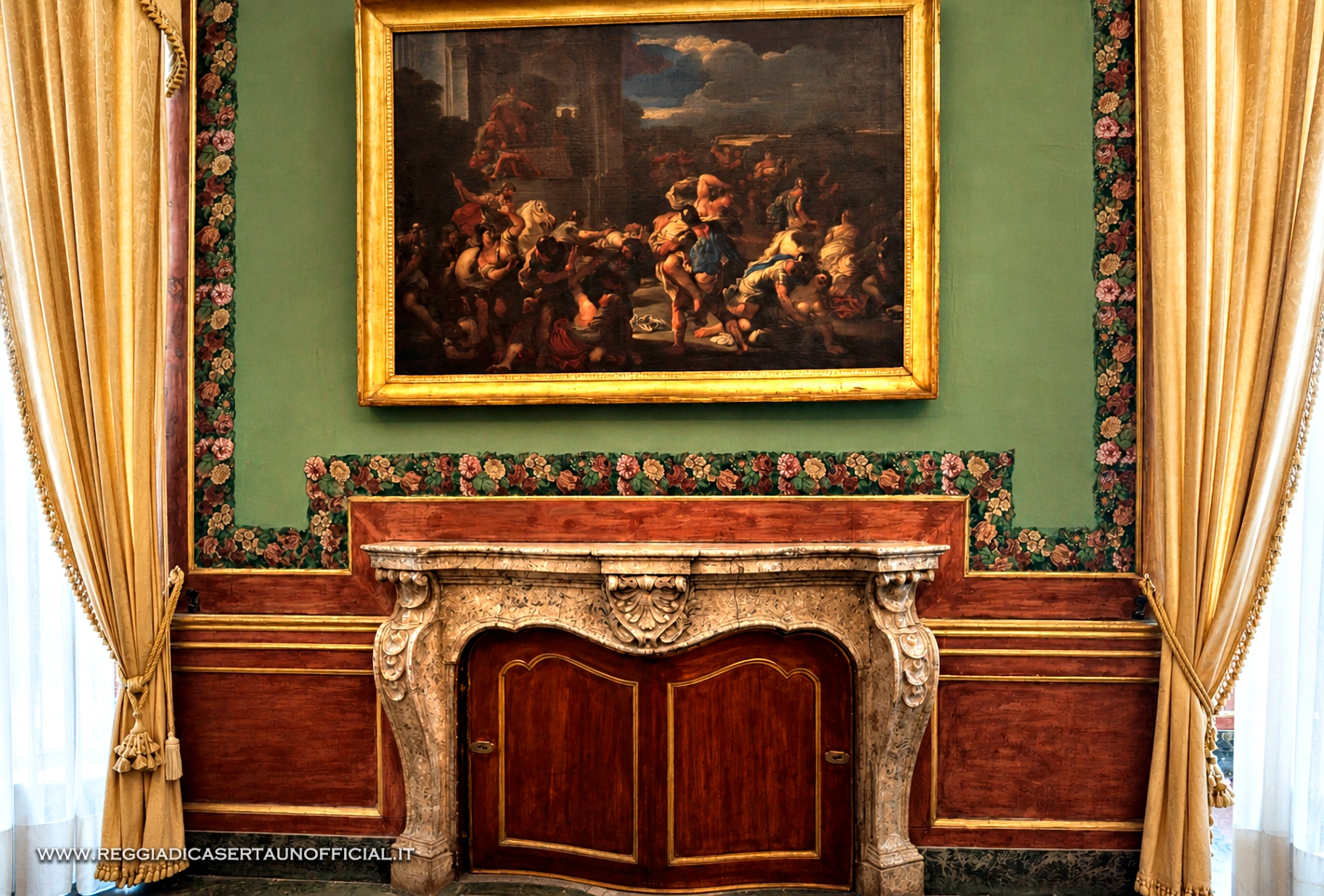
Marble fireplace with a mantel supported by two volutes and a stylized shell on the front.
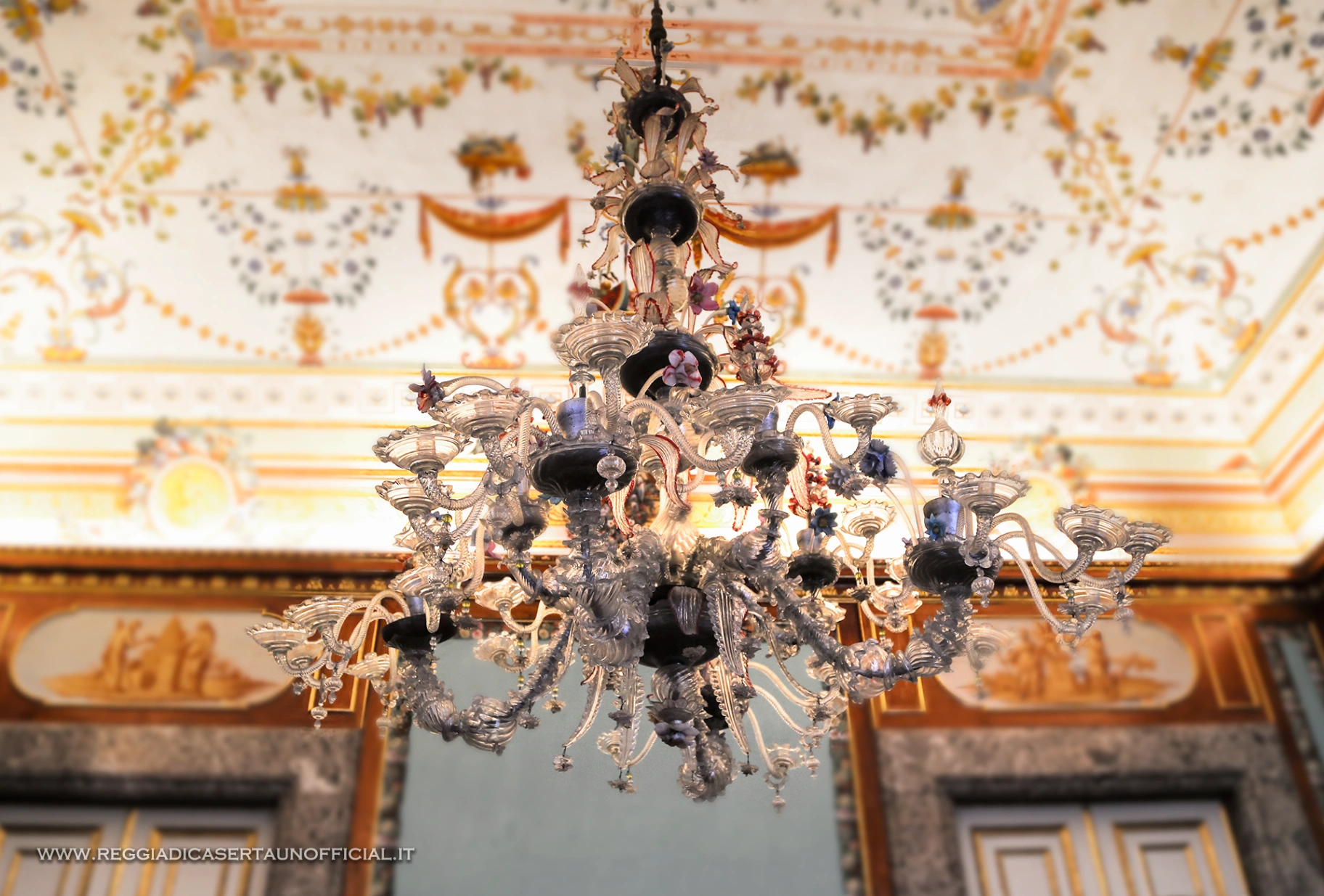
18th-century Murano glass chandelier
External link