The Sovereigns' private chapels in the Royal Palace of Caserta
The sovereigns' private chapels were places of intimate reflection where one can still discern the sense of profound religiosity that inspired the lives of the Bourbon monarchs.
The private chapel of King Ferdinand II of Bourbon
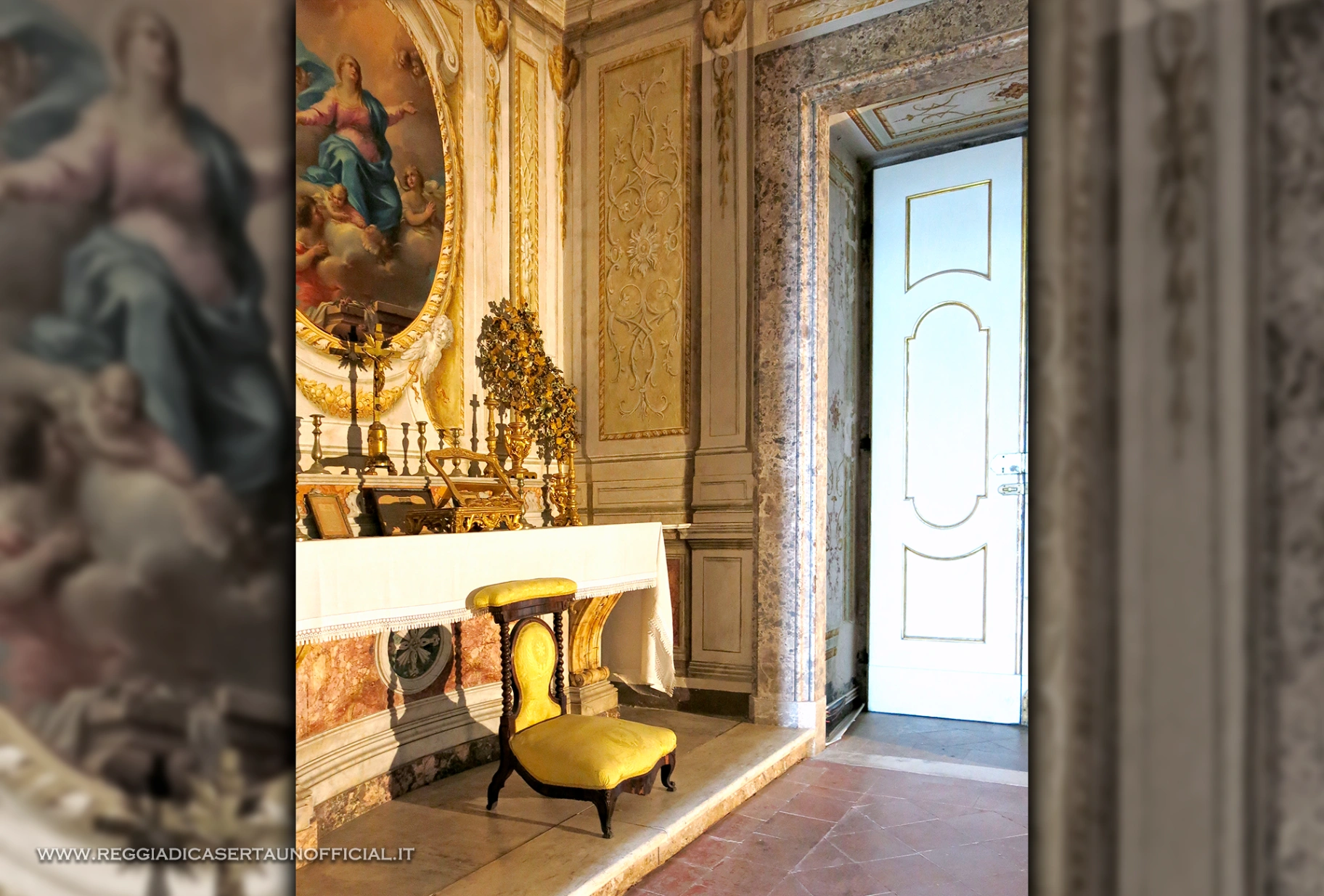
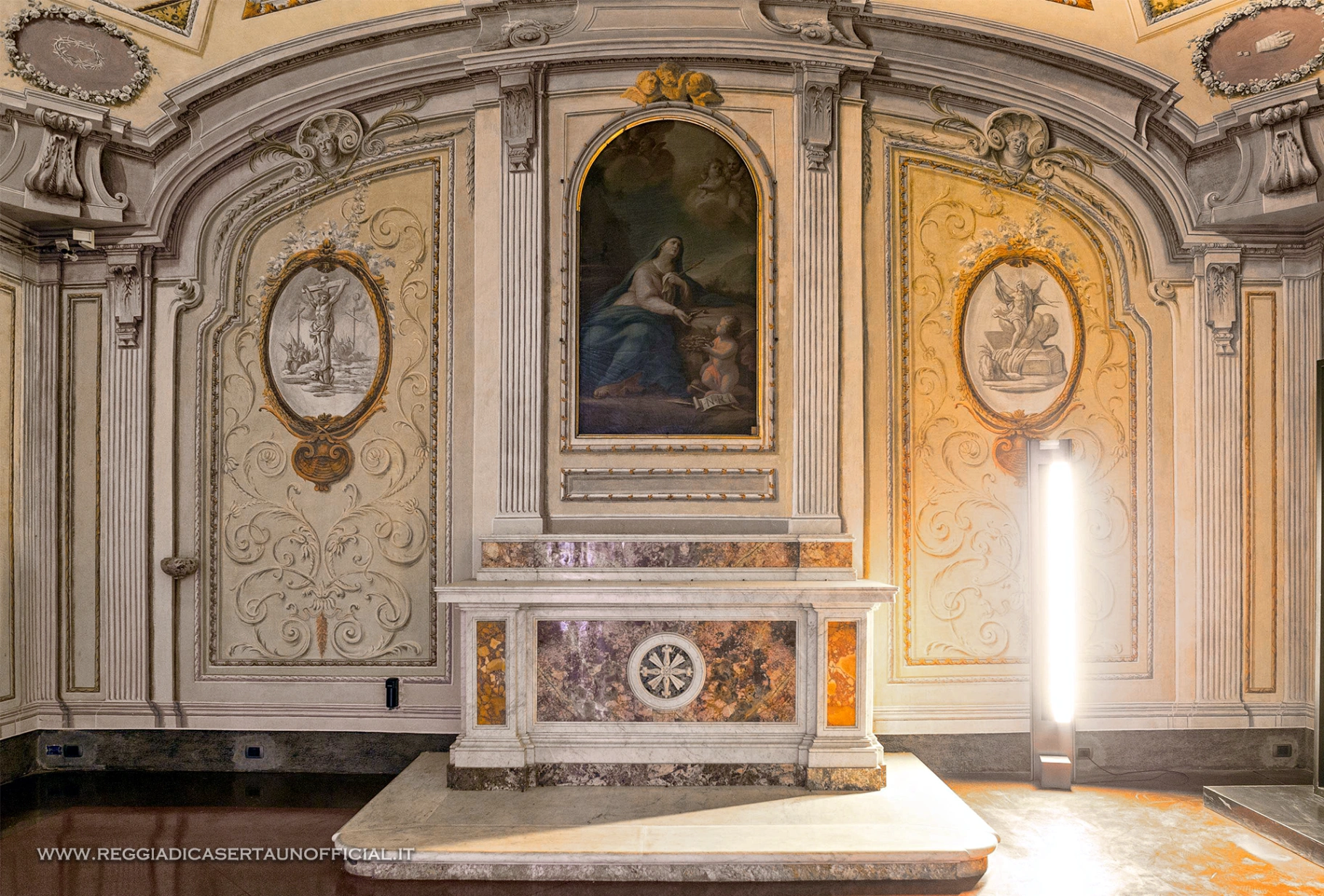
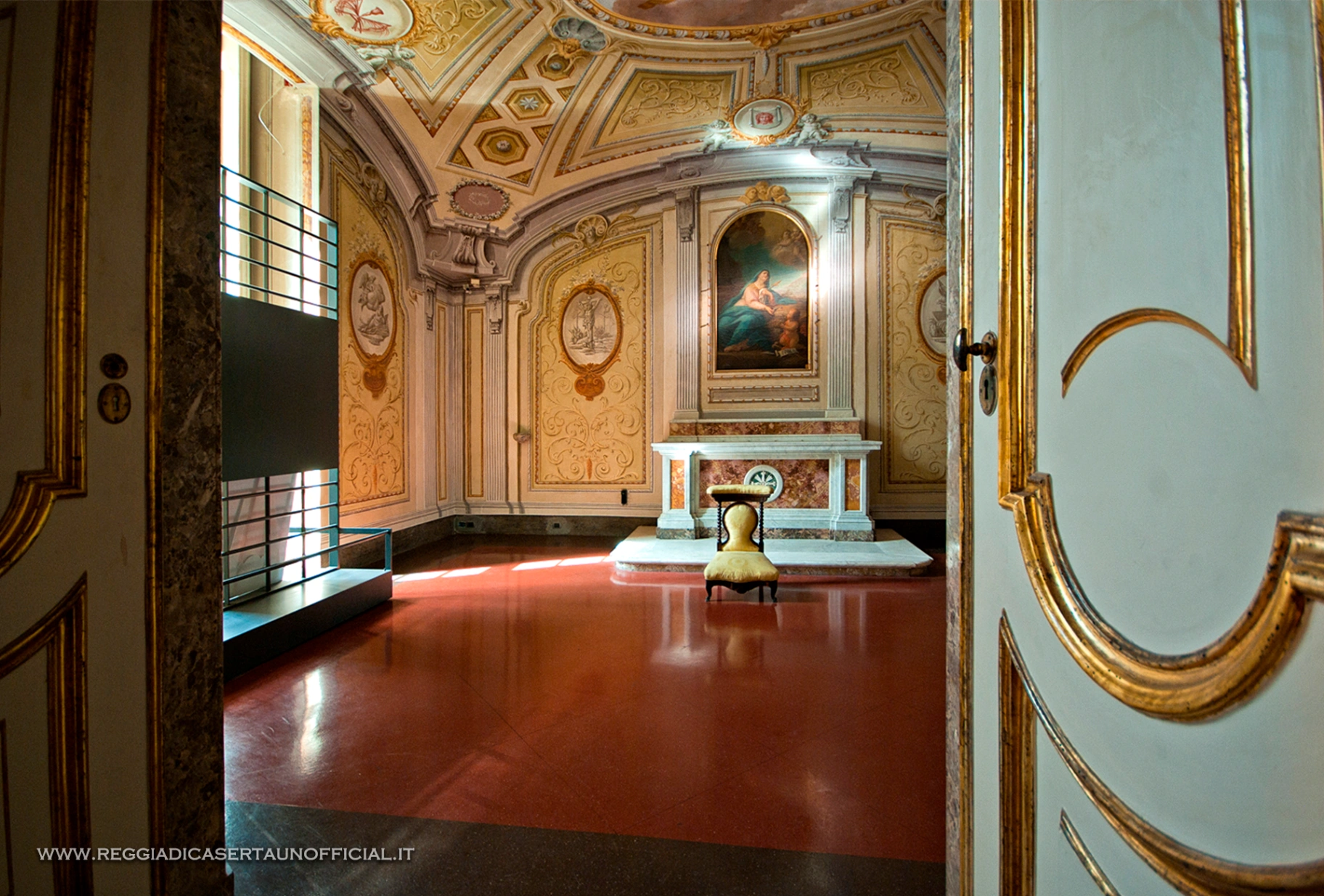
Queen Maria Carolina's private chapel
The room was designed by the architect Carlo Vanvitelli, who had succeeded his father, Luigi, as the official in charge of construction at the Royal Palace of Caserta. Inventories describe it as the “Private Oratory of Her Majesty the Queen.”
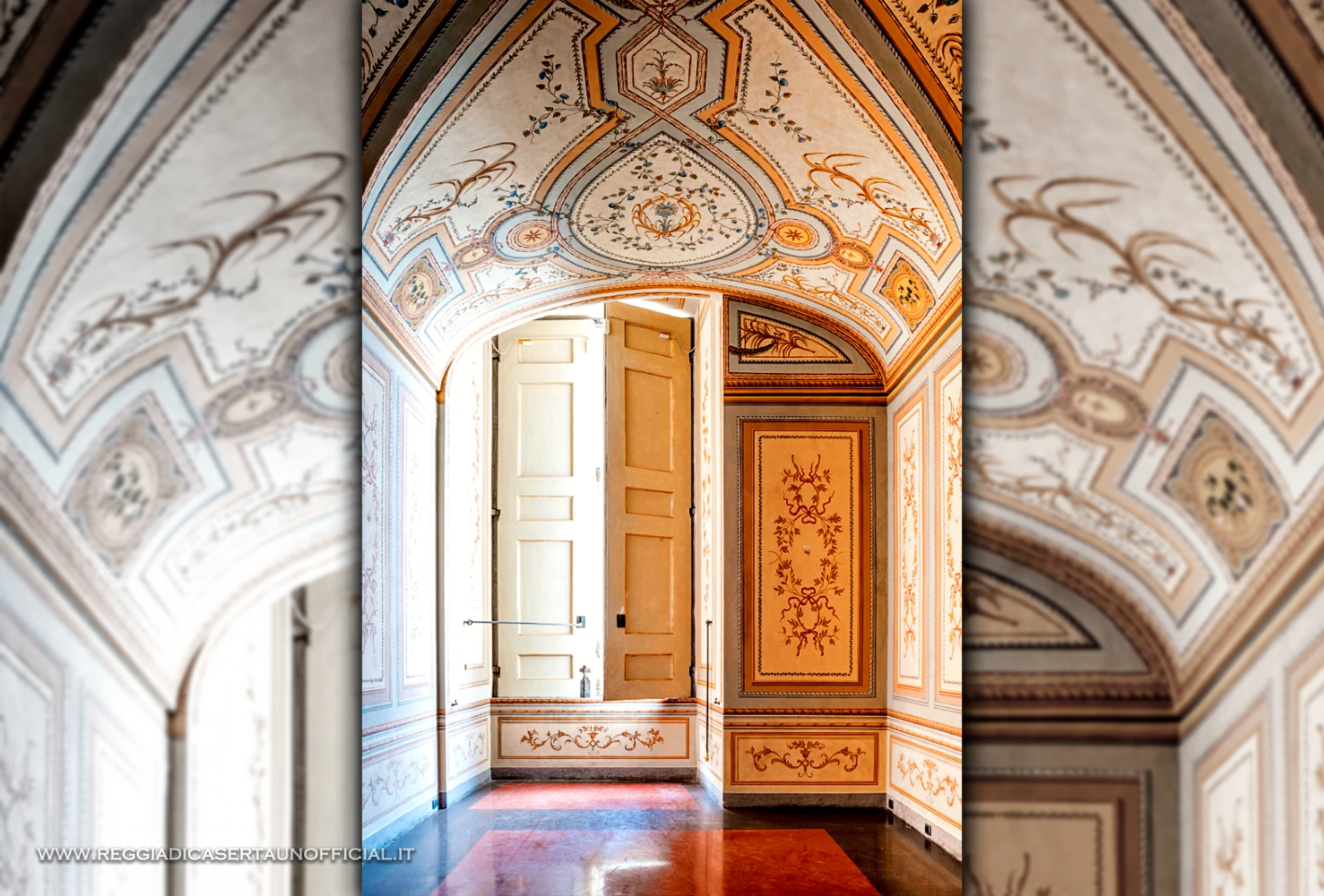
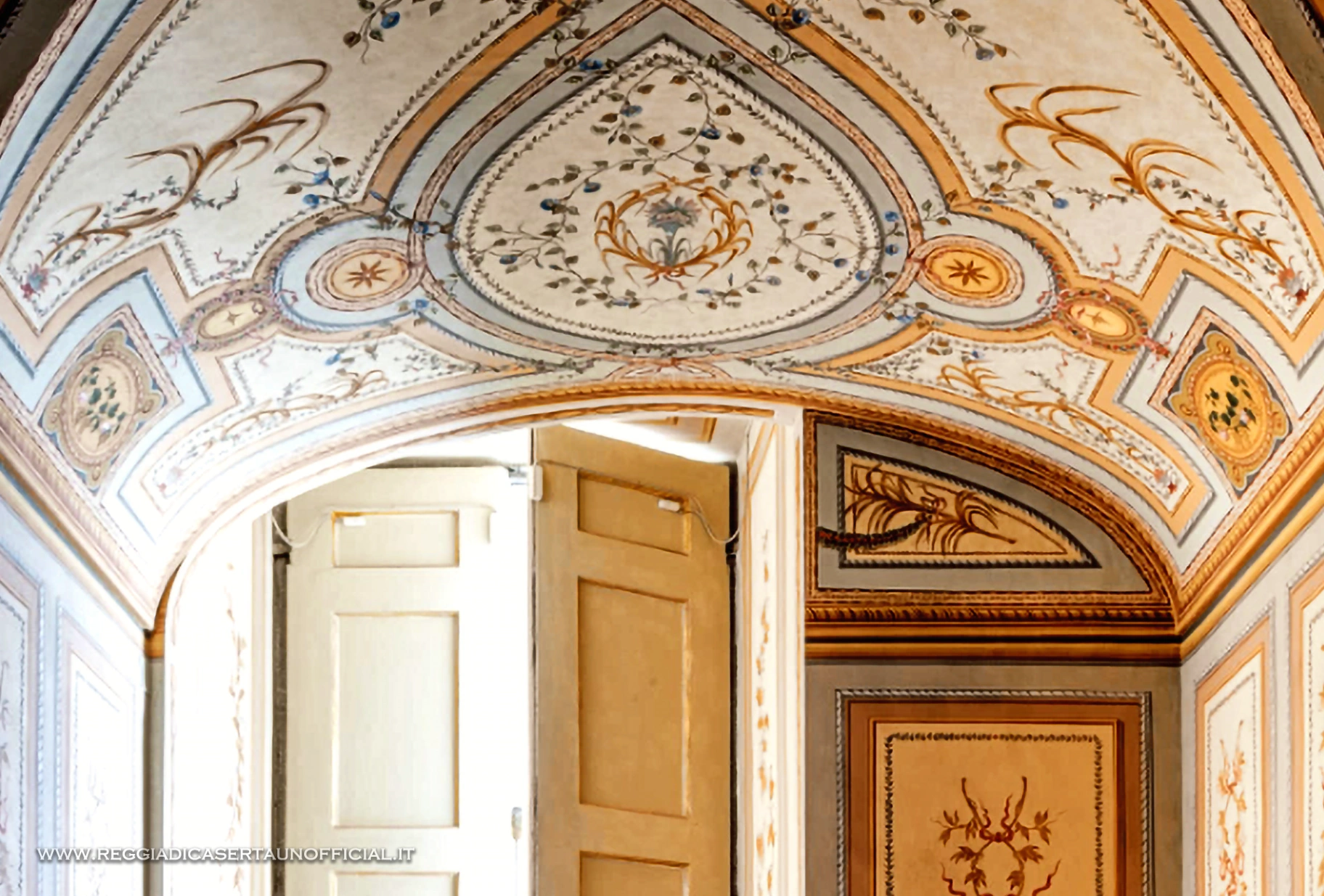
Behind the Second Reading Room lay a small passageway leading to the small chapel of Queen Maria Carolina. Following the deaths of her firstborn children, Carlo Tito and Marianna, she decided to dedicate the chapel to *Maria Santissima Addolorata* (Our Lady of Sorrows)—a dedication evident from the décor and the oil painting by Carlo Brunelli. For her personal devotions, the Queen kept a biscuit porcelain statue of Saint Francis of Paola in the chapel.